Choosing color changing landscape lighting can quickly get overwhelming—between IP ratings, color modes, control options, and fixtures that all look the same on paper.
After years of helping homeowners, contractors, and distributors select the right products, we’ve found that most problems come down to a handful of details buyers miss early on.
In this guide, you’ll learn how to choose color changing landscape lighting step by step: matching fixtures to your space, picking the right brightness and IP protection, and selecting a control system that actually fits your needs.
What Are Color Changing Outdoor Lights
Before you choose, it helps to understand exactly what “color changing” means—and why not all fixtures deliver the same experience.
Definition of Color Changing LED Outdoor Lighting
Color changing outdoor lights use RGB or RGBW LEDs to shift between millions of shades on demand. Instead of one fixed color, you can switch from a warm glow to a bold blue, festive red, or any hue your project calls for.
RGB fixtures mix red, green, and blue chips to create color. RGBW fixtures add a dedicated white chip alongside those three, so you get cleaner, more natural whites for everyday use—not just saturated color.
You can control these lights through an app, remote, wall controller, or a DMX system for larger commercial setups. That control layer is what lets one fixture serve everyday lighting, seasonal themes, and special events all year round.
In short, color changing outdoor lights give you flexibility: one install, endless looks, and full control over how your space feels at any moment.
Residential vs Commercial Color Landscape Lighting Differences
The right mix depends heavily on where the lights go.
In our project experience, residential and commercial installations follow very different formulas.
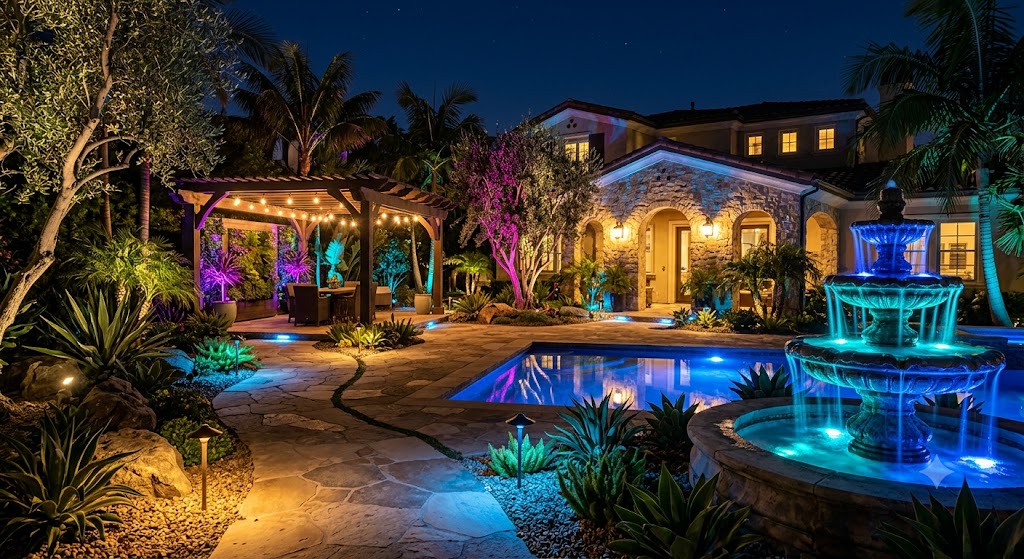
For homes, we recommend a 2700K–3000K warm white base with only 10–20% RGB color accents—enough to light up a facade for a holiday without overwhelming the yard every night.
For commercial sites, a 4000K neutral white works best on main pathways for visibility, with color-changing RGBW limited to roughly 25% or less as feature points on signage, water features, or entrances. Pushing the color ratio higher rarely improves the result—it just raises cost and complexity.
Residential buyers usually prioritize ambiance and easy control. Commercial buyers prioritize durability, brightness, and safety compliance across larger areas.
Why Correct Color Landscape Lighting Selection Matters
Getting the selection wrong isn’t just a technical issue—it shows. The wrong choice leaves your property looking cheap, mismatched, or garish, and can create safety problems on top of it. Here’s what’s really at stake.
Risks of Picking Unsuitable Color Changing Outdoor Lights
The biggest disappointment with color changing outdoor lights is almost always visual. Low-grade fixtures rarely produce the clean, even color you saw in the product photos. Reds look pink, whites look bluish, and greens turn sickly—so the finished landscape looks nothing like what you imagined.
Color inconsistency between fixtures is even more noticeable. Install a row of “identical” lights and one leans warm while the next leans cold, breaking the uniform look a facade or pathway depends on. Cheap RGB units also tend to flicker or shift color unevenly during transitions, which reads as amateurish rather than dynamic.
Overusing color creates its own appearance problem. A yard drenched in shifting reds, blues, and purples looks like a nightclub, not a home—the effect feels cheap and tiring rather than elegant.
Beyond looks, placement matters for safety. Never run line voltage (120V/230V) fixtures in wet zones like water features, pools, or play areas—it’s a genuine shock hazard and will typically fail inspection, forcing costly rework.
According to the U.S. Consumer Product Safety Commission, improper outdoor electrical installations remain a leading cause of preventable shock and fire incidents.
Advantages of LED Color Changing Outdoor Lighting
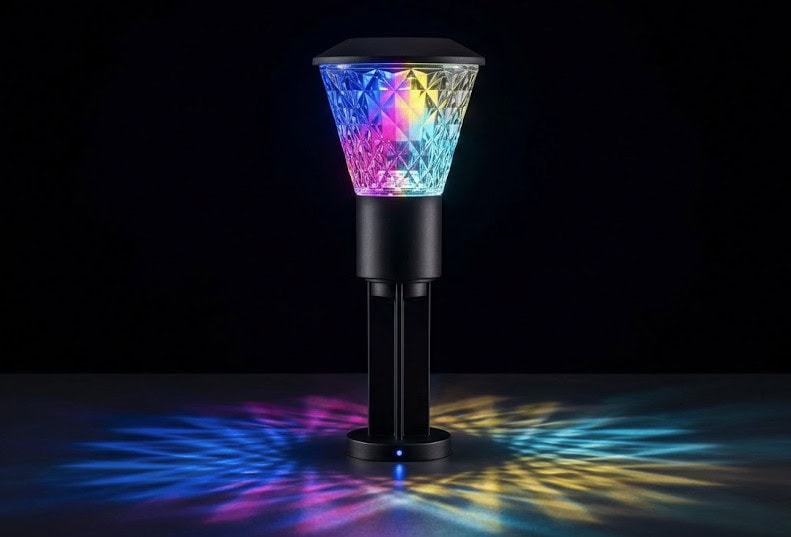
The real value of color changing lighting isn’t brightness or efficiency—fixed-white lights offer those too. Its advantage is the color itself: the ability to change, program, and reuse the same fixtures for completely different purposes. Here’s what only color changing lighting can do.
Transform the space without touching the hardware
Because the color is changeable, one installation can look warm and elegant on an ordinary evening, then festive red-and-green for Christmas, or team colors for an event—all from the same fixtures. Fixed-white lighting can never do this; you’d have to physically swap gels or add temporary lights.
One fixture replaces many seasonal setups
Instead of buying and storing separate holiday lights, decorative floods, and event lighting, color changing fixtures cover every occasion in one permanent install. The color does the work that used to require multiple products.
Set moods and highlight features on demand
Color lets you direct attention—wash a feature wall blue, turn a fountain into a moving color display, or shift the whole yard to a soft amber for a dinner. This is an emotional, atmospheric effect that white light simply cannot create.
Programmable scenes and dynamic effects
Because output is per-color-channel, fixtures can run fades, chases, and color cycles, and switch scenes on a schedule. A property can move from everyday warm white to full event color automatically—something impossible without color control.
Flexibility that protects the investment
Tastes, seasons, and event needs change; with color changing lighting, the look changes with them—no re-buying, no rewiring. That adaptability is the core payoff.
Used with restraint—a warm-white base plus color accents on feature walls, water, or entrances—color changing lighting delivers a refined everyday look and the power to transform the space on demand. That combination is its single biggest advantage.
Key Tips for choosing Color LED Outdoor Lighting
Once you know what you want color, the next step is choosing fixtures that actually hold up outdoors and match your project’s power setup. Two factors matter most: build quality and voltage.
Choose the Right Fixture Grade for Outdoor Conditions
Not all “outdoor” color lights are built for real outdoor life. The single most important spec is the IP rating—it tells you how well the fixture resists dust and water.
IP65 – suitable for walls, facades, and covered areas exposed to rain
IP66/IP67 – better for open ground, heavy rain, and splash zones
IP68 – required for submerged use in ponds, fountains, and pools
But IP ratings on the box don’t always match reality. On lower-grade color fixtures, the weak point is almost always the sealing around the lens and cable entry—the exact spots stressed by outdoor temperature swings. We routinely see units rated IP65 that leak within a season because the gasket is thin or the cable gland isn’t properly tightened at the factory.
Before committing to volume, it’s worth checking the gasket quality, the housing material (die-cast aluminum outlasts plastic), and whether the cable entry is genuinely sealed. A fixture that looks identical online can behave very differently once the seasons change.
Housing material matters just as much as the rating. Die-cast aluminum with a quality powder coat resists corrosion and heat far better than plastic, which fades and cracks under UV exposure.
Low Voltage vs Line Voltage for Color Changing Outdoor Lights
Voltage determines both safety and how far your lighting can reach.
Low-voltage (12V/24V DC) systems are the go-to for most residential and garden projects. They’re safe to handle, easy to install, and ideal near water and planting beds. Their limit is distance—long runs cause voltage drop and dimming.
Line-voltage (120V/230V) fixtures suit large commercial areas and long perimeters where low voltage can’t carry far enough. They require proper conduit, sealing, and often a licensed electrician.
Match Fixture Styles to Outdoor Usage Scenarios
Color changing fixtures aren’t chosen the same way as fixed-white landscape lights. The real question for each scenario is whether color adds value, which color range you need, and how it should be controlled. Below are the most common outdoor scenarios and how to choose color changing lighting for each.
Trees and tall plants
Use RGBW spotlights, not plain RGB. Foliage looks unnatural under pure colored light, so the dedicated white channel lets you shift between vivid holiday colors and a natural warm-white for everyday use. Choose fixtures with adjustable beam angles so a single color can be aimed precisely at the canopy.
Building facades and walls
This is where color changing lighting earns its cost. Use RGB/RGBW wall washers that support DMX or addressable (pixel) control, so the facade can run gradients, chases, or brand colors instead of one flat wash. Confirm the fixtures allow synchronized color across multiple units, or the wall will look patchy.
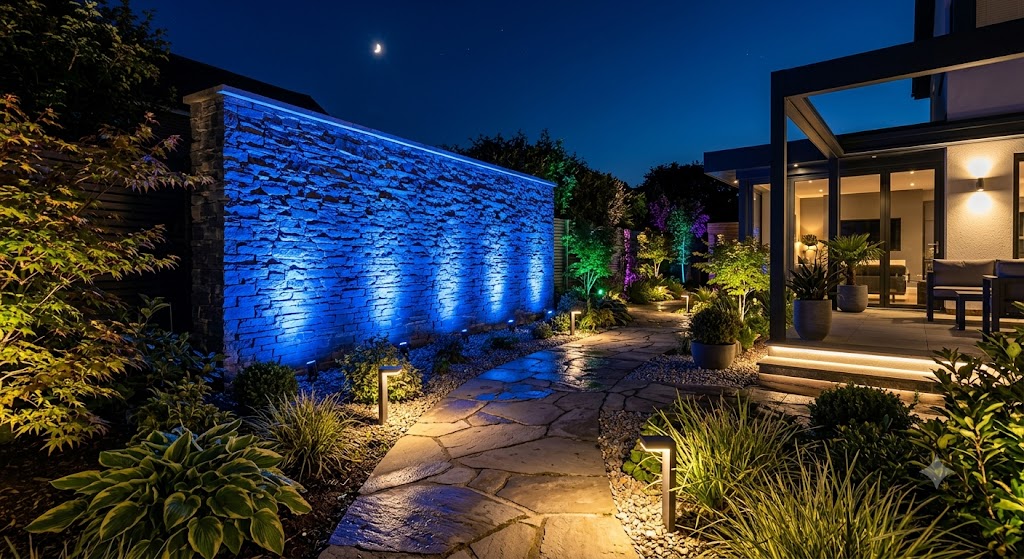
Walkways and driveways
Here, restraint matters. Use low-output RGBW bollards or path lights and rely mostly on the white channel for daily use, saving full color for events. The goal is subtle accent color, not a rainbow—choose fixtures with smooth dimming and slow transition modes to avoid a harsh, distracting effect at eye level.
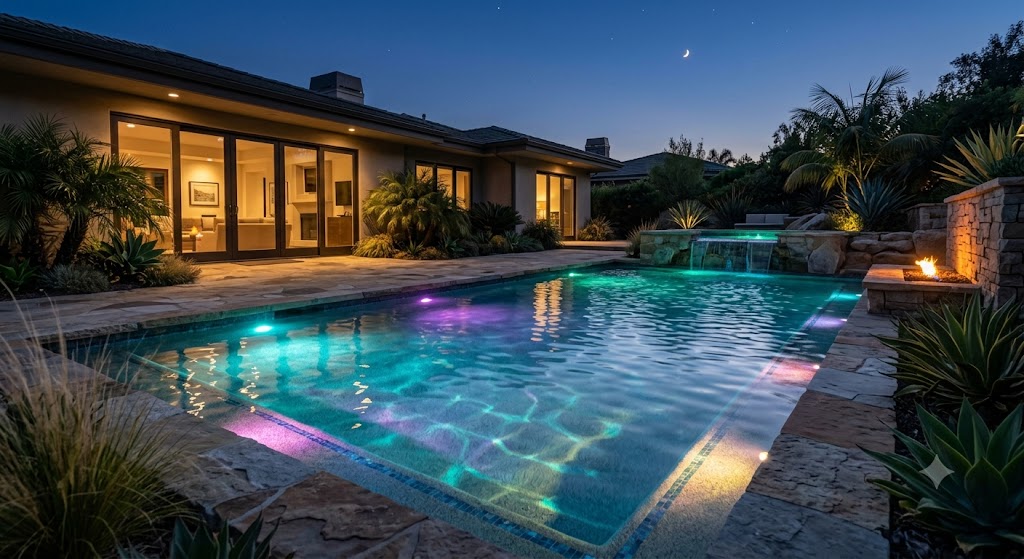
Ponds, fountains, and pools
Water is the strongest showcase for color changing light. Use IP68 submersible RGB/RGBW fixtures—IP68 is non-negotiable here. Prioritize fixtures with dynamic modes (fade, wave, color cycling) since moving water amplifies color transitions. Confirm the controller can sync underwater and surrounding fixtures together.
Steps, railings, and edges
Use addressable RGB/RGBW strip or linear fixtures so each segment can display a different color or run a flowing effect along the length. Confirm the pixel density and maximum run length, since long runs of cheap strip lose both brightness and color accuracy toward the far end.
For larger projects, the advantage of color changing lighting is scene control—one system can switch the entire property from warm-white everyday mode to full-color event mode. Keep every fixture on a shared controller or protocol (DMX, DALI, or app-based) so color transitions stay synchronized across the whole scene, rather than drifting out of sync section by section.
Professional Standards for Color Changing Landscape Lighting
For commercial, export, and large landscape projects, fixtures must meet more than performance expectations—they must satisfy safety, weatherproofing, and market-specific certification requirements. Overlooking these standards is where projects most often run into costly delays, and a compliance problem is far harder to fix after fixtures have shipped than before.
Key standards to verify before ordering:
Certification for the destination market, at both fixture and driver level
Wide-voltage compatibility for cross-border or multi-site deployment
Documented test reports, not just marketing claims printed on the housing
To stay protected, always request certification documents at the driver level, confirm the IP grade against the actual install location, and verify voltage flexibility before placing any volume order. These three checks prevent the majority of customs and inspection problems.
Frequently Asked Questions
Is RGB or RGBW better for outdoor lighting?
For most projects, RGBW is the better choice. RGB alone struggles to produce clean, usable white, so it looks great for color but poor for everyday lighting. RGBW adds a dedicated white chip, giving you a proper warm-white base plus full color—exactly the layered look most premium projects want.
How are LED color changing outdoor lights controlled?
Common control methods include app/Wi-Fi, RF remote, DMX512, and programmable schedules. DMX is preferred for large commercial and architectural projects because it allows precise, synchronized scenes across many fixtures.
Can I use color changing lighting every day, or only for holidays?
Both. The most effective approach is a warm-white base for everyday use, with color reserved for holidays, events, and feature accents. This keeps the look refined day-to-day while unlocking full transformation whenever you want it.
Can LED color changing outdoor lighting be customized for my project?
Yes—and for larger or brand-driven projects, customization is usually where the best results come from. Beam angle, color temperature of the white channel, IP rating, housing finish, control protocol (DMX, app, or scheduling), and even OEM branding can all be tailored to your specification. If you have specific requirements, sharing your project details with a manufacturer’s technical team is the fastest way to get the right RGBW configuration—rather than forcing a stock fixture to fit.
Conclusion
The real value of color changing landscape lighting is what only color can deliver: the freedom to transform a space without touching the hardware.
One permanent install can look warm and elegant on an ordinary evening, turn festive for the holidays, run programmable scenes for an event, and shift back the next day—doing the work that used to require multiple seasonal setups.
Used with restraint, that flexibility shines across every scenario. RGBW spotlights switch trees from vivid color to natural warm white, wall washers run gradients and brand colors on a facade, IP68 fixtures turn a fountain into a moving color display, and subtle accents light walkways and steps.
This adaptability—changing the look on demand as tastes, seasons, and events change—is the single biggest payoff, and the reason color changing lighting protects your investment far better than fixed-white fixtures ever could.
Talk to RC Lighting About Your Project
RC Lighting offers both standard and fully customizable RGBW color changing outdoor fixtures backed by a professional R&D team. Share your project details and we’ll help you get the right RGBW configuration, IP grade, voltage, and control setup—at competitive prices with responsive service. Request a quote or send us your project brief today.