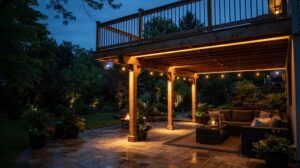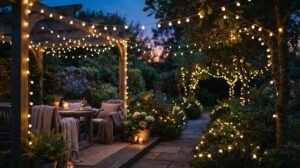
Choosing the best backyard flood lights sounds simple—until you’re staring at dozens of listings with wildly different lumen ratings, IP codes, and sensor options. Pick the wrong one, and you either blind your neighbors or leave dark corners where intruders can hide.
In this guide, we’ll walk you through why backyard flood lights matter, how LED compares to other types, the key specs that actually affect performance, and how to match a light to your specific yard. Let’s start with why the right lighting is worth getting right.
Why Backyard Flood Lights Matter for Security and Livability
Good backyard lighting does more than push back the dark. It shapes how safe, usable, and comfortable your outdoor space feels after sunset.
Security is the top reason most people install flood lights. A well-lit yard removes hiding spots and signals that a property is occupied and monitored. According to the U.S. Department of Justice’s guide on burglary prevention, visible lighting is one of the situational measures associated with deterring residential break-ins.
Flood lights also make security cameras far more effective. Most cameras struggle in low light, and infrared night vision only reaches so far. A motion-triggered flood light gives your camera the full-color, well-lit footage that actually helps identify a person or vehicle.
Then there’s everyday livability. The right lighting lets you use a patio, grill area, or garden path safely long after dark—without turning your yard into a stadium.
The challenge is balance. Too little light leaves blind spots. Too much creates glare, wastes energy, and spills onto your neighbors’ property. Getting that balance right starts with choosing the correct light type, which we’ll cover next.
LED vs. Other Flood Light Types: Why LED Wins for Backyards
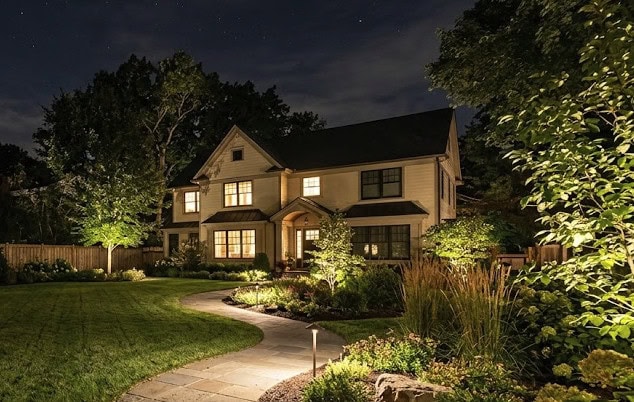
Before comparing specs, it helps to settle the biggest question first: which technology should you buy? For most backyards today, the answer is LED—but it’s worth understanding why.
Older halogen flood lights are cheap upfront and very bright, but they run hot, burn through electricity, and often fail within a year or two of heavy use. They also waste most of their energy as heat rather than light, which quickly shows up on your power bill.
Solar LED flood lights are the opposite trade-off. They cost nothing to run and install almost anywhere, since there’s no wiring. The catch is reliability in low sun: a partially shaded yard or a run of cloudy days can leave a solar light dim or dead exactly when you need it. They suit accent lighting far better than serious security.
Integrated LED flood lights hit the sweet spot for backyards. They deliver high brightness, sip power, and last for years. The U.S. Department of Energy notes that LEDs use at least 75% less energy and last up to 25 times longer than incandescent lighting, which is exactly the durability an outdoor fixture needs.
For most homeowners and installers, LED is the default choice.
Key Specifications to Compare
Once you’ve settled on LED, the real decisions come down to a handful of specs. Get these right and the fixture will perform for years; get them wrong and you’ll be shopping again by next season.
These five specifications—brightness, beam angle, waterproofing, color temperature, and efficiency—matter far more than brand names or marketing claims. Read them together, not in isolation, because the best backyard result comes from balancing all five.
Brightness and Lumens
Lumens measure how much light a fixture actually produces—not watts, which only tell you how much power it draws. This is the single spec buyers get wrong most often, because old habits from incandescent bulbs make people shop by wattage.
In our experience supplying outdoor flood lights, homeowners tend to go to two extremes. Small yards get over-lit with 3,000–5,000 lumen fixtures that create harsh glare and, often, complaints from next door. Large yards get under-lit with 700-lumen units that leave dark security blind spots along the perimeter. In fact, “too bright” and “light trespassing onto a neighbor’s property” is the most common post-sale complaint we hear.
A practical starting point is roughly 200–300 lumens per 100 square feet, then add about 50% for dedicated security points. Here’s a simple reference we give buyers:
- Small garden or patio: 700–1,300 lumens per fixture, warmer 3000–4000K
- Standard backyard or pathway: 1,500–2,500 lumens, split across 2–3 points
- Large yard or perimeter security: 2,000–5,000 lumens with a narrow beam angle
The bigger lesson: several well-spread fixtures almost always beat one ultra-bright head. Spreading the light reduces glare, fills blind spots, and gives you a far more even, usable yard.
Beam Angle and Coverage
Beam angle decides the shape of your light, not just how far it reaches. It’s the spec most people ignore—and the reason a bright fixture can still miss the spot you cared about.
A wide beam (110°–180°) spreads light across a large area with softer intensity. This is ideal for general backyard coverage, patios, and open lawns where you want even, comfortable light without harsh hot spots. A narrow beam (15°–60°) concentrates output into a tight, long-throw column. That’s exactly what you want for security zones—a driveway entrance, a side gate, or a distant fence line where reach matters more than spread.
A practical rule is simple: use wide beams for living areas and narrow beams for security points. Mixing both across a single yard gives you soft comfort where you relax and focused reach where you need protection. Always check the beam angle on the spec sheet, because two lights with identical lumens can light your yard completely differently. Brightness tells you how much light there is; beam angle tells you where it actually goes.
Waterproof Rating (IP Code)
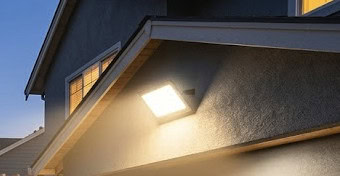
The IP code tells you how well a fixture resists dust and water, and outdoors it’s non-negotiable. The rating uses two digits—the first for solid particles, the second for water—defined by the international IEC 60529 standard. The higher each digit, the better the protection.
For backyard flood lights, aim for IP65 as a minimum, which blocks dust and withstands rain and direct hose spray. Step up to IP66 or IP67 for fixtures near sprinklers, in coastal areas, or in regions with heavy, driving rain. A cheap indoor-rated light will fail fast outdoors, so this is not a spec to compromise on.
In quality inspections, the failures we catch are rarely the housing itself—they’re the weak points buyers can’t see in a product photo: cable-gland seals, gasket quality, and the junction where the driver enters the housing.
A fixture can advertise IP65 and still let moisture creep in through a poorly sealed cable entry after a few months of thermal cycling. This is also why heat dissipation quietly affects waterproofing: an aluminum body that runs too hot ages its seals faster and shortens LED life at the same time.
When comparing lights, look for die-cast aluminum housings, silicone (not cheap rubber) gaskets, and a stated IP rating backed by real test data—not just a number printed on the box. That combination is what actually survives years of outdoor weather.
Color Temperature (CCT)
Color temperature, measured in Kelvin (K), sets the mood and clarity of your light. It’s the difference between a warm, welcoming patio and a stark, clinical security floodlight—and it’s easy to get wrong when you only shop by brightness.
Use this as a quick guide:
- 2700K–3000K (warm white): cozy, relaxing light for patios, decks, and entertaining areas
- 4000K (neutral white): a balanced, natural look that works almost anywhere in the yard
- 5000K–6500K (cool/daylight white): crisp, high-contrast light best for security zones and camera coverage
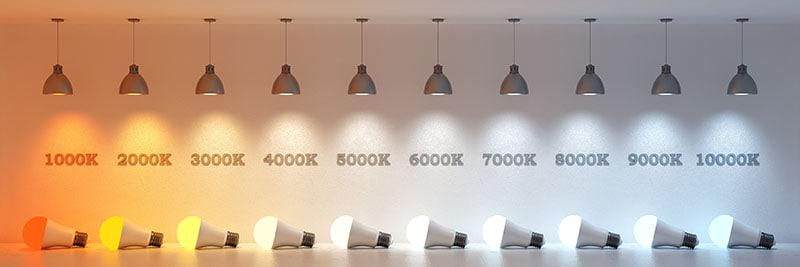
A useful strategy is to match CCT to purpose: warm tones where people gather, cool tones where you need sharp visibility. If you’re running security cameras, cooler light around 5000K produces clearer, more usable footage, because it renders faces, plates, and colors with far more contrast than warm light. Many buyers now choose tunable-CCT fixtures so a single light can shift from relaxed evening warmth to bright white when motion is detected.
Energy Efficiency (lumens per watt)
Efficiency is measured in lumens per watt (lm/W)—how much light you get for every watt you pay for. Two fixtures can share the exact same brightness while one costs far more to run over its lifetime.
Look for at least 100 lm/W; well-made LED flood lights today commonly reach 120–150 lm/W or more. Higher efficiency means lower electricity bills, less waste heat, and longer LED life, since heat is the main enemy of any LED. Because flood lights often run for several hours every night, even a small efficiency gain adds up to real savings over a year.
When you compare two options, divide the lumens by the watts—it’s the fastest way to separate a genuinely efficient light from one that’s simply power-hungry. Efficiency and heat management go hand in hand: a cooler-running, high-lm/W fixture is almost always the one that lasts longest outdoors.
Smart Features and Controls Worth Considering
Beyond the core specs, smart features decide how convenient and efficient your flood lights are day to day. You don’t need every feature, but the right ones cut energy use, improve security, and remove the daily chore of switching lights on and off.
Motion Sensor Detection
Motion sensors turn lights on only when something moves, which saves energy and adds a genuine security layer. Instead of running all night, the fixture stays dark until it detects activity, then floods the area with light.
When comparing motion-sensor flood lights, check three things: detection range, detection angle, and adjustable sensitivity. A typical unit covers 20–40 feet at a 120°–180° angle. Look for adjustable timing (how long the light stays on after motion stops) and sensitivity control, so pets or passing cars don’t trigger it constantly. Placing sensors to cover entry points—gates, doors, and driveways—gives the best security value.
Dusk-to-Dawn Photocells
A dusk-to-dawn photocell switches lights on at sunset and off at sunrise automatically. It’s the simplest form of automation and ideal for consistent, all-night coverage of key areas.
This feature is perfect for pathways, entrances, and general safety lighting where you want reliable light every night without touching a switch. Many fixtures now combine a photocell with a motion sensor—the light provides a low ambient glow after dark and boosts to full brightness when motion is detected. That combination delivers both comfort and security while keeping energy use low.
Smart App and Voice Control
Smart flood lights connect to Wi-Fi or a hub, letting you control them from your phone or by voice through platforms like Alexa and Google Home. You can set schedules, adjust brightness, change color temperature on tunable models, and monitor usage remotely.
The real value is flexibility: dim the patio lights for an evening outdoors, brighten security zones on a schedule, or turn everything off while you’re away. If you already use a smart-home system, choose fixtures that match your existing ecosystem so everything works from one app. For most backyards, smart control is a convenience upgrade—useful, but secondary to getting brightness, beam angle, and waterproofing right first.
Installation and Placement Tips
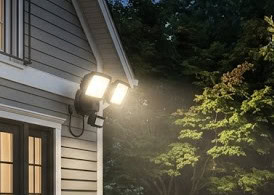
Even the best flood light disappoints if it’s mounted in the wrong spot. Placement often matters as much as the specs on the box, so plan your layout before you buy.
Follow a few practical guidelines:
- Mount height: aim for 8–10 feet for most flood lights—high enough for wide coverage, low enough to avoid excessive glare
- Aim slightly downward: tilt fixtures down to light the ground and reduce light trespass onto neighbors
- Cover entry points first: prioritize gates, doors, driveways, and dark corners for security
- Spread the load: use several moderate fixtures rather than one intense head to avoid harsh glare and blind spots
- Mind the wiring: hardwired fixtures may need a qualified electrician, while solar and plug-in models offer easier DIY installation
For wiring and mounting outdoors, always follow local electrical codes and safe practices; guidance from bodies like OSHA on electrical safety is a useful reference for higher-voltage installations. When in doubt about hardwiring, hire a licensed electrician—it protects both your fixture and your home.
Choosing Flood Lights for Different Backyard Use Cases
Here’s the thing: one flood light almost never covers a whole yard well. Your driveway wants punch and quick reaction. Your patio wants a soft, cozy glow. A big lot needs actual planning, not just a brighter bulb. Once you match the light to the job, everything gets easier—and a lot cheaper to run. Let’s walk through the three setups you’ll run into most.
Driveway and Garage Security
This is where brightness and motion really earn their keep. Your driveway and garage entrance are the spots you want lit the second someone pulls in—and dark the rest of the night.
Go for 2,000–6,000 lumens with a narrow-to-medium beam, so the light shoots down the driveway instead of leaking off to the sides. You can pair it with a motion sensor aimed at the approach—it flips on the moment a car or person arrives, which is honestly half the deterrent right there.
Stick to a cooler color around 5000K; it looks sharper to the eye and, more importantly, gives your security camera much cleaner footage. And if the fixture offers it, grab a motion + dusk-to-dawn combo: a low glow all night, then full brightness when something moves. You get the convenience without paying to run it flat-out for eight hours.
Patio and Garden Ambiance
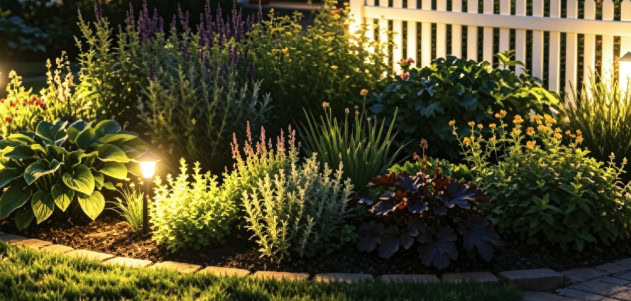
Out here, the goal is comfort—not floodlight interrogation-room vibes. Patios, decks, and garden seating are for relaxing, so a blazing 5,000-lumen head is exactly the wrong call.
Dial it back to around 700–1,500 lumens per fixture and pick a warm color (2700K–3000K) for that soft, inviting feel. Wide beam angles spread everything out evenly so you don’t get harsh hot spots, and adjustable heads let you point the light right where you want it—a seating nook, a nice tree, a garden wall.
Honestly, dimmable or tunable-CCT fixtures are the sweet spot here: one light can be mellow for an evening outside, then brighter when you actually need to see. The takeaway? A few soft, well-placed lights beat one bright one every time in a space where people hang out.
Large and Commercial Lots
Big spaces come down to planning, not just power. A large backyard, a parking area, a commercial lot—these need even light across the whole space, which means thinking about layout instead of dropping in one giant fixture and hoping.
Start withhigh-output LEDs (often 5,000 lumens and up) and space them so the beams overlap a little—that’s what kills the dark gaps between poles. For anything this size, it’s worth working to an actual illuminance target in lux; the Illuminating Engineering Society (IES) lighting standards are a solid reference for the right light levels in parking and general outdoor areas.
Efficiency matters a lot more here too—chase 120+ lm/W, because when you’re running a dozen fixtures for hours every night, the electricity bill adds up quick.
One more thing people forget: at this scale, tough die-cast housings and IP66+ ratings really pay off, since climbing up to swap a failed unit across a big site is a genuine hassle.
Quick Buying Checklist
Before you check out, run through this quick list. It keeps you from grabbing a fixture that looks great in the photo but falls short in the yard.
For a typical home purchase, confirm:
- Lumens — matched to the use case (patio ~700–1,500lm, security ~2,000–6,000lm, large lots 5,000lm+)
- IP rating — IP65 minimum for anything exposed to rain
- CCT — warm (2700K–3000K) for ambiance, cool (5000K) for security
- Sensor type — motion, dusk-to-dawn, or a combo of both
- Mounting compatibility — right bracket, height, and wiring type for your spot
If you’re buying in bulk, add three more checks that matter far more at volume:
- Certifications — confirm valid CE, RoHS, or UL/ETL marks for your market
- Batch consistency — ask whether color temperature and brightness stay uniform unit-to-unit, since mismatched fixtures on one wall are obvious and hard to fix later
- Lead time — get a realistic production and shipping timeline before you commit
Frequently Asked Questions
Does solar work for a partially shaded yard?
It can, but manage your expectations. Solar flood lights need several hours of direct sun to fully charge, so a shaded panel means shorter, dimmer runtime. If the panel can be mounted in a sunny spot—even away from the light itself on a separate-panel model—shade over the fixture is fine. Full shade all day, though, and hardwired or plug-in is the smarter pick.
How many flood lights do I need to cover my backyard?
It depends on your yard size and how evenly you want the light spread, but a simple rule helps: one wide-beam fixture typically covers 200–400 square feet of usable light. For a small patio, a single well-placed fixture is often enough. For a larger yard, space multiple lights to overlap slightly rather than relying on one super-bright unit—overlap kills harsh shadows and dark corners. When in doubt, two medium fixtures usually beat one oversized one.
Can I get flood lights customized for my project?
Yes, and for larger or branded projects, it’s often the smarter move. If off-the-shelf fixtures don’t quite fit, a manufacturer can customize lumen output, beam angle, color temperature, housing, IP rating, and even logo or packaging to match the job. Custom work makes the most sense when you’re ordering in volume, standardizing fixtures across a big site, or building your own product line. Just plan for minimum order quantities and longer lead times—so it’s worth talking specs through with a manufacturer’s technical team early, not after you’ve committed.
Conclusion
Choosing the right backyard flood lights really comes down to one habit: decide the job first, then match the specs. Once you know what you’re lighting, everything else falls into place.
The right light in the right spot is what makes a yard feel safe, usable, and genuinely enjoyable after dark.
Source Quality LED Flood Lights with RC Lighting
Once you know what you need, the last question is who you buy it from. A reliable manufacturer should be able to show you valid certifications (CE, RoHS, UL/ETL), batch-level test data, honest IP and lumen ratings, and consistent quality across orders—not just a low price.
At RC Lighting, we manufacture LED flood lights built around exactly those standards, with verified specs, batch consistency checks, and full certification support for both retail and bulk buyers. Whether you’re lighting a single patio or spec’ing fixtures for a large lot, our technical team can help you match the right output, beam angle, and IP rating to your project.
Ready to move forward? Request a quote, and contact our technical team to talk through your specs before you buy.