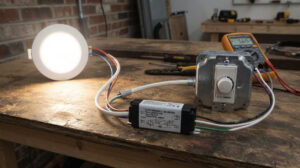
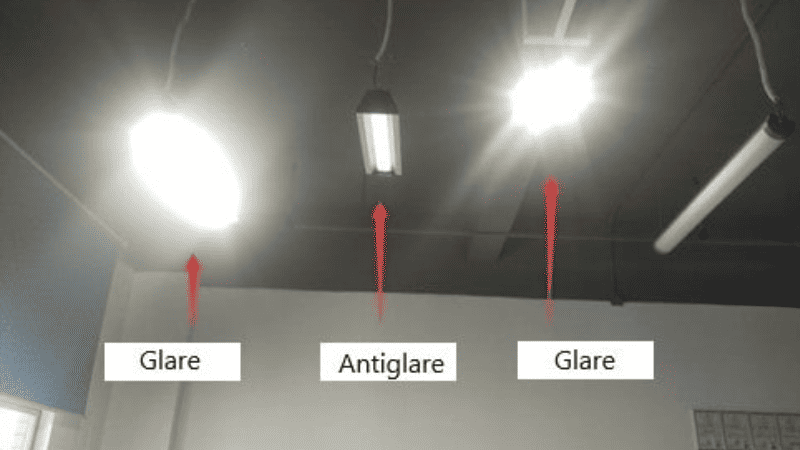
LED lighting can sometimes cause glare and reduce visibility. But this can be reduced and significantly improved by choosing the right light. This article discusses the what is anti glare light and how to reduce light glare to minimize this unwanted effect.
Light glare is one of the most common problems with any type of light, but it can be particularly troublesome for those who suffer from certain eye conditions. Anti-glare light solutions reduce the glare you see by blocking out unwanted reflections and reducing the intensity of the light source itself.
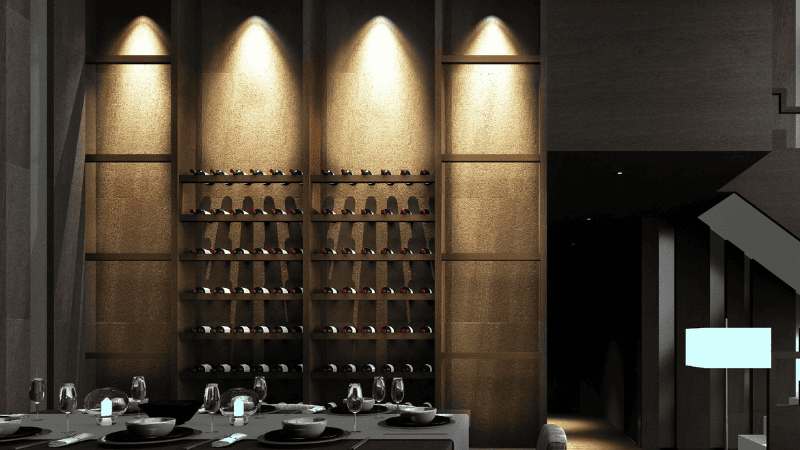
This article will discuss how to Diminish glare on your eyes and why anti-glare lights benefit people with eye conditions. (This publication details the harmful effects of glares on your eyes)
What Is Anti-Glare Light?
Anti-glare lights are used to reduce the glare of light. With these lights, you can reduce light overhead and other sources that cause excess light in a room or vehicle. This is important as too much lighting has been shown to affect your eyes and reduce nighttime visibility.
Anti-glare light is designed for people who are sensitive to bright lights. It provides gentle lighting that makes it easier for your eyes to adjust and concentrate on reading or something else. The anti-glare allows you to see things clearly without hurting your eyes because of the intense light on a screen.
This light is perfect for people who spend a lot of time indoors and do not get enough exposure to bright sunlight. You can use it while reading, studying, or even watching TV in your room at night when there are no sources of natural light such as windows available. This way, you will reduce the strain on your eyes caused by looking at the bright screen for prolonged periods.
Discomfort Glare vs. Disability Glare: What Is the Difference?
To effectively solve lighting issues in a commercial space, you first need to understand that not all glare is created equal. Lighting professionals divide glare into two distinct categories based on how it impacts the human eye:
- Discomfort Glare: This occurs when a light source is too bright for the surrounding environment, causing an instinctive desire to look away. While it does not physically block your vision, it leads to severe eye strain, fatigue, and headaches over a long workday. It is the number one culprit behind dropping productivity in poorly lit offices and classrooms.
- Disability Glare: This is a much more serious safety hazard. Disability glare happens when intense, stray light enters the eye and physically reduces your ability to see clearly—such as a high-beam headlight blind spot or blinding reflections off industrial machinery. It masks contrast and obscures details, which can quickly lead to dangerous accidents in warehouses, manufacturing plants, and outdoor parking lots.
By identifying whether your space suffers from irritating discomfort glare or hazardous disability glare, you can choose the precise anti-glare fixtures or lens shielding required.
Anti-Glare LED Lights
Lately, there has been an increase in the use of LED light bulbs. This can be attributed to the plethora of benefits offered by LED. However, the unidirectional light from LED fixtures has increased the incidence of glare.
LEDs produce harsher glare than incandescent or halogen lights because their tiny chips act as narrow, high-brightness point sources that shoot light forward directly, unlike the wide 360° diffused glow of tungsten filaments; additionally, their higher blue light output amplifies eye irritation from intense spot brightness.
The use of no-glare lights is highly recommended both indoors and outdoors. Their use ensures a holistically enabling environment, increases human productivity, and prevents accidents.
It must be noted that anti-reflective and anti-glare are not interchangeable terms.
How to Measure the LED Glare?
When choosing an LED, you can measure its glare properties through the UGR (Unified Glare Rating). This rating describes how much an LED will produce glare and which number is best suited for the respective application.
According to the European Standard’ BS EN 12464: 2002‘, The following ranges of UGR can be applied to specific applications;
- UGR < 25 is best for general warehouse applications such as storage, loading bays, and material handling.
- UGR<19 is best for office-based work such as reading, writing, and meetings.
- UGR<16 is best suited for technical drawing.
- UGR>30 will produce the highest levels of glares.
Note that UGR measures the relative difference between the brightness of a light fitting and its surrounding area. Therefore, this unit works only for indoor lighting.
8 Tips for Reducing Light Glare
The anti-glare light fixtures eliminate the occurrence of glare and thus prevent the strain and fatigue experienced by the eyes. Therefore, glare-free lights should be used in all big and small spaces to Diminish glare.
LED lights produce much more glare than what we’re used to from filament bulbs and halogen lights. The strong contrast between bright light and darkness hurts their eyes.
Following are some tips to help reduce glare.
1. Replace Your Lights with Anti-Glare Lighting Products
The absolute fastest way to tackle both discomfort and disability glare is to swap out older, high-intensity bulbs with modern, engineered anti-glare LED fixtures.
Traditional bulbs blast raw light in every direction, which often triggers severe eye strain for anyone in the room, especially individuals with sensitive vision conditions like myopia or cataracts.
Upgrading to fixtures with built-in glare control naturally balances the illumination, eliminating blinding hot spots while dramatically improving overall visual comfort.
2. Installing Filters
If you already have working LED fixtures and aren’t ready for a full replacement, adding a specialized anti-glare filter is a fantastic aftermarket fix. These filters attach over the lens to catch harsh, unidirectional light beams and scatter them softly.
By cutting down the stinging intensity of the light by up to 50%, they instantly remove the sharp contrast that causes discomfort glare, making the room’s atmosphere much gentler on the eyes without requiring a massive budget.f the ultraviolet (UV) rays that cause skin damage, sunburns, and cataracts. With its anti-reflective effect, these screens also help users see their screen clearly under bright natural or artificial lighting conditions such as sunlight or office cubicles where fluorescent bulbs are used.
3. Using Diffusers
Diffusers are semi-transparent or frosted glass/polycarbonate covers placed directly over the light source. Instead of letting the LED chips blast sharp beams downward, the diffuser spreads the light out smoothly.
This makes them the ultimate solution for neutralizing discomfort glare in shared indoor environments like classrooms and corporate offices; they blend the light evenly, ensuring no single desk suffers from irritating reflections or harsh contrasts.
4. Installing Dimmers
At its core, discomfort glare is simply the result of too much light hitting your eyes at once.
By replacing standard on/off switches with smart dimming systems, you give users complete control over their environment.
Lowering the brightness during darker hours of the day immediately bridges the contrast gap between the light fixture and a dark room, allowing employees or family members to relax their eyes dynamically.
5. Correct Positioning of Fixtures
Fixing glare in an indoor office is relatively straightforward, but outdoor landscape and facade lighting require careful planning during the design phase.
When bright streetlamps or floodlights blast light into an otherwise pitch-black night, they can cause dangerous disability glare that temporarily blinds drivers or pedestrians.
To avoid this hazard, fixtures must be precisely angled downward and away from direct lines of sight, ensuring they illuminate the path rather than entering the eye.
6. Choosing Right Color Temperature
Did you know the color of your light affects how bright it feels? Cool, blue-toned LEDs (3500K to 6000K) naturally stimulate the eye more aggressively, making discomfort glare feel significantly sharper and more piercing. By opting for warmer color temperatures (under 3000K) for your indoor projects or residential pathways, you get a much softer output that inherently reduces visual fatigue.
7. Lens Covers
Using specialized optical lenses is an excellent structural way to control discomfort glare.
Prismatic lenses use tiny geometric patterns to break up heavy light concentrations and distribute them evenly across a room. This precise optical dispersion eliminates the piercing intensity of raw LED chips, turning a potentially blinding fixture into a smooth, highly comfortable light source.
8. Louvers
When safety is on the line and you need to completely stop disability glare, louvers are your best line of defense.
These fixtures feature physical geometric grids or “egg-crate” structures built around the lamp. By mechanically blocking stray, high-angle light from shooting sideways into a person’s field of vision, louvers force the light strictly downward.
This guarantees maximum safety in industrial warehouses, manufacturing plants, or high-end architectural spaces where operators must see heavy machinery or hazards with absolute clarity.
Benefits Of Using LED Anti-Glare Light
Check out some of the essential benefits of anti-glare LEDs.
Reduces Eye Strain
This light will help reduce eye strain. This is especially beneficial for people who sit in front of computer screens all day long or watch television on a screen at night before bedtime.
Does Not Create Harsh Shadows
This type of lighting does not create harsh shadows around objects and the like, making it easier to read books and other publications such as magazines and newspapers. When trying to see your work clearly, anti-glare lights become useful; this excludes situations where you need low levels of illumination (i.e., late nights).
No Emission of Ultraviolet Rays
They do not emit harmful ultraviolet rays into space, making them safe even when used without proper protection from the sun. You can purchase them and use them in your car or office without worrying about UV damage during the day.
Long Lifespan
Anti-Glare lights also have a long lifespan, so you do not have to spend money on replacing bulbs often. This is especially beneficial for places such as theatres with no windows nearby. It becomes challenging to replace lightbulbs now and then because of a lack of ventilation/accessibility (i.e., closets).
Increases Productivity
Anti-glare lighting has proven to increase productivity while allowing people enough sleep even when working odd hours. This makes anti-glare lighting an excellent option if you want more than general room illumination but don’t like fluorescent lights.
Best For Stadiums and Courts
The lighting in stadiums and courts is supposed to be precise because it directly affects the gameplay. The glare can reduce visibility for both the players and the spectators on the field.
Therefore, any glare and discomfort must be reduced by choosing the best brightness of LED stadium lights and the positioning of lighting poles.
Aesthetically Pleasing
They look gorgeous! Anti-glare lights make spaces more beautiful and colorful even at low light levels. This allows people to create a certain mood or atmosphere with lighting making it easier for them to enjoy the space around them without having too much concern over eye strain, UV damage, etc.
Frequently Asked Questions
What is the difference between anti-glare and anti-reflective lighting?
Anti-glare technology controls harsh light emitted from fixtures to avoid eye irritation. Anti-reflective coatings only block surface reflections on screens or lenses, not raw lamp brightness. The two solutions serve separate lighting problems and cannot replace each other.
What is the mechanical difference between anti-glare lights and regular LED fixtures?
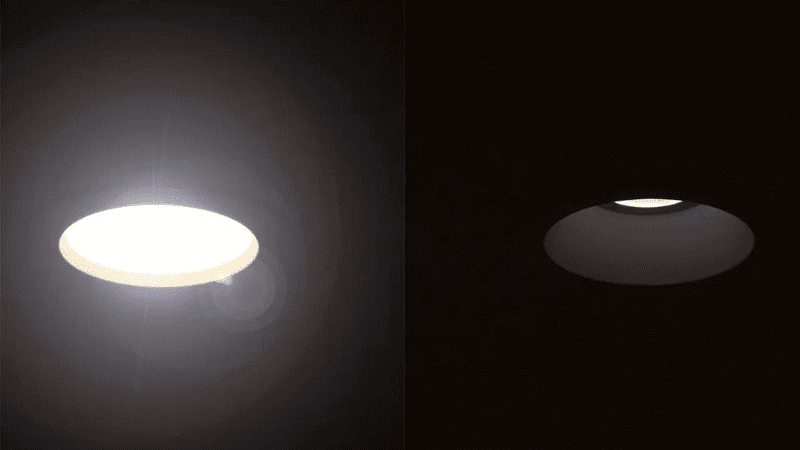
Regular LED fixtures use standard clear or frosted lenses that let light spread wide at high, piercing angles directly into a user’s field of vision. In contrast, dedicated anti-glare lights feature deep-recessed housings, physical honeycomb louvers, or complex internal reflectors that mechanically restrict light cutoff angles. This specific structural engineering forces the light output directly downward toward the work plane rather than allowing it to spill sideways into people’s eyes
What is the shielding angle of an anti-glare fixture and why does it matter?
The shielding angle (or shading angle) is the exact physical angle measured between the horizontal plane of the ceiling and the first line of sight where the naked light source becomes completely invisible. For an LED fixture to be considered a true anti-glare light, it typically requires a minimum shielding angle of 30 degrees to keep the intense LED chip hidden from a user’s normal field of view. Commercial specifiers and lighting designers carefully check this metric to ensure the fixture’s mechanical cut-off natively blocks direct blinding rays without relying on secondary lens covers.
Can RC Lighting build custom anti-glare LED fixtures for unique commercial venue layouts?
Yes, as a premier architectural LED lighting manufacturer, RC Lighting specializes in delivering bespoke, project-specific solutions for complex interior and landscape designs. Our engineering team can fully customize your fixtures’ beam angles, power wattages, finishing colors, and internal shielding components to achieve optimal UGR levels tailored perfectly to your venue. Contact us today to receive a comprehensive technical consultation and get a fast, accurate custom quote that meets your project timeline and budget!
Conclusion
Anti-glare lights are energy-efficient, reduce glare, & provide true colors while saving you yearly electricity bills. They should be the only bulb type used in homes or work settings for maximum savings effectiveness.
Please note that they may cost slightly more than your average LED bulb to purchase initially but will save you much more over time due to their superior lighting quality and benefits.
Are you ready to upgrade your commercial lighting with RC Lite?
Are you ready to take the next step and elevate your commercial lighting experience? Say goodbye to the discomfort and inefficiencies of glare with RC Lite’s advanced anti-glare solutions. Our cutting-edge technology ensures that your space is not only well-lit but also comfortable and visually appealing.
Don’t let poor lighting hold you back any longer. Join the countless satisfied customers who have transformed their spaces with RC Lite.
Contact us today to learn more about our products and how we can help you achieve the perfect lighting environment for your business. Upgrade now and illuminate your commercial space with the clarity and comfort it deserves!