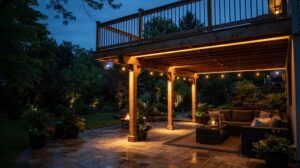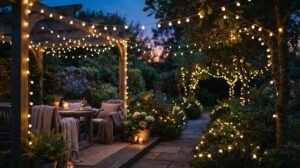
Picking staircase light fixtures sounds simple until you open a supplier catalog and face dozens of styles, wattages, and IP ratings. Most buyers get stuck on the same questions. Which fixture type fits this stairway? How bright should it be? Will it pass code and hold up over time?
We work with staircase lighting on indoor and outdoor projects every week. That experience shows us where selections go wrong, which specs buyers overlook, and how the right choice prevents callbacks and returns. Those lessons drive the advice below.
This guide gives you a clear way to choose the right staircase light fixtures for your project. You will learn which fixture types suit different stairways, and how to weigh brightness, color temperature, IP rating, and safety before you buy. Let’s start with why the choice matters more than most people expect.
Why Staircase Lighting Matters
Stairs are one of the most common places for falls in both homes and commercial buildings. Good lighting lowers that risk because it makes each step easy to see. This matters most in transition zones, where your eyes shift between bright and dark areas.
Poor lighting also makes stair edges blend together, which creates a real trip hazard. The U.S. Consumer Product Safety Commission reports that stairs and steps rank among the leading sources of home injuries. For that reason, even and glare-free light is a true safety feature, not just a design touch.
Lighting also shapes how a space feels. A well-lit stairway can guide people through a building and act as a visual centerpiece. In hotels and retail spaces, it can even reinforce a brand’s design style.
For commercial and public projects, lighting ties directly into code compliance. Many building codes set a minimum light level on stair treads and landings. So your fixture choice affects both the look and the approval.
When you get this balance right across safety, ambiance, and compliance, the staircase becomes an asset instead of a liability.
Types of Staircase Light Fixtures
Your stairway, budget, and install method decide which fixture type fits best. Each option below solves a different problem, so you’d better match the type to your goal before you compare brands or prices.
Step Lights
Step lights mount low, right at or just above each tread. They cast light directly onto the walking surface where people need it most. This makes them one of the safest choices for any staircase.
Buyers pick them for clear, glare-free visibility on each step. Plan their placement early, since even spacing matters for both looks and safety.
Recessed Wall Lights
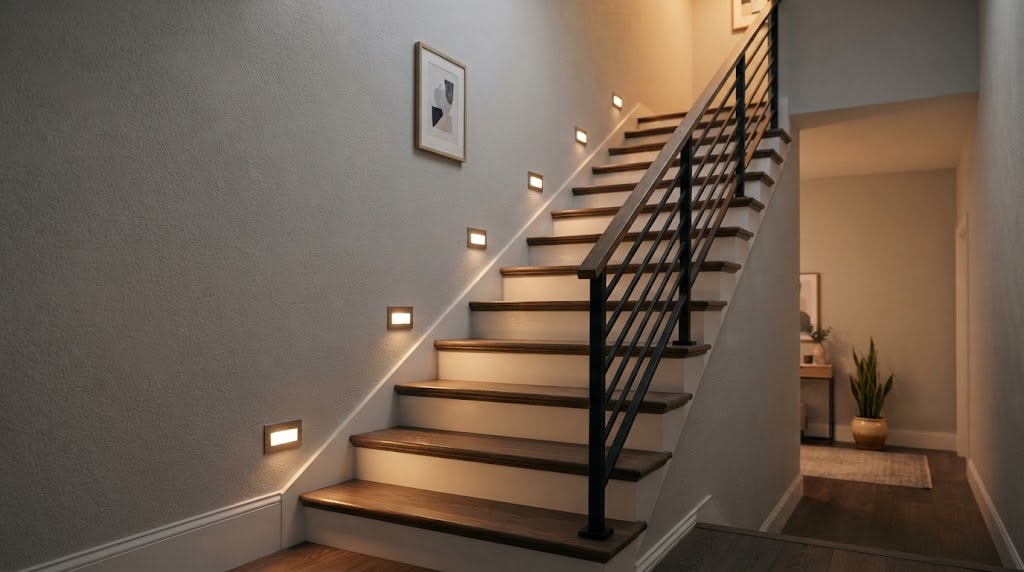
Recessed wall lights sit flush inside the stair wall. They stay hidden in the daytime and throw a soft wash onto the treads at night. The clean, seamless look suits modern interiors.
They need wiring and wall openings during the build. Retrofitting them later gets costly, so decide on them at the design stage.
LED Strip Lights
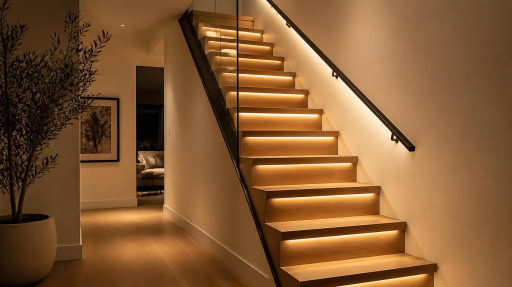
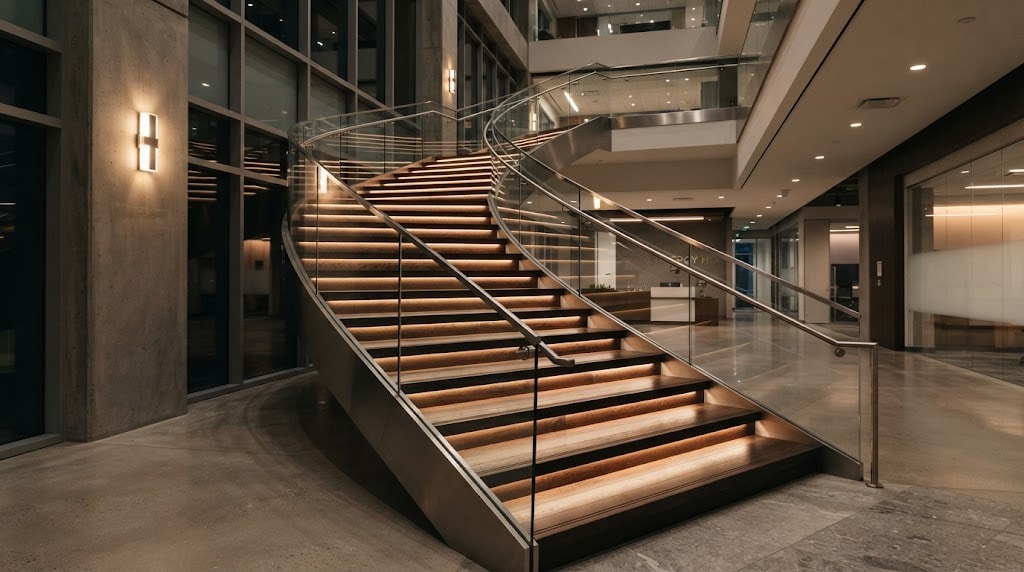
LED strips tuck under the tread nose or along the wall. They give you a continuous glow that traces the full run of the stairs. Designers reach for them when they want a floating, high-end effect.
Strips also support dimming, color change, and motion sensors. Choose a strip with a solid IP rating and an aluminum channel, or heat and dust will cut its life short.
Wall Sconces
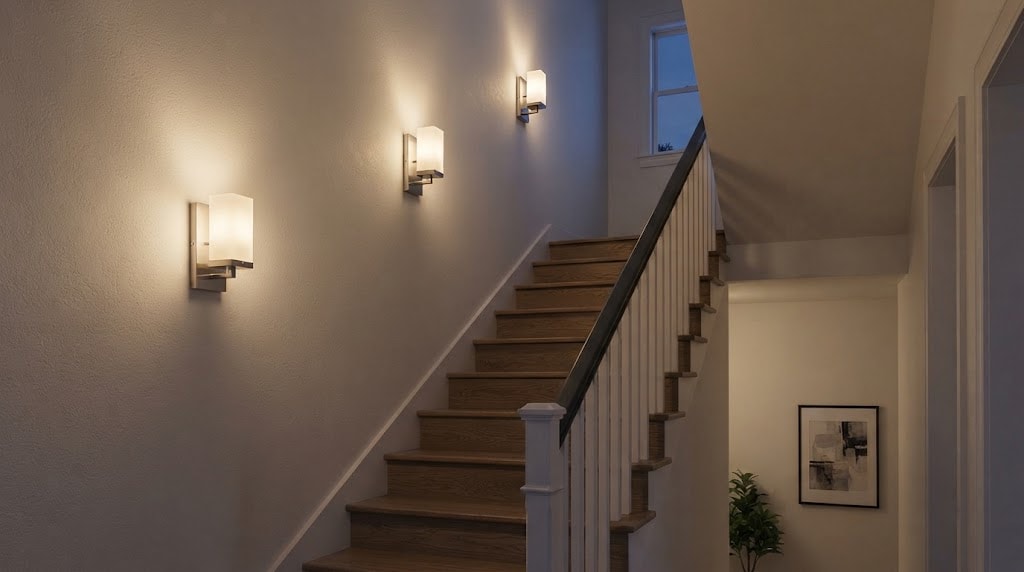
Sconces mount on the wall beside the stairs, usually at eye level or above. They light the space as a whole rather than each single step. This works well when you want both ambiance and general visibility.
They shine in wide staircases and grand entryways where a decorative touch adds value. Space them evenly and aim for a warm, glare-free output.
Handrail / Railing Lights
Railing lights build an LED source into or under the handrail. They guide the hand and the eye along the same path people already follow. This makes them one of the most intuitive safety options.
They suit long staircases, outdoor steps, and accessibility projects. Use sealed, weather-rated versions when the rail sits outdoors.
Pendant & Chandelier Lights
Pendants and chandeliers hang from a high ceiling above an open stairwell. They act as a centerpiece and fill a tall void with light. Hotels, lobbies, and large homes use them to make a statement.
These fixtures cover mood and scale far better than task lighting. Confirm the ceiling height and mounting load, since a heavy fixture over a stairway raises real safety concerns.
Spotlights & Downlights
Spotlights and downlights mount on the ceiling and aim light down onto the stairs. They deliver focused, adjustable beams that highlight treads or artwork nearby. This gives you strong control over where the light lands.
They pair well with other fixtures as a layered lighting setup. Angle them carefully so the beam avoids shining into people’s eyes.
Motion Sensor Lights
Motion sensor lights switch on automatically when someone approaches. They save energy and add safety on stairs people use at night. Many step lights and strips now offer a built-in sensor option.
They remove the need to find a switch in the dark. Check the sensor range and delay time so the light stays on long enough to clear the stairs.
How to Choose the Right Staircase Light Fixtures
Now that you know the types, the real decision comes down to a few core specs. Nail these key details, and any fixture type will perform. Miss them, and even a premium light will fail or feel uncomfortable.
Consider Your Staircase Type
Your staircase shape decides which fixtures work and which ones fight the layout.
A straight indoor run takes evenly spaced step lights with no trouble, while a curved or spiral stair often suits continuous strip or railing lighting that follows the bend. Open stairwells with tall ceilings open the door to pendants, whereas narrow enclosed stairs do better with recessed or low-profile fixtures that stay out of the way.
Map the fixture type to the physical stairway before you look at anything else.
Brightness and Lumens
Stairs need enough light to show each edge clearly without blinding anyone. On step and recessed fixtures, a low and even output beats raw power, so around 25 to 100 lumens per step covers most indoor stairs. Match the level to the setting: a dim accent glow suits a bedroom stairway, while a busy commercial staircase needs brighter, more uniform coverage across the full run.
Color Temperature
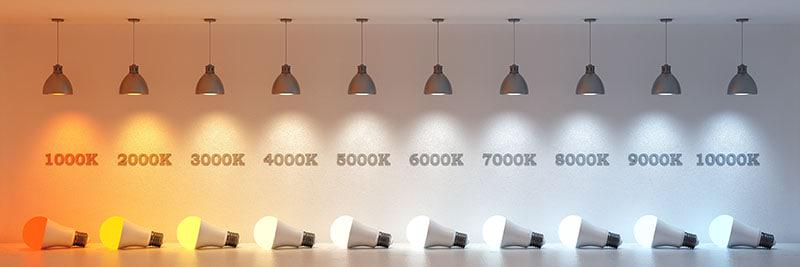
Color temperature sets both the mood and the visibility of your stairs. Warm white at 2700K to 3000K feels cozy and reads well in homes, while neutral white at 3500K to 4000K looks crisper and suits offices, hotels, and outdoor steps. Whatever range you pick, keep it consistent across every fixture on the same staircase, because mixing warm and cool sources looks off and tires the eye.
IP Rating for Indoor vs. Outdoor
The IP rating tells you how well a fixture resists dust and water, and it matters far more than most buyers expect. Indoor dry stairs can use a lower rating, but outdoor steps, covered patios, and damp areas need at least IP65 to survive rain and washdowns over the long term.
This is where projects most often go wrong. In our experience, buyers lock in the light output early and only check the location rating once the fixtures reach the site, and an indoor-rated unit placed outdoors can fail within a single season.
Confirming the exact install spot for each fixture, and asking the manufacturer for the IP test documentation on any outdoor unit, quietly prevents the most common return in staircase lighting work.
Installation Method
How a fixture mounts shapes both your cost and your timeline. Recessed and in-wall lights need openings and wiring during construction, so retrofitting them later gets expensive and messy. Surface-mounted step lights, plug-in strips, and railing fixtures give you far more flexibility on an existing staircase.
Decide early whether you are building new or upgrading, since that single choice narrows your realistic options fast.
Energy Efficiency & LED Choice
LED is the clear default for stairs, and the reasons stack up quickly. Good LED fixtures draw less power, run cooler near a walking surface, and last for years without frequent replacement in hard-to-reach spots. Look at the lumens-per-watt figure and the rated lifespan rather than the wattage alone, and check that the driver and any dimmer are rated to work together. For a benchmark on efficiency claims, programs like ENERGY STAR set useful reference standards.
Safety and Compliance
Staircase lighting is a safety system, not just a design feature. Many building codes require illuminated stairs in commercial and shared residential buildings, since uneven or dark steps are a leading cause of falls. Standards from the International Code Council cover stair illumination in many regions, so review your local building and electrical codes before you finalize a layout.
The bigger on-site risk is uneven light rather than too little of it. Bright pools with dark gaps between them create exactly the shadow that trips people, because the eye adjusts slowly from one to the next. We recommend walking the finished stairs at night before sign-off, and if any tread edge disappears into shadow, adding a fixture or tightening the spacing before the project closes.
Budget and Bulk Cost
Price per fixture only tells part of the story on a staircase. A cheap unit that fails early costs more once you add labor, access, and replacement, especially on recessed or hard-to-reach positions. For larger residential or commercial jobs, buying in volume brings the unit cost down and keeps the color temperature and finish consistent across every batch. Weigh the total installed cost and the expected lifespan together, not just the sticker price.
Common Mistakes to Avoid When Choosing Staircase Lights
Most staircase lighting problems show up a year or two after install, not on day one. You can dodge nearly all of them by knowing what tends to fail and why. Here are the issues we see most often in service and on project sites, along with the simple choices that prevent them.
Lumen Depreciation and Color Drift
Cheap LED chips and poor heat management cause fixtures to fade and shift color over time, so a run that looked uniform on install starts to show warm and cool patches. Sticking with quality light sources, keeping the drive current in check, and choosing fixtures with proper heat dissipation keeps the output steady for years.
Driver Failure
This is one of the most common reasons a fixture dies early. Weak drivers struggle in hot spaces and give out faster when they run at full load all day, so the light quits long before the LED itself would. Picking a reliable driver and leaving roughly 20% power headroom takes the strain off the system and adds real life to the fixture.
Water Ingress on Outdoor Projects
Rain finds its way into fixtures rated for indoor use, and it also creeps through connectors that were never sealed properly. Matching the IP rating to the environment, which means IP65 or higher outdoors, and sealing every connector with care keeps moisture out and prevents the corrosion that follows.
Uneven Brightness on Long Strip Runs
Voltage drops as it travels down a long strip, so the far end looks dimmer than the start even with identical LEDs. Running a 24V system, planning the supply distance, and feeding power to segments along the run keeps the light consistent from the first step to the last.
Installation tips for a well-lit staircase
Good fixtures still fail if the install misses the basics, so a little planning up front saves rework later. Beam angle, mounting height, and viewing angle work together to decide whether your stairs look clean or glary. Aim the light across each tread rather than into people’s eyes, and set the mounting height so the beam skims the step surface and defines every edge.
Long strip runs need the same care you gave them at the spec stage. A 24V system with segmented power feeds holds the brightness even from top to bottom, so plan those feed points before you fix anything in place. Outdoors, seal every connector properly, because a single open joint lets in the water that ruins an otherwise solid install.
Run through this quick checklist before you start mounting:
- Confirm beam angle and viewing angle for each fixture position.
- Set a consistent mounting height so no tread edge falls into shadow.
- Plan segmented power feeds for any strip run over a few meters.
- Verify the 24V supply distance against the manufacturer’s limits.
- Seal all outdoor connectors and test them before final fixing.
- Walk the finished stairs at night to catch any dark gaps.
FAQ
How many lights do I need on a staircase?
It depends on the fixture type and how long your stairs run. Step and recessed lights often sit on every second or third tread to give you even coverage without over-lighting. Strip and railing lights cover the full run in one continuous piece, so you plan by length rather than by step. When in doubt, aim for consistent spacing that leaves no tread edge in shadow.
Should staircase lights stay on all night?
Not usually, since running them at full output all night wastes energy and shortens the life of the driver. Motion sensor fixtures solve this well, because they switch on when someone approaches and cut off after the stairs clear. Dimmers also help on stairs you pass often at night, giving you a low guide level instead of full brightness. Both options add safety without the constant load that ages a fixture early.
Can I add lights to an existing staircase without rewiring?
Yes, though your options narrow depending on the stairway. Surface-mounted step lights, plug-in LED strips, and battery or low-voltage railing fixtures all retrofit without opening walls. Recessed and in-wall lights are the hard case, since they need openings and wiring that get costly after the build. Decide what look you want first, then match it to a mounting method your existing stairs can actually support.
Can I get custom staircase lighting for a specific project?
Yes, and it often makes sense once a project moves beyond a standard straight run. Custom staircase lighting lets you match the length, IP rating, color temperature, and connector layout to your exact stairway rather than forcing an off-the-shelf part to fit. This matters most on curved stairs, long commercial runs, and outdoor installs where a stock fixture leaves gaps or fails early. If your project has unusual dimensions or strict spec requirements, working with a manufacturer on a tailored solution usually beats buying a compromise.
Conclusion
You now have a clear way to choose staircase light fixtures without second-guessing every spec in the catalog. Pick the fixture type that fits your stairway first, then lock in the brightness, color temperature, and IP rating that suit the location, and confirm the mounting method your project can actually support.
If you take one thing into your next project, make it this: confirm the IP rating against the exact install spot before you order, and walk the finished stairs at night before sign-off. Those two habits prevent the returns and callbacks we see most often.
Get Tailored Staircase Lighting for Your Unique Project from RC Lighting
If your project has a curved run, a long commercial staircase, or outdoor steps that need a specific IP rating and color temperature, an off-the-shelf fixture rarely fits cleanly. That is where the right lighting partner makes the difference.
RC Lighting offers a full range of LED staircase fixtures, from step lights and strips to railing and recessed units, backed by a professional R&D and production team and quality you can rely on. Our staircase lighting comes at competitive prices with the service to match, whether you need a single custom run or bulk orders with consistent color and finish across every batch. Our team can help you confirm the right IP rating, color temperature, and driver spec, and provide the test documentation your project needs.
Send us your staircase requirements for a quote, or contact our team to compare specifications and find the right fixtures for your next project.