Lumens Vs. Watts in Terms of Bulb Rating
It was common practice to look for the ‘Watts’ before buying a lighting bulb in the past. However, this practice has become obsolete as new energy-efficient bulbs entered the market that gives off the same number of lumens (or the brightness level) at a lower wattage. Let’s break down this topic further.
What is Watt?
Watt is the unit of power that measures the energy usage of the lighting fixture. In olden times, people bought lights by looking at the wattage of the bulb. The higher wattage meant higher brightness for lamps such as incandescent, fluorescent, etc.
For example, in incandescent lamps, the electricity passes throughout the filament inside the bulb to produce heat and brightness. Higher the watts, the higher the brightness level of the visible light emitted. So wattage became a measure of brightness.
As the technology improved, these lighting bulbs were replaced by more efficient and energy-saving lighting fixtures such as LEDs and CFLs. Their working principle is different from older lamps. Such lamps gave off a high brightness output at a fraction of wattage. So, the term ‘lumens’ came into being, and wattage ratings became unpopular.
What are Lumens?
Lumens are the measurement of the output light brightness of lighting bulbs. A higher number of lumens will mean a higher brightness level and vice versa. It is a more accurate measuring unit than wattage and tells how the lighting fixture performs regardless of the electricity source.
Lumens are now the prevalent measurement unit to judge the brightness of a light bulb. An easy example of the difference between different lighting technologies’ energy-saving aspects is that an incandescent bulb produces 12.5–17.5 per watt. In contrast, an LED produces 100 lumens per watt. This drastic difference has changed the course of energy consumption debates.
How to Convert Lumens to Watts?
While choosing a bulb for your project, you must select the correct number of lumens for the area. Sometimes you will be required to find the wattage corresponding to the required lumens of a particular lighting fixture, and this is where you need to convert lumens to watts.
Lumen to Watt Conversion Formula
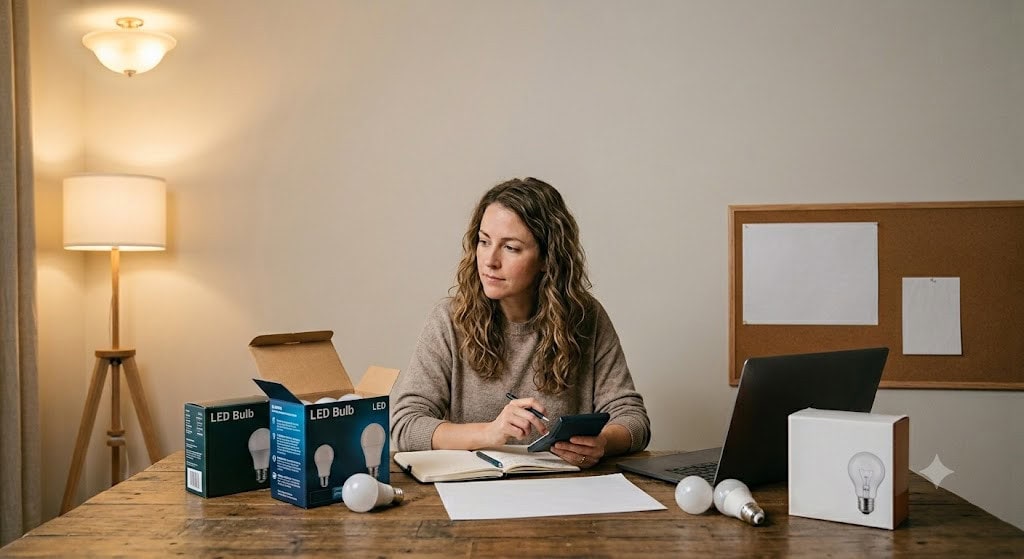
The easy formula to calculate watts out of the lumens mentioned on the bulb label is.
Watts= Lumen/Lumen per watt
To use this formula, look at the “Lighting Facts” label on your bulb package. First, find the total lumen output. Next, find the luminous efficacy, which is the “lumens per watt” (lm/W) ratio. Divide the total lumens by this efficiency rating. The result will tell you exactly how much power the bulb draws.
What if the label does not list the luminous efficacy? You can still estimate the conversion using industry averages. Many standard LED bulbs provide around 90 lm/W. High-end commercial fixtures can deliver 120 lm/W or higher.
If a fixture only marks a brightness of 900 lumens, divide 900 by 90. You can estimate that it uses about 10 watts of power. If a traditional bulb only marks 60 watts, multiply 60 by a typical incandescent rating of 12 lm/W. This tells you that you need an LED with at least 720 lumens to replace it.
For large-scale projects, always check the manufacturer’s spec sheet. Real-world efficiency can change based on the driver quality and operating temperature. In commercial fixtures, a high-quality driver ensures the actual wattage matches your math.
Using this formula helps you calculate total power loads accurately before buying your lighting fixtures.
What is Luminous Efficacy?
Luminous efficacy is lumens divided by watts. This term refers to the efficiency by which a bulb converts watts to lumens. The older technology had a very low luminous efficacy. For example, incandescent bulbs had the efficacy of only 15 lumens per watt. Nowadays, you can find LEDs offering 140 lumens per watt. This is a massive jump in the energy-saving aspect of lights.
Comparison of different bulb technologies
To switch to more energy-efficient LEDs and CFLs, you must find the same lumens as your old incandescent bulbs in the new LED/CFL bulbs. The table below shows a lumen-to-watt comparison for LEDs, Halogens, CFLs, and incandescent. There is a drastic difference between traditional incandescent bulbs and LEDs’ energy usage under the same lumen output range.
| Type of bulb | 200-300 lumens | 300-500 lumens | 500-700 lumens | 700-1000 lumens | 1000-1250 lumens | 1250-2000 lumens |
| Incandescent | 25-30 watts | 40 watts | 60 watts | 75 watts | 120 watts | 150-250 watts |
| Halogen | 18-25 watts | 35 watts | 50 watts | 65 watts | 100 watts | 125 watts |
| CFL | 5-6 watts | 8 watts | 11 watts | 15 watts | 20 watts | 20-33 watts |
| LED | 2-4 watts | 3-5 watts | 5-7 watts | 8-10 watts | 10-13 watts | 13-20 watts |
Luminous Efficacy: Beyond Watts to Real Light Efficiency
Watts are no longer helpful in determining the brightness, but they are helpful in measuring the bulb’s luminous efficacy.
You should note that luminous efficacy varies from manufacturer to manufacturer. Always check the label of the bulb to have a better idea regarding its efficacy. The table below indicates the difference in the efficacies of various technologies. LEDs have taken the top spot with the efficiency of 80-100 Lm/W, and rightly so. Switching to all LED lights can easily cut ~50% of your energy usage and, thus, the electricity bill.
| Light type | Typical luminous efficacy (lumens/watt) |
| Tungsten incandescent light bulb | 12.5-17.5 lm/W |
| Halogen lamp | 16-24 lm/W |
| Fluorescent lamp | 45-75 lm/W |
| LED lamp | 80-100 lm/W |
| Metal halide lamp | 75-100 lm/W |
| High-pressure sodium vapor lamp | 85-150 lm/W |
| Low-pressure sodium vapor lamp | 100-200 lm/W |
| Mercury vapor lamp | 35-65 lm/W |
How To Choose The Best Light Bulb?
This section consists of essential steps and tricks to help you buy the right bulb that gives off your project’s required brightness.
Look for lumens instead of watts.
Find out the total lumens that are needed to illuminate your project thoroughly. If you want to replace old incandescent and halogen bulbs, match the lumens with the new bulbs on the market. Wattage has no significance while looking for the bulbs as the latest technologies use much fewer watts than old lighting bulbs.
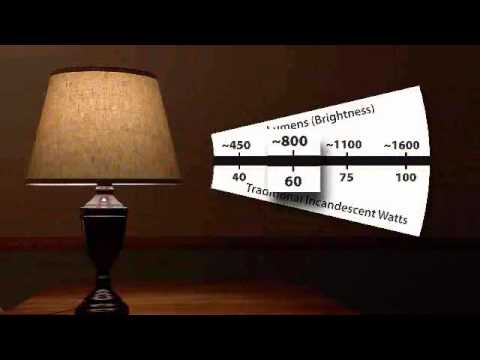
If you want an equivalent of a 40W incandescent bulb, look for the LED bulb with 600 lumens output. Similarly, for a 150W bulb, an LED with 3000 Lumens is your best option.
This criterion is for smaller-scale lighting applications such as indoor lighting. However, many other factors come into play in more extensive and scaled-up projects to find equivalent LED lumens. These include optics, burnouts, ballast factors, ambient temperatures, lumen depreciation, etc.
Useful Lumens: For instance, in commercial and industrial applications such as streetlights, 250 watts HID lamps give off ~14000 lumens in all directions. You don’t need the light and energy wasted in all directions and we are now considering replacing these fixtures with inherently directional LEDs. For this purpose, you will not look for 14000 lumens LED equivalent; instead, 7000-8000 lumens will suffice as the light is directed toward the ground.
The ‘useful lumen’ rating considers only the directional light output and is usually less than the total lumen output. It provides a fairer overview of lumens for directional fixtures.
Reading a light bulb label.
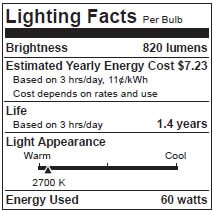
The new technology and energy-saving bulb labels discuss lumens, watts, kelvins, etc. As the new technology bulbs slowly removed the old energy-consuming bulbs from the markets, the labels mention lumens and brightness more clearly than wattages.
It is essential to read the lighting facts. The label covers the brightness measured in lumens, the estimated yearly cost that gives you an idea of the cost, the bulb’s life, the color temperature measured in Kelvins, and the bulb’s wattage.
Some labels contain an ‘equivalent watt’ section that refers to an incandescent bulb. For instance, if the 1600 lumens LED is equivalent to a 100W incandescent bulb. However, a high-performance LED uses only 20W to give off this brightness level.
Color rendering index (CRI)
CRI is the clarity and distinctiveness with which the color of an object is shown under the light coming from the light bulb. It is primarily considered when choosing CFLs and fluorescents. A high CRI of about 80 is desirable for indoor applications.
This indicator is especially important when selecting CFL and fluorescent lights, as these traditional lighting types tend to distort colors more noticeably. CRI values range from 0 to 100, with a higher score standing for better color performance.
For most indoor spaces such as homes, offices and living areas, a CRI rating of 80 or above is ideal. It ensures objects show their original hues, creating a comfortable and visually pleasant lighting environment for daily use.
Color temperature
In the lighting facts of the bulbs, you can see a Kelvin color temperature scale. For a warmer outcome, look for bulbs in the range of 2700K-3000K. The best LED color temperature for replacing incandescent bulbs is in the range of warm colors. Cool and daylight colors correspond to 3000K-5000K, which is best for the kitchen and brighter rooms. Lastly, the range of 5000K-6500K is best suited for tasking applications and spaces requiring bright light.
Color temperature can sometimes distort the actual brightness level of the bulb. Two bulbs with varying color temperatures will yield different brightness results for the same lumens. Warmer-colored lights appear less bright than cool and daylight color temperatures. Adjust the color temperature to suit your project.
Why Should You Switch To LED Lights?
The comparison above shows that a right led bulb uses ~80% fewer watts than incandescent and halogen bulbs to produce the same brightness. Switching can save your cost drastically. LEDs require lesser maintenance and are long-lasting, which further reduces the bills. Further added functionalities in LED fixtures such as solar panels, motion sensors, and smart technology can reduce the energy to greater extents.
FAQ
How many lumens do commercial spaces require per square foot?
Commercial spaces use foot-candles to measure required light levels, which translates directly to lumens per square foot based on the industry. For instance, a standard office or retail showroom typically requires 30 to 50 lumens per square foot, while high-precision manufacturing zones or healthcare examination rooms often demand 100 lumens or more. Calculating this correctly ensures your project meets occupational safety standards while optimizing corporate energy efficiency.
What is the financial ROI for a business switching from HID to LED lighting?
Switching a commercial facility to LED technology typically yields a full return on investment (ROI) within 12 to 24 months. Because LEDs consume up to 70% less electricity and boast a lifespan of over 50,000 hours, businesses experience immediate drops in utility bills and near-zero maintenance costs. Additionally, many regions offer government tax incentives or utility rebates for commercial energy upgrades, significantly accelerating your payback period.
How do I choose the correct beam angle for commercial high-bay fixtures?
Selecting the right beam angle depends entirely on your facility’s ceiling height and aisle configuration. Narrow beam angles (around 60°) are ideal for high ceilings above 20 feet or narrow warehouse aisles, as they focus the light directly onto the floor or shelving without wasting output. Conversely, wider beam angles (90° to 120°) are better suited for open-plan offices, low-ceiling retail layouts, and manufacturing floors to ensure uniform coverage.
Can bulk commercial lighting orders be custom-engineered and tailored for OEM or project specifications?
Yes, high-end commercial distributors and developers can source fully customized architectural lighting products engineered to match exact technical specifications, design layouts, or branding profiles. As an ISO 9001 approved LED lighting manufacturer in China, RC Lighting offers extensive manufacturing flexibility to adjust fixture styles, optical beam angles, color rendering indexes (CRI), and exterior finishes to align with your product catalog or site blueprint. Our professional research and production team guarantees high-quality standards across every bulk order, making it our pleasure to provide your business with excellent products at highly competitive wholesale prices and with exceptional service today!estimate.
Conclusion
The betterment in lighting technology has brought about significant changes in the bulbs’ energy efficiencies and cost-effectiveness. RC Lighting is a professional LED facade and landscape lighting manufacturer in China. Contact us for your projects now!