Good retail store lighting does more than let shoppers see your products. It sets mood, directs foot traffic, and subtly shapes buying decisions.
Even so, many shops still use flat, uniform lighting. This makes high-end goods look unremarkable.
We have supplied lighting to boutiques, showrooms and retail chains for years. We have watched how the right beam angle or color temperature turns an average display into one that drives instant purchases.
This guide shares practical retail store lighting ideas built for active sales floors. We cover suitable fixtures, layouts and key specs to make every product display stand out. Let’s dive in.
How to Plan Retail Store Lighting
Strong retail lighting comes from strategy, not picking random fixtures. Answer three questions before placing any orders:
What do you sell? How will customers move through your space? Which products need to capture attention first?
A jewelry counter and a hardware aisle demand entirely different lighting. Jewelry needs sharp, shimmering accent lighting. Grocery aisles require bright, even illumination.
Lock in your priorities upfront: overall brightness, desired atmosphere, and your hero zones where you want eyes to focus. Once these goals are set, selecting fixtures becomes far simpler.
Common Retail Lighting Fixtures
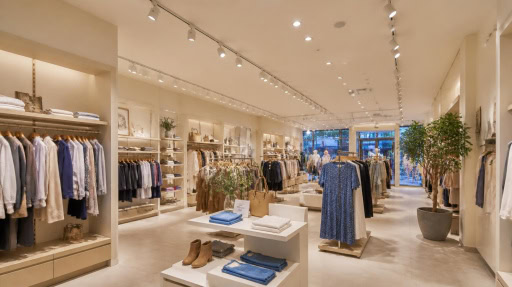
Most retail spaces combine three fixture families, each with a different job. Understanding them helps you mix and match instead of over-relying on one type.
Ambient Fixtures
Ambient fixtures provide your baseline light. The general illumination that lets customers move and shop comfortably.
Recessed downlights give clean, even coverage with minimal ceiling clutter. Flat panels suit lower ceilings, backrooms, and modern interiors. High-bay fixtures handle tall spaces like warehouses, big-box stores, and showrooms with 5m+ ceilings.
Think of ambient light as the canvas. It should be comfortable and consistent — not the star of the show.
Accent Fixtures
Accent fixtures create contrast and drama. This is where displays start to sell.
Track heads are the most flexible. You can reposition and re-aim them whenever merchandise changes. Spotlights deliver focused punch on a single feature. Pendant cylinders add tight, directional beams with a clean architectural look.
Accent lighting is what makes a product pop off the shelf. Without it, everything blends together.
Decorative Fixtures
Decorative fixtures light the space and become part of the design.
Pendants work beautifully over checkout counters, tables, and feature displays. Chandeliers add personality in boutiques, salons, and high-end retail.
Use these to reinforce your brand identity. Just remember they’re mood-setters — you’ll still need ambient and accent layers to do the heavy lifting.
Key Specs to Check Before You Buy
Once you know which fixtures you need, the specs decide whether they actually perform. Four numbers matter most, and getting them right is what makes your displays look the way you intended.
Color Temperature
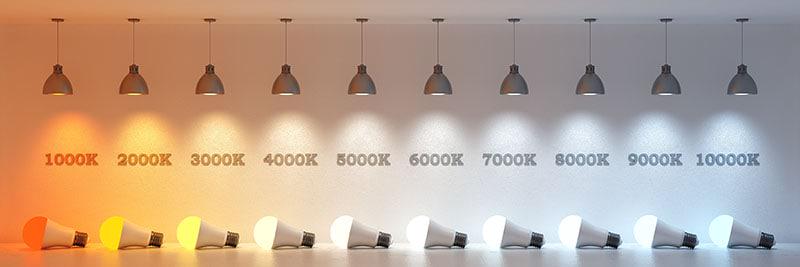
Color temperature sets the mood, and it’s measured in Kelvin (K).
3000K (warm white) feels cozy and inviting, so it works well in fashion boutiques, jewelry stores, bakeries, and hospitality spaces.
4000K (neutral white) is clean and balanced, which makes it a safe all-rounder for most general retail.
5000K (cool white) looks crisp and almost clinical, so it’s best for supermarkets, hardware stores, and electronics where clarity matters more than warmth.
Here’s a simple rule to remember. Warmer light flatters people and premium goods, while cooler light emphasizes detail and freshness. Just keep your color temperature consistent within each zone, because mixing 3000K and 5000K in the same area looks like a mistake rather than a design choice.
CRI
Color Rendering Index (CRI, Ra) quantifies a light source’s ability to render colors faithfully compared to a reference illuminant, ranging from 0 to 100.
We recommend CRI 90+ for retail accent displays. Common CRI 80 commercial LEDs often deliver weak saturated red performance and flat skin tones, creating problems for apparel, beauty counters and fresh produce. Important limitation: standard CRI only averages eight muted color samples and does not test deep saturated red (R9). Some CRI 90 fixtures still produce dull reds if R9 is low.
For zones where color perception impacts purchases, high-CRI lighting paired with good R9 is essential. This consistency minimizes color mismatch complaints and returns, separating vibrant market-ready goods from dull, uninviting merchandise. General circulation aisles without featured displays can operate reliably on quality CRI 80 lighting to balance cost.
Beam Angle
Beam angle controls how wide or tight the light spreads, and it’s the spec that shapes contrast and drama on your displays.
A wide beam covers broad areas evenly. A narrow beam concentrates light into a focused pool that makes a product stand out.
In our experience supplying retail projects, beam angle is the spec buyers overlook most. Teams compare wattage, color temperature, and CRI carefully, then leave beam angle to chance — and that’s a costly gap. Go too wide and the light floods everything with no focus or depth. Go too narrow and you get harsh spotlights with abrupt bright-to-dark edges that look cheap.
As a working guide, we recommend roughly 24°–36° for apparel, 15°–24° for jewelry and watches, and 40°–60° for supermarket shelving. We’ve watched window displays fall flat under a 60° flood, and seen accessory stores turn patchy — one spot glaring, the next in shadow — from misusing a 15° beam.
Lumens & Dimming
Lumens measure total light output — the actual brightness you get, regardless of wattage.
Don’t chase watts; chase lumens and efficacy (lumens per watt). A modern LED can match an old halogen at a fraction of the power. Plan brightness by zone: bright for hero displays, softer for lounge or fitting areas.
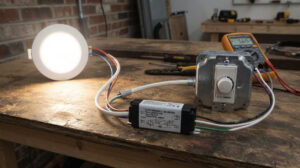
Add dimming where you can. It lets you fine-tune ambiance, adapt to daylight through the day, and cut energy use during quiet hours. Just confirm your fixtures and dimmers are compatible — mismatched dimming causes flicker and buzzing.
The Three Layers of Retail Lighting
Good retail lighting is never just one type of light doing all the work. It’s three layers working together, and each one has a different job. When you get the mix right, the store feels intentional and easy to shop. When one layer is missing, something always feels off even if customers can’t explain why.
Let’s break down what each layer does.
Ambient Lighting
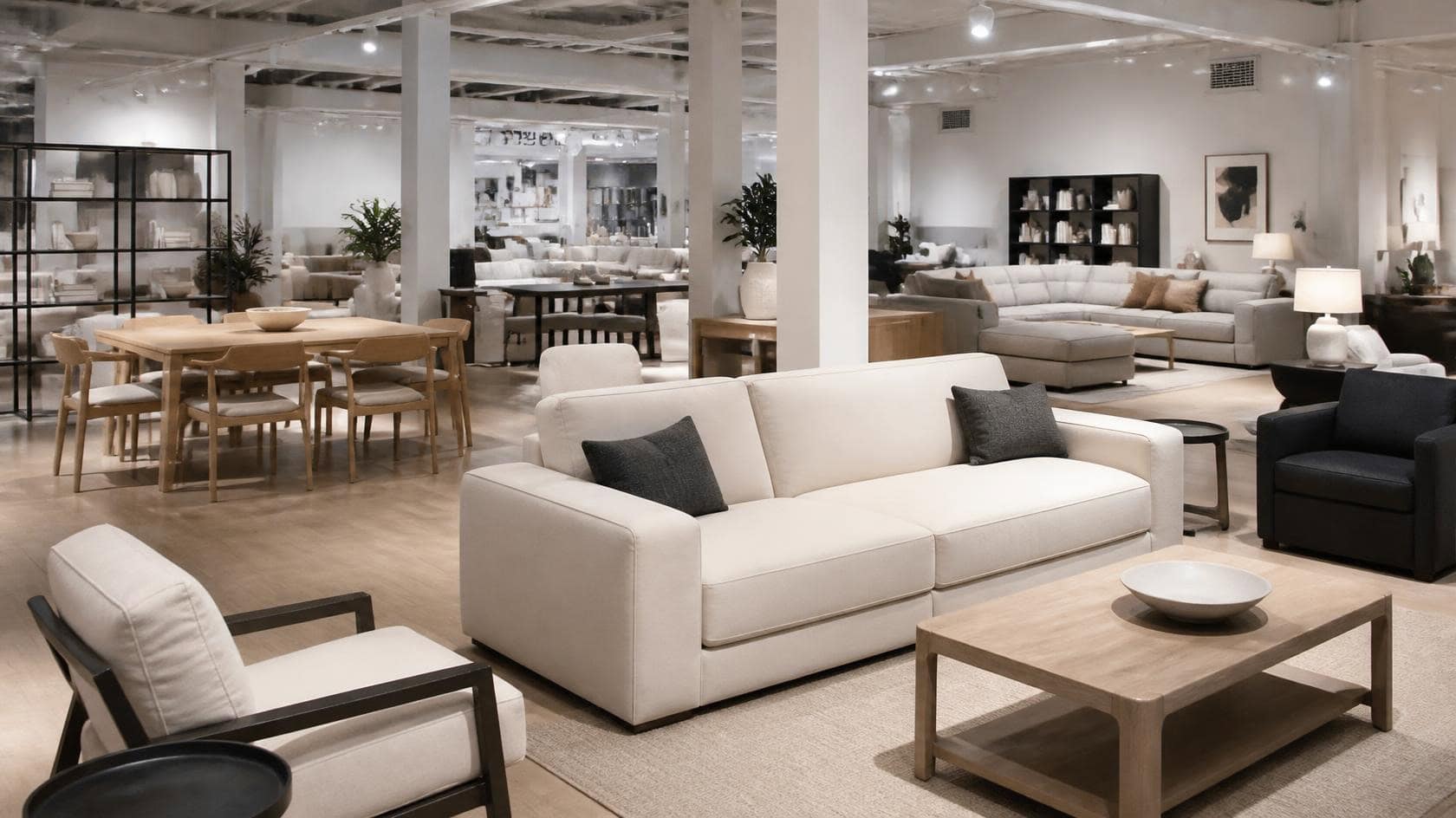
Ambient lighting is your base layer, the general light that fills the whole space.
It’s what lets customers move around safely, see the products, and feel comfortable. Think of it as the foundation everything else sits on. Downlights, flat panels, and high bay fixtures usually handle this job depending on your ceiling height.
The goal here is even, comfortable coverage. You don’t want bright patches and dark corners in your general lighting, because uneven ambient light makes a store feel cheap and disorienting. Get this layer consistent first, then build the more exciting layers on top.
Accent Lighting
Accent lighting is where selling happens.
This layer draws the eye to specific products, displays, and focal points. It’s the difference between a shelf that blends in and a shelf that makes someone stop and look. Track heads, spotlights, and cylinders are the usual tools, and they let you aim light exactly where you want attention.
The key is contrast. Accent light only works when it’s noticeably brighter than the ambient layer around it. That 3:1 ratio we mentioned earlier is a good starting point, and it’s what turns a flat, evenly lit room into a space with focus and drama.
Task Lighting
Task lighting supports specific activities where people need to see clearly.
The most obvious spots are the checkout counter, the fitting room, and any area where staff handle detailed work. Here the priority is function over mood. You want enough brightness and high CRI so cash handling, product inspection, and trying on clothes all feel comfortable and accurate.
It’s easy to overlook this layer because it isn’t glamorous, but customers notice it fast. A dim fitting room or a shadowy checkout leaves a bad final impression, and that’s the last thing they remember before they leave.
Retail Store Lighting Ideas
Now that you know the fixtures, specs, and layers, here’s how to put them to work. These six ideas cover the areas that matter most in a real store, and each one includes the fixture type and specs we’d actually recommend, so you can move from concept to a real purchase list.
Idea 1: Track Lighting
If you only invest in one flexible lighting system, make it track lighting.
Track systems let you add, move, and re angle heads whenever your merchandising shifts with seasons, promotions, and new arrivals. A fixed spotlight locks you into one layout, but a track follows the products. For most stores we’d put adjustable LED heads on a three circuit track, somewhere around 20W to 35W each, with a 24 to 36 degree beam for general merchandise and CRI 90 or higher so colors stay true.
The flexibility is the real value here. Track lighting is also forgiving, since a slightly off head just twists back into place, which is why we often recommend it to stores that change displays often. Use it to accent hero products, wash a feature wall, or highlight a promotional table. One track can do several jobs at once.
Idea 2: Window Display Lighting
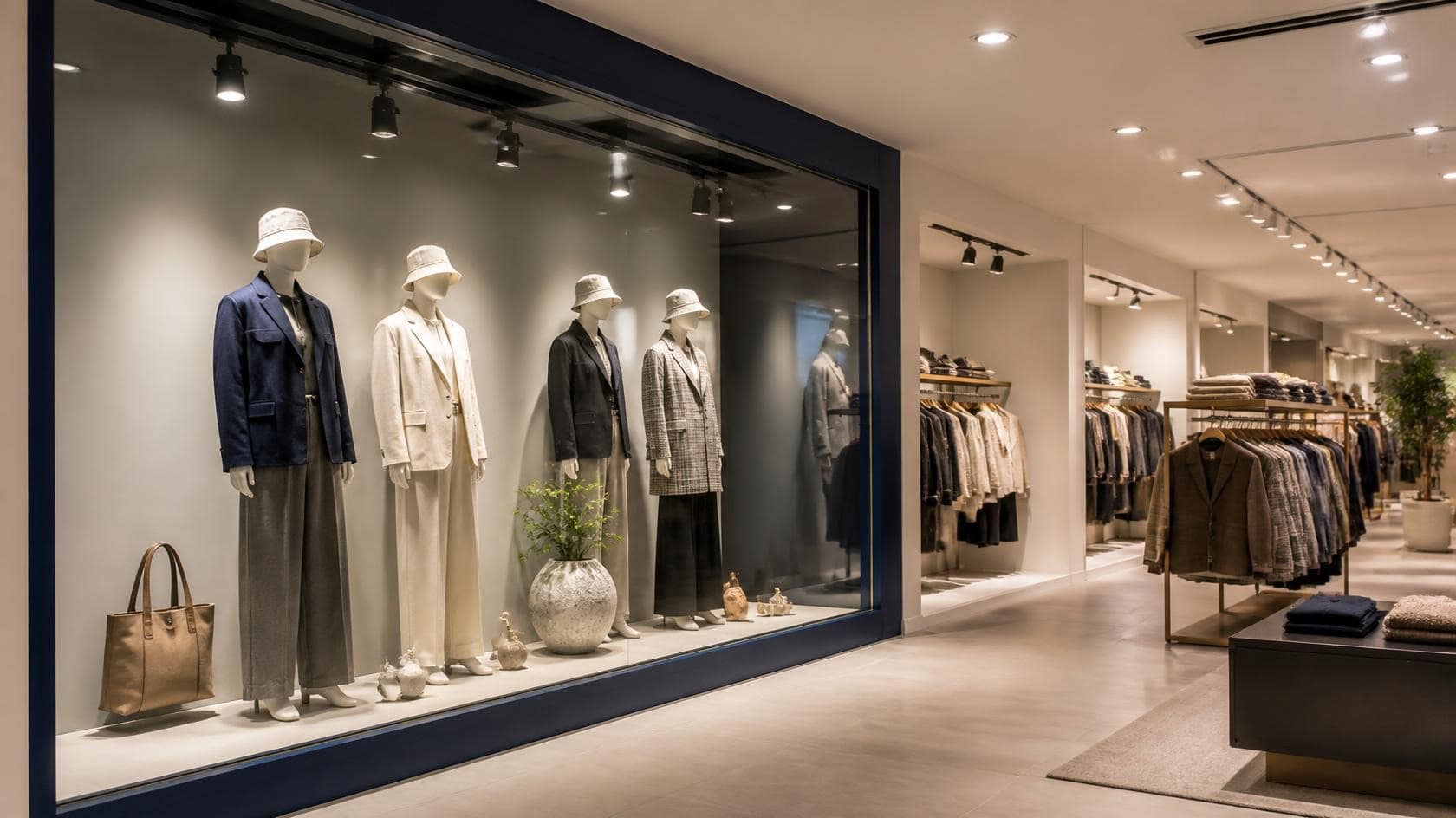
Your window is your hardest working salesperson, and it’s the area with the biggest payoff when you get the light right.
The most common mistake we see is a single fixture pointing straight at the display. That flat, head on approach causes reflections on the glass and makes everything look dull and two dimensional.
Here’s what actually works, based on window projects we’ve supplied.
In a women’s fashion boutique, the strong setup used narrow 15 to 20 degree spotlights angled at roughly 45 degrees, focused on the model from the shoulder and neck down to the waistline. Behind that, a 4000K linear strip with a wide 120 degree spread outlined the background and separated the figure from the wall.
The result was a clean 3:1 contrast between subject and background, and the display read with real depth instead of looking flat.
For window work we’d stay with narrow beam spotlights in the 15 to 24 degree range, 25W to 40W, and push to CRI 95+ since color accuracy sells the merchandise. Light from an angle, add a background layer for separation, and aim for strong contrast. Windows return the most on lighting effort, so it’s worth doing carefully.
Idea 3: Display Case Lighting
Enclosed cases need their own dedicated light, because ceiling light rarely reaches inside them well.
For jewelry, watches, cosmetics, and premium goods, small integrated LED case strips or mini spotlights reveal fine detail and true color at close range.
This is exactly where high CRI earns its keep, so we’d aim for CRI 95+, with a color temperature around 3000K to 4000K depending on the product. For jewelry in particular, tight 8 to 15 degree mini spots add the sparkle customers expect.
One thing to watch is heat. Enclosed cases trap warmth, and cheap fixtures can raise the temperature enough to affect sensitive products, so choose low heat LEDs rated for enclosed use. Your products stay safe while still looking their best.
Idea 4: Linear Aisle Lighting
Long aisles and shelving runs need even, continuous light so shoppers can scan products comfortably.
Running linear LED fixtures in unbroken rows parallel to the aisle delivers consistent coverage without the shadows and dark gaps you get from spacing downlights too far apart. A wider beam works best here, around 40 to 60 degrees, since the goal is uniform vertical light on the shelves rather than tight focal points.
For grocery and general merchandise, 4000K with CRI 80 to 90 reads clean, and choosing DLC listed fixtures can also help you qualify for utility rebates.
Well lit shelves feel fully stocked and easy to shop, which encourages people to browse the whole run.
Idea 5: Pendant & Decorative Lighting
Decorative fixtures do two jobs at once. They add light, and they add personality.
Pendants and chandeliers help define zones, mark transitions, and reinforce your brand style. A cluster over a central table or a statement piece at the entrance gives the store a signature look customers remember. For a warm, branded feel we’d usually go with 3000K LED pendants sized to the ceiling height, placed over focal points like central tables, checkouts, or entrances.
Just don’t rely on decorative pieces for real illumination. Treat them as accents that shape the atmosphere, and let your ambient and accent layers handle the actual lighting work.
Idea 6: Checkout & Fitting Room Lighting
These two areas shape the last impression a customer takes with them, so don’t cut corners here.
At the checkout, downlights or flat panels around 4000K with CRI 90+ give staff the clear, accurate light they need for cash handling and product inspection. A well lit counter also signals professionalism and keeps transactions moving.
Fitting rooms deserve extra care, because flattering light directly affects whether someone buys. Here we’d use vertical or wall mounted fixtures at roughly face height, 3000K to 3500K, and CRI 95+, positioned to light the face and body evenly rather than from directly overhead. Harsh top down fixtures cast unflattering shadows, and a customer who likes what they see in the mirror is far more likely to keep the item.
How Many Lumens Does a Retail Store Need?
There’s no single number, because a discount store and a jewelry boutique have very different needs. The useful measure is lux, which is how much light actually lands on a surface.
| Store type | Target light level |
|---|---|
| Supermarket / discount | 750 to 1,000 lux |
| General merchandise | 500 to 750 lux |
| Fashion / apparel | 500 to 800 lux, higher on displays |
| Jewelry / luxury | 300 to 500 lux base, 1,500 to 3,000 lux on displays |
| Restaurant / café retail | 150 to 300 lux |
Notice the pattern: premium stores run lower ambient light but much brighter accent light on the products. That contrast is what makes merchandise feel special, while discount stores go bright and even to signal value.
To size fixtures, multiply target lux by floor area in square meters for total lumens, then divide by lumens per fixture. Plan for about 80 percent of initial output to account for dimming and dust over time.
Retail Lighting Layout by Store Type
The same fixtures behave differently depending on what you sell.
Fashion & Apparel. Use CRI 90+ so fabric color reads true. Keep ambient moderate and let track heads accent mannequins and feature walls. Pick 3000K or 4000K to match your brand, and stay consistent.
Jewelry & Watches. Tight 8 to 15 degree, CRI 95+ mini spots inside cases create sparkle. Keep ambient low so the cases stand out, and use low heat LEDs rated for enclosed use.
Supermarkets & Grocery. Continuous 4000K linear runs at CRI 80+ give clean, even coverage. Add targeted accents on fresh food, and choose DLC listed fixtures to qualify for rebates.
Specialty & Boutique. Lean into atmosphere with warm 3000K accents, decorative pendants, and careful spotlights. Layering ambient, accent, and decorative light makes even a small shop feel premium.
FAQs
Is LED worth the higher upfront cost for retail?
Yes, in most cases. LEDs cut energy and maintenance costs, run cooler, and often qualify for DLC listed utility rebates that offset the initial price.
How often should retail lighting be replaced?
Quality LED fixtures typically last years before output drops noticeably. Plan around 80 percent of initial output when you design, so the store still hits target levels late in the fixture’s life.
Can I mix warm and cool lighting in the same store?
It is best avoided in the main sales floor, because mixed temperatures make merchandise look inconsistent. You can, however, use a slightly warmer accent on a feature area for atmosphere, as long as the ambient layer stays uniform throughout the space.
Can I get custom lighting made for my store?
Yes. If standard fixtures do not fit your layout, brand look, or display cases, custom lighting lets you specify beam angle, color temperature, CRI, housing finish, and mounting to match your exact needs. This is common for boutiques, flagship stores, and unusual case or shelf designs.
Building a Lighting Plan That Sells
Good retail lighting is not about one bright ceiling grid. It is about layering ambient, accent, and task light so customers feel comfortable, find products easily, and see merchandise the way you intend.
Start with your store type, set a target lux level, choose the right color temperature and CRI, then plan fixtures around your key displays. Get those fundamentals right and the space does much of your selling for you.
If you are planning a new store or a lighting upgrade, Rc Lighting can help you match fixtures to your store type, layout, and budget. Reach out for a layout review or request a product catalog to compare specifications side by side.