Picking the wrong LED fountain lights gets expensive fast. Maybe a unit lets in water. Maybe it corrodes in a saltwater pool, or fades to a harsh blue tint after a few months. Any of these can turn your signature water feature into a maintenance headache. Worse, it can trigger a slow drip of disappointed guest reviews.
So this guide shows you how to choose fountain lights that survive real resort conditions and still look premium at night. We’ll walk through waterproof ratings, corrosion-resistant materials, color quality, control systems, electrical safety, lifecycle cost, and how to vet a supplier you can trust.
First, let’s look at why hotels and resorts can’t treat fountain lighting like a simple backyard upgrade.
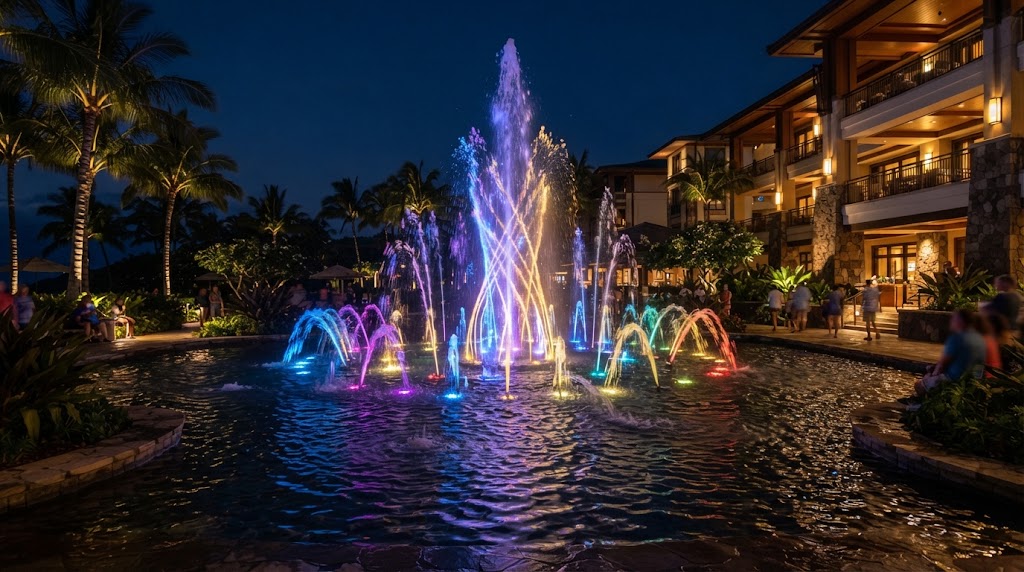
Why Resort & Hotel Water Features Have Higher Lighting Demands
A backyard fountain light runs for a few hours each night. A resort water feature works much harder than that.
Commercial LED fountain lights in a hotel often run every night, all year long. That non-stop schedule finds weak components quickly. It exposes poor sealing, cheap drivers, and flimsy connectors within months.
The environment adds more pressure. Coastal resorts fight salty air every day. Pool features sit in chlorinated water. Continuous-flow fountains keep every fitting wet and gently vibrating. Each of these conditions attacks a different weak spot in the fixture.
Then there’s the guest experience to think about. Most visitors notice a water feature the moment they arrive, or while they relax on a restaurant terrace. Good water feature lighting shapes that first impression more than owners often realize.
The cost math makes all of this worse. When one light fails, you rarely just swap a fixture. You often drain the basin, pause the whole display, and call in a diver or technician. That rework can cost many times the price of the light itself. On top of that, dark spots and flicker sneak into guest photos and online reviews, and they quietly pull down your perceived quality.
That’s exactly why hospitality projects need stricter selection criteria.
Key Factors to Consider
Waterproof Rating: Why IP68 Isn’t Always Enough
Every supplier will quote you an IP rating. IP68 sounds like the top of the scale, and technically it is, but the number alone doesn’t tell you how long the fixture survives.
An IP rating tells you two things: protection against solids (the first digit) and against water (the second). IP68 means the fixture is dust‑tight and rated for continuous submersion beyond one meter. What it does not tell you is how long that submersion protection holds under constant pressure, temperature swings, and years of runtime for underwater fountain lights.
Here’s the trap. IP68 is tested under specific lab conditions, defined by the manufacturer, for a set depth and duration. A resort fountain runs every night for years. That’s long‑term submersion, not a short test dip. Two fixtures can both carry IP68 and behave completely differently after 18 months underwater for underwater lighting applications.
What actually decides longevity is the sealing process, not the rated number.
Look at how the fixture is sealed:
- Potting (resin-filled) fills the internal cavity with resin, leaving no air gap for water to migrate into. This is the most reliable method for permanent submersion for commercial led lights.
- Silicone O-ring seals work well but depend on assembly quality and can degrade over time if the material is low grade.
- Glue-only sealing is the cheapest and the first to fail. Avoid it for commercial features.
Ask the supplier one direct question: Is the fixture potted or O-ring sealed, and what’s the tested submersion duration behind the IP68 rating? A vague answer is a red flag.
For the official IP rating definition, buyers can reference the IEC 60529 standard on degrees of protection (IP Code).
Material & Corrosion Resistance
The housing material decides whether a fountain light survives its water. For resort and hotel fountains, the choice comes down to one question: is the water fresh, or is it chlorinated or salty?
Inland freshwater fountains are the easiest case. Landscape and courtyard fountains fed by fresh water don’t corrode fixtures aggressively, so 304 stainless steel holds up well and keeps cost reasonable.
Chlorinated and coastal fountains are a different problem. Poolside fountains sit in chlorinated water, and beachfront resorts deal with constant salt spray. Both attack metal fast. Here you need 316L stainless steel. The “L” means low carbon, which resists the pitting corrosion that chlorine and salt cause. Regular 304 looks identical but pits and stains within a season or two, and on a resort centerpiece that shows quickly.
Salt spray is worth calling out separately, because it damages fixtures even above the waterline. On beachfront properties it attacks welds and fasteners first, so specify 316L with properly passivated welds.
The most common cost mistake is buying “stainless steel” without confirming the grade. Suppliers sometimes label 304, or an unmarked alloy, as marine-grade. For any pool or coastal fountain, insist on documentation confirming genuine 316L rather than taking the word “stainless” at face value.
Color Temperature & CRI: Creating a Premium Ambiance
Once a fixture survives underwater, the next question is how the light looks. This is where a resort fountain either reads as premium or cheap, and the two specs that decide it are color temperature and CRI.
Color temperature (measured in Kelvin) sets the mood:
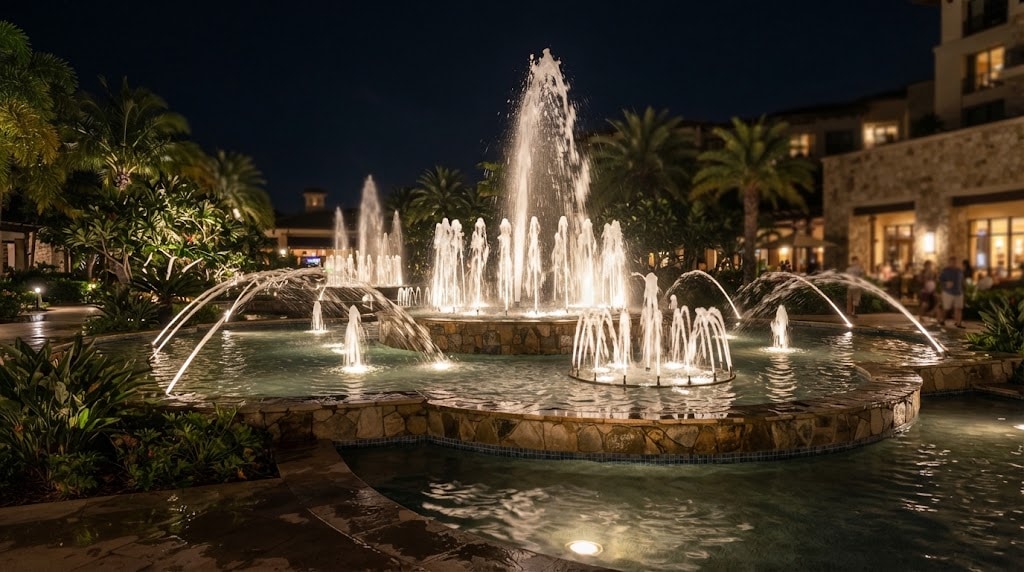
- Warm white (2700K–3000K) feels luxurious, relaxed, and inviting. It suits resort landscapes, hotel entrances, and evening ambiance.
- Cool white (5000K–6500K) looks clean and modern but can feel clinical or harsh on water at night.
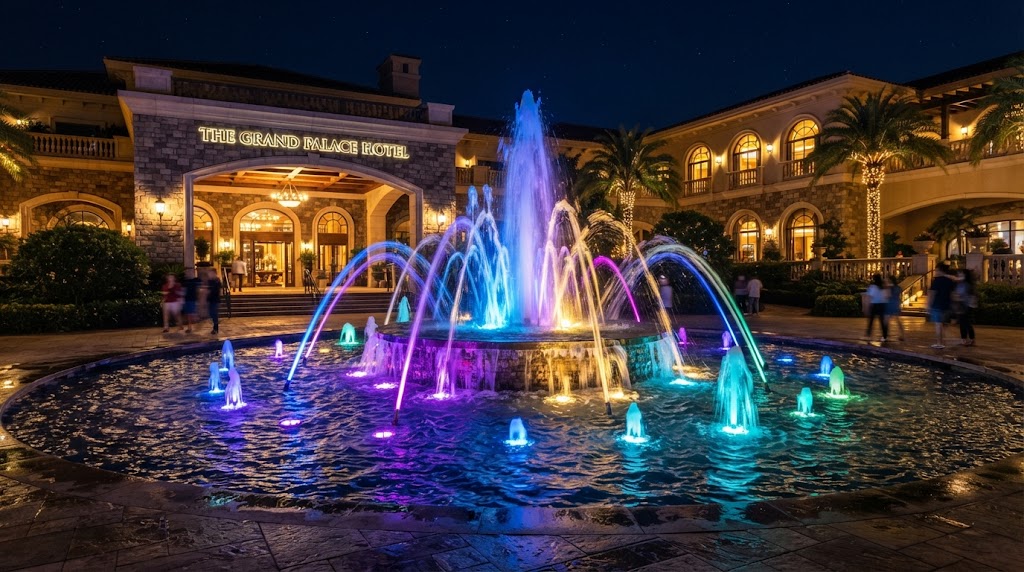
- RGB / colored is great for events and displays, but a harsh bluish tint is the most common look that reads as “cheap.”
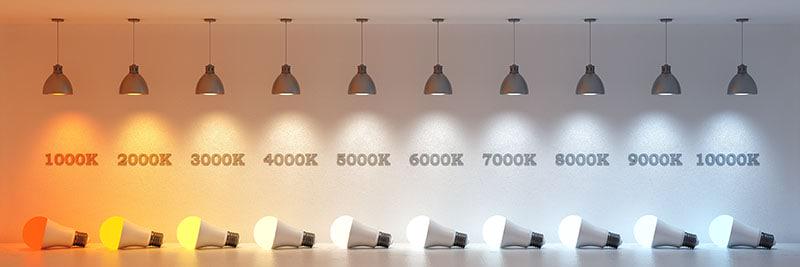
For a premium feel, most luxury properties lean warm, or use tunable/RGBW so staff can shift mood for events versus normal nights.
CRI (Color Rendering Index) measures how accurately the light shows the true colors of surroundings, on a scale to 100.
- CRI 80+ is acceptable baseline.
- CRI 90+ makes water, landscaping, and architecture look rich and true. This is what separates premium installations.
Low-CRI light makes even beautiful stonework and planting look flat and washed out. On a resort water feature, that undercuts the whole investment.
The combination matters. Warm color temperature plus high CRI looks premium. Cool, low-CRI, bluish light is the classic failure, technically bright, but cheap-looking and unflattering.
Control Systems: RGB, RGBW & DMX Options
How you plan to control the lights should be decided before you buy, not after. The control type shapes the wiring, the fixture choice, and what the fountain can do at night.
There are three practical levels for resort and hotel fountains.
Static single-color is the simplest. One fixed color, usually warm white, that turns on at dusk. It’s reliable, low-cost, and low-maintenance. For a quiet garden fountain or an understated entrance feature, this is often all you need.
RGB / RGBW lets you change colors and set scenes. RGBW adds a dedicated white channel, so you get both rich colors and a clean white, rather than a muddy white mixed from red, green, and blue. For most resort fountains that want flexibility, RGBW is the sweet spot.
DMX control is the professional standard for choreographed shows. It addresses each fixture individually, so you can run synchronized color sequences, chases, and effects across the whole fountain. Hotels running nightly water shows, or features timed to music, need DMX.
A few practical notes for buyers:
- Match the controller channel count to your fixture count. Running out of addresses mid-project is a common and avoidable delay.
- If there’s any chance of upgrading to shows later, buy DMX-ready fixtures now. Retrofitting control wiring into an installed fountain is expensive.
- Confirm the control protocol matches your existing building or fountain management system before ordering.
Voltage & Electrical Safety in Water Environments
Safety is the top priority for underwater lighting, and this section takes precedence over cost considerations. Combining electricity and water creates genuine hazard risks, so compliance with relevant safety standards is non‑negotiable.
Prioritize low‑voltage lighting fixtures. Trusted underwater fountain lights operate on low‑voltage DC power, most commonly 12 V or 24 V, rather than mains voltage. Low‑voltage design drastically lowers the likelihood of hazardous electric shock within and around water features. Be wary of any supplier recommending mains‑voltage fixtures for submerged fountain installations — this is a major warning sign.
Select properly rated transformers and protective circuitry. Low‑voltage luminaires require matched transformers or drivers, and the circuit must be fitted with ground‑fault protection (GFCI for North America, RCD for other regions). These devices immediately cut power when an electrical fault occurs. For public‑access fountains at resorts and hotels, ground‑fault protection is not an optional upgrade; it is a fundamental safety mandate.
Adhere to local electrical codes. Regulations governing pools, fountains and water features differ across countries and regions. A certified electrical professional must verify that the full installation complies with local codes, as the property owner bears legal liability for public water‑feature safety.
Avoid transformer undersizing and excessive cable runs that ignore voltage‑drop effects. Undersized transformers or overly long wiring will cause light dimming and place excess stress on the driver unit.
Verify wet‑location and submergence ratings across the entire system. It is not enough for only the light head to be rated for wet or submerged conditions; the transformer and cabling must also carry appropriate waterproof and submersible ratings.
Long-Term Value Should be Known
The cheapest fountain light is rarely the cheapest decision. On resort projects, the real value comes from four things working together.
Cost
Look past unit price. When a submerged fixture fails, you pay for the replacement, the labor to drain and reseal the fountain, and the downtime while the feature is offline. Compare quotes on cost per year of service, weighing unit price, maintenance, replacement, and downtime together.
Maintenance
Good fountain light maintenance means catching small problems early: clean lenses regularly (scale and algae dim output faster than LED aging), inspect seals during scheduled cleaning, and check wiring for corrosion. Fixtures serviceable without fully draining the fountain cut labor over time.
Lifespan
Quality LEDs are rated at L70 around 50,000 hours (LM-80 / TM-21), but that’s the chip, not the fixture. Underwater, fountain light lifespan is usually limited by the seal, not the LED. Protect it with good heat dissipation (every ~10°C rise in junction temperature shortens LED life significantly) and reliable IP68 sealing (IEC 60529).
Energy Efficiency
LED fountain lighting is far more energy efficient than halogen, drawing a fraction of the power. Low-voltage systems (12V/24V DC) plus timers or dimming cut long-term running cost. Over a multi-year install, this is where quality LEDs pay back their higher upfront price.
How to Evaluate a Reliable Fountain Light Supplier
Anyone can send you a quote. The harder question is whether the fixtures will still be running after two seasons underwater. When you evaluate a fountain light manufacturer, judge them on evidence, not claims.
Certifications and Test Reports to Request
Ask for documents, not adjectives. A serious commercial supplier can produce them on request:
- IP68 test report (IEC 60529), with the stated submersion depth and duration, not just the “IP68” label
- CE and RoHS documentation for compliance and restricted substances. Genuine CE RoHS fountain lights come with actual declarations, not a logo on the box
- Salt spray test report for saltwater or coastal projects, showing corrosion resistance of the housing and hardware
- LM-80 / TM-21 LED test data to back up any lifespan claim
If a supplier can’t provide these, treat the specs as marketing, not engineering.
Warranty, Lead Times, and After-Sales Support
Warranty terms tell you how much the supplier trusts their own product. The detail that matters most: does the warranty still apply once the fixture is submerged and running continuously, or does it quietly exclude water ingress, the one failure that actually happens? Also ask whether coverage survives use in saltwater or chlorinated pools, since some suppliers void it for exactly the conditions resorts run in.
For procurement, pressure-test three things:
- Lead times against your fill-and-commissioning date. Fountain lights are installed before the feature is watered and sealed. If fixtures arrive late, you either delay filling the whole fountain or reopen a sealed structure to retrofit, both expensive
- Spare-unit and same-batch replacement policy. LED bins and housing finishes drift between production runs, so a replacement from a different batch can visibly mismatch the others underwater. Ask whether they hold matched spares for your order
- On-site fault support that understands submerged diagnostics. When one fixture dies mid-run, you need someone who can tell you over a call whether it’s the driver, the seal, or the cable joint, before you drain the fountain to find out
A reliable commercial supplier plans for the fixture that fails on year three, not just the one that ships today.
Quick Checklist: Choosing LED Fountain Lights for Your Property
Use this as a fast decision list before you approve any order.
- IP rating and sealing: IP68 with a test report; ask how the housing is sealed, not just the rating
- Material: 316L stainless steel for saltwater and chlorinated pools
- Light quality: CRI 80+ (90+ for feature areas) and a color temperature that matches your property’s mood
- Control type: static white, RGB/RGBW, or DMX for music and scene sync
- Voltage: low-voltage 12V/24V DC for safety in and around water
- Certifications: CE, RoHS, and salt spray reports on file
- Warranty and support: clear terms covering submerged failure, plus a technical contact
If a fixture misses more than one of these, keep comparing.
Frequently Asked Questions
Should I choose flush-mounted or surface-mounted fountain lights?
This is often decided by your basin construction, not preference. Flush-mounted (recessed) fixtures sit inside a pocket in the basin floor or wall, so they stay out of the way of water flow and cleaning equipment, but they must be planned into the concrete or liner during construction. Surface-mounted fixtures bolt onto the finished basin and are easier to add or replace later, though they’re more exposed to debris and foot traffic. For new builds, recessed usually looks cleaner. For retrofits, surface-mounted is often the only practical option.
Why do some of my fountain lights look brighter or a different shade than others?
If fixtures from the same order look mismatched, the usual causes are inconsistent LED binning, differing beam angles, or uneven water depth and turbulence over each unit. Deeper or foamier water dims and diffuses the light above it, so identical fixtures can read differently across one feature. When it’s a true color or brightness mismatch rather than a water effect, it points to loose production tolerances. This is worth raising with the supplier, since consistency across units is a mark of controlled manufacturing.
Do fountain lights need a different setup for winter or seasonal shutdown?
In climates that freeze, yes. Fountains are often drained and winterized, which can leave submerged fixtures sitting dry, or exposed to ice if water isn’t fully removed. Confirm whether your fixtures tolerate dry operation and freezing conditions, and follow the supplier’s winterization guidance. Ice expansion around a fixture or cable can crack housings and seals, so proper seasonal shutdown protects the lighting as much as the fountain structure. In year-round climates this isn’t a concern.
Conclusion
Choosing LED fountain lights for a resort or hotel isn’t about finding the brightest fixture or the lowest quote. It’s about matching the right sealing, material, light quality, control, and safety to the water your fountain actually runs in.
Start with the two factors that decide survival: how the fixture is sealed, and whether the housing grade suits your water. Get those right, and the rest becomes a question of ambiance and control.
Before you approve any order, run the fixtures through the quick checklist above and ask each supplier for the test reports that back up their specs. The suppliers worth working with will answer without hesitation.
Work with RC Lighting for Proper Lighting Fixtures
Every resort water feature is different, so the right fixture depends on your specific water conditions, quantity, and how you plan to control the lights.
Tell us about your project, whether it’s a single entrance feature or a full water show, and share your requirements: fountain type, water conditions, quantity, and any control or certification needs.
Ready to move forward? Send RC Lighting your requirements along with your phone number and company details, and our team will prepare a quote and manufacture the fixtures for your project. Have fountain drawings? Send them over and we’ll help you plan the right specification before you order.