Many people feel unsure when choosing between high bay and low bay lighting for commercial and industrial spaces. In this article, we will clarify their core differences, functions and applicable scenarios in detail. We address all your puzzling questions and share practical tips for selection. With our guidance, you can easily make a wise and suitable choice for your lighting projects. Let’s begin our introduction now.
What Are High-Bay LED Lights
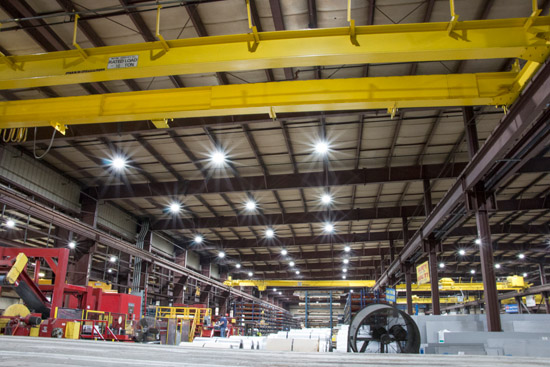
High bay LED lights are professional, high-performance lighting fixtures. They are made for spaces with tall ceilings. The general industry standard defines high bay lighting for mounting heights of 20 feet and above. Most industrial and commercial sites install these fixtures at 30 to over 40 feet to meet daily lighting requirements.
In the lighting industry, “high bay” usually refers to industrial-grade and commercial-grade LED lights. These robust fixtures handle harsh working conditions in commercial and industrial sites. They differ greatly from regular residential lights and low-ceiling lighting. They offer high lumen output, focused beam angles, and strong, long-lasting build quality.
High bay LED lights excel at delivering stable, uniform light from high mounting points. They minimize light loss and light scatter at height, so floors stay bright even in tall buildings. These modern LED fixtures replace old, power-hungry lights like metal halide and high-pressure sodium lamps. They save more energy, last much longer, and provide more consistent lighting for high-ceiling industrial and commercial areas.
Types of High Bay LED Lights
High bay LED lights have multiple mainstream types to fit diverse industrial and commercial needs. They vary in structure, optical design and installation flexibility. The three most common types are listed below:
Reflector-style High Bay Lights
These fixtures use pure aluminum reflective covers instead of transparent lenses. The polished surface collects and directs light straight downward. It cuts unnecessary upward light waste and creates concentrated, steady illumination. This type suits standard factories and general warehouses well. It delivers uniform floor brightness with wide coverage and reduces light loss at high mounting heights.
Lens-type High Bay Lights
These lights adopt professional refractor lenses for accurate beam control. The lens shapes light into fixed beam angles, including 60°, 90° and 120°. It concentrates light on target ground areas over long vertical distances. It is perfect for high-rise warehouses with tall storage racks. It effectively stops light diffusion and keeps narrow aisles and stacked goods well-lit.
Fully Enclosed Integrated High Bay Lights
This type features a complete all-sealed housing structure. The tight enclosure blocks dust, moisture and various industrial debris. It achieves a higher IP rating than regular high bay fixtures. It works best in harsh working conditions, such as humid, dusty processing plants and production workshops.
Apart from different optical structures, many industrial high bay lights come with practical adjustable mounting arms. This functional design greatly improves installation and maintenance convenience. The flexible brackets support free angle adjustment and proper height adjustment. Workers can lower or tilt the fixtures easily when needed.
This structure avoids risky high-altitude operations. It simplifies daily light inspection, lamp replacement and routine maintenance, and ensures long-term safe and stable lighting performance.
Application Areas for High Bay Lights
High bay lights are used in many applications. Some of them include the following:
- Warehouses
- Sports arena
- Parking lots
- Gymnasiums
- Airport hangers
High bay lights are also used extensively in industrial and commercial spaces for large open areas where the need is to cover a wide area with concentrated light.ed light.
How to Install High Bay Lights
Here are the steps on how to install the high bay LED lights:
- Plan the lighting layout
Planning is essential before you start to install high bay lights. It should provide enough light for convenient usage of the area you plan to light up.
Doing this can save you a lot of time and effort. So, if you want your fixtures to be placed high, plan first.
- Mark out the point of installation
Place a mark where you will install each fixture. It helps determine how many fixtures will be needed depending on what size space you’ll illuminate with your LED lights.
- Cut holes according to the marking done.
Make sure all markings are well-defined before proceeding further, or else irregularities may arise when cutting holes within surfaces.
- Feeding wires into new sockets
Make sure that all connections of new cables are wired securely and adequately.
- Mounting bracket
Now your fixtures can be mounted on the ceiling or wall. It all depends on what was indicated in your drawings earlier.
Finally, connect the light fixtures according to the instructions for easy installation.
What are Low Bay LED Lights?
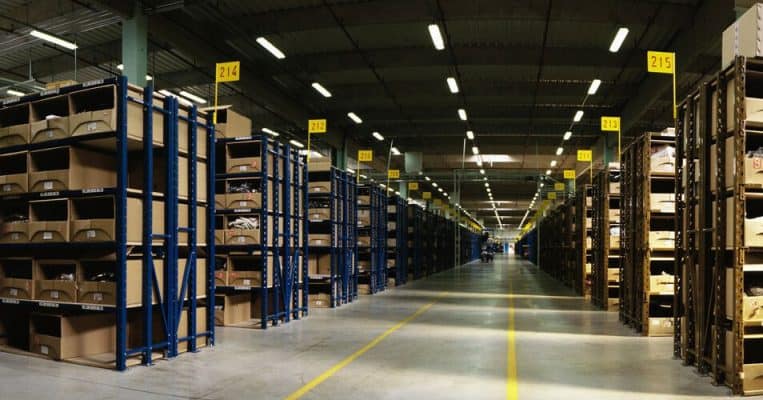
Low bay LED lights are dedicated commercial LED lighting fixtures. They are designed for ceiling mounting heights below 20 feet. They serve as the matching counterpart to high bay LED lights for low-ceiling spaces.
Low bay lights fit many common industrial and commercial venues. Popular spots include small workshops, retail backrooms, low-height warehouses and light-duty construction sites. Some units can also be wall-mounted to fill extra lighting gaps. They deliver bright, reliable light for close-range work zones.
This fixture line features a wide light distribution design. Its optical structure spreads light broadly and points illumination straight down to the ground. Unlike high bay lights that focus light over long vertical distances, low bay models create wide, even brightness across nearby floor space. They avoid overly narrow beams and dark patches in low-height rooms.
With their wide light spread, low bay LED lights remove the need for extra lamps in mid-size low-ceiling areas. They balance light coverage without wasting energy on long-distance light projection. This makes them a cost-effective lighting choice for spaces under 20 feet tall.
Which Types of Low-bay LED lights are There?
Which Types of Low-bay LED lights are There?
Low bay light fixtures are split into two core optical designs to meet different indoor lighting demands. They differ greatly in light control, brightness output and anti-glare performance. The two primary types are broken down below:
Full Cutoff Low Bay LED Lights
These fixtures route 100% of their light output straight down toward the floor. No light leaks upward or sideways outside the target working zone.This tight light containment eliminates stray light and glare. It stops light waste that would otherwise bounce onto ceilings or upper walls.Full cutoff low bay lights work great for office backrooms, retail storage areas and small processing workshops. They deliver focused light exactly where staff needs to complete close-range work. They also comply with strict light pollution rules for commercial buildings.
Semi-Cutoff Low Bay LED Lights
Semi-cutoff models send most light downward, with roughly 10% of light spreading outward softly around the main beam.That small portion of extra light boosts total lumen output compared to full cutoff variants. The mild side spill softens harsh shadow lines across floors and workbenches.This style fits open low-ceiling spaces like light manufacturing bays and compact logistics zones. The subtle peripheral light reduces dark corners without sacrificing overall brightness. It creates a warmer, more balanced visual environment for long-hour work.
Extra Practical Design Note for Low Bay Fixtures
Besides cutoff classification, most low bay LED lights feature slim, compact housing built for ceilings under 20 ft. Many models support both ceiling surface mount and simple wall mount setups. Their lightweight frames cut installation labor and do not require heavy hanging hardware used for high bay units. The wide default beam angles evenly cover broad floor areas without needing many separate light fixtures.
Application Areas for Low Bay LED Lights
Some of the application areas for low bay LED lights to include:
- Gymnasiums
- Hallways and doorways, lobbies, and reception areas
- Warehouses and industrial facilities
- Parking lots, outdoor venues, and recreational facilities
- Sports courts and fields – baseball, football, soccer, etc.
- Amusement parks
How to Install Low Bay LED Lights
If you plan to install the low bay LED lights, here is how to go about it.
- First, make sure your work area is well-lit with the LED light.
- Pry off the cover on the fixture’s wire connection box with a flat-head screwdriver
- Connect wires to new fixture according to the color of insulation tape and markings
- Secure wires in place by tightening screws or nuts on each side of the junction box with pliers
- Mount low bay LED lights onto the ceiling surface using screws according to mounting height requirements.
- Next, install the safety cable following the manufacturer’s directions into the junction box.
You can use the Low Bay LED lighting for most applications where there is a need to illuminate an area with better illumination than conventional light fixtures or HID lamps.
Difference Between High Bay and Low Bay Lights
Choosing between high bay and low bay lighting isn’t just about picking a fixture; it requires a precise understanding of your facility’s structural layout and operational lighting compliance. While both are designed to illuminate expansive areas, they serve vastly different engineering purposes.
Below is a technical comparison of their core parameters:
| Technical Attribute | High Bay Lighting | Low Bay Lighting |
| Installation Height | 20 feet to 40+ feet (6 m – 12+ m) | 10 feet to 20 feet (3 m – 6 m) |
| Lumen Output | Typically 15,000 to 40,000+ Lumens | Typically 5,000 to 15,000 Lumens |
| Typical Wattage | 100W to 400W+ LED | 30W to 100W LED |
| Standard Beam Angles | Narrow to Medium (60 degrees, 90 degrees) | Wide (120 degrees or specialized optics) |
| Smart Controls | Supports 1-10V, DALI, Motion Sensors | Supports 1-10V, Triac, Daylighting |
1. Mounting Height and Structural Layout
The fundamental divider between these two systems is the ceiling clearance. High bay lights are engineered for heavy-duty industrial environments with ceilings soaring from 20 to over 40 feet. At this height, the fixtures require high-intensity output to overcome light depreciation over distance.
Conversely, low bay lights are optimized for ceilings between 10 and 20 feet. Installing a high bay in a low-ceiling space causes blinding glare and hot spots, while a low bay in a high ceiling results in dark, non-compliant work zones.
2. Lumen Output and Intensity Mechanics
Modern LED industrial fixtures no longer rely on multiple independent bulbs; instead, they utilize high-density SMD or COB LED arrays driven by industrial-grade drivers.
- High bays deliver a massive concentration of light, frequently pushing between 15,000 and 40,000+ lumens, ensuring bright visual acuity on factory floors.
- Low bays require much less raw power, typically generating 5,000 to 15,000 lumens, which provides a comfortable lighting density without overwhelming smaller commercial layouts.
3. Optical Engineering and Beam Angles
The optics of these fixtures are precisely engineered to control light distribution based on distance:
- High Bay Optics: Because the light has to travel a long distance to reach the floor, high bays use tighter beam angles like 60 degrees or 90 degrees. These narrow angles focus the lumens downward, preventing light from scattering uselessly along upper wall sections.
- Low Bay Optics: Since they are mounted much closer to the work plane, low bays leverage a wide 120-degree beam spread. This creates a highly diffused, overlapping lighting pattern that minimizes harsh shadows and glare in low-clearance tasks.
4. Primary Commercial Applications
Identifying the right environment is vital for contractors aiming for building code compliance. High bays are the default standard for heavy manufacturing plants, logistics warehouses, indoor sports arenas, and large commercial hangars. Low bays are the preferred solution for retail showrooms, commercial parking garages, specialized workshops, grocery aisles, and cold storage units with low ceilings.
Why LED Bay Lighting is a Good Option
Compared to traditional sources of lighting, LED bay lighting has many advantages. Some of them are as follows:
- Utility cost savings– Did you know that LED lights can save you up to 80% of electricity consumption compared to your existing lighting system? LED lights are more cost-effective than traditional light sources.
- Long-life– The average LED light can last more than 30,000 hours and more than five years of continuous use. This low maintenance cost makes LED lights more popular among commercial establishments.
- Low heat emission – compared to the HID lighting system, the LED lights produce much less heat, making it a safe option for any industrial or warehouse application.
- Better control– With the new generation of technology, you can now enjoy full control over all your lighting needs.
- Easy customization– You can now change the colors and moods of the LED lights with ease by just adjusting the controller setting.
- Safe for the environment– There are no harmful fumes, so it’s much safer than other options. For example, fluorescent lamps contain mercury which is hazardous to health. Also, LED bulbs are made of recycled material, unlike conventional metal halide or HPS lamps with harmful metals like mercury, lead & arsenic.
How to Choose Between High Bay LED lights and Low Bay LED Lights?
When choosing between high or low-bay LED lighting, are you wondering what to consider? The main things you need to consider are the application area and the desired illumination for the space. Another vital thing to consider is functionality.
If you want uniform light distribution, then choose high bay lights. On the contrary, low bays provide a “spot” light effect that increases the visual appearance and reduces glare and uplight on artwork.
Frequently Asked Questions
What color temperature works best for high bay and low bay lights?
Cool white light is ideal for high bay lights in warehouses, factories, and logistics centers, as it boosts clarity for detail work. Neutral white is the top choice for low bay lights in offices, lobbies, and classrooms to create a comfortable working atmosphere. Matching the right color temperature avoids eye strain and improves overall space usability.
Are LED high bay lights suitable for dusty or humid industrial environments?
Standard open-style high bay lights cannot resist heavy dust and moisture buildup. Fully enclosed high bay models with high IP ratings are specially built for harsh factory and processing environments. They prevent internal dust accumulation and moisture damage for longer service life.
Do I need to dim high bay or low bay lights for warehouse energy savings?
Dimming is not required for standard high bay industrial zones with 24-hour operation. It is highly recommended for low bay areas with variable occupancy, such as break rooms and entry zones. Smart dimming effectively cuts idle energy waste without affecting workplace brightness.
Can I get customized high bay and low bay lighting configurations for special industrial projects?
Yes, unique commercial and industrial facility layouts can source fully customized high bay and low bay lighting solutions tailored directly to their structural blueprints. As an ISO 9001 approved LED lighting manufacturer in China, RC Lighting features a professional team dedicated to researching and producing specialized configurations, allowing us to adjust fixture styles, beam angles, and wattages to match your exact site layout. It is our pleasure to provide your industrial development with these high-quality guaranteed products at highly competitive wholesale prices and with excellent service today
Conclusion
Now that you have gone through this reading, you can distinguish between high bay and low bay lighting. Do you already have an idea of what type of lighting fixtures will suit your space the best? Well, think no more! Feel free to contact us at RC Lighting. Our capable team members are always ready to answer all your inquiries so that we can give you the most accurate quotations out there!