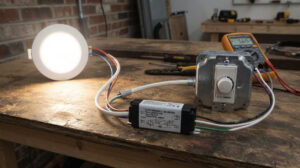
Choosing the right underwater fountain lights is harder than most buyers expect. Fixtures that look identical online can differ enormously in sealing, materials, and control compatibility—and those differences usually stay hidden until months after installation, when lights fog up, corrode, or fail to sync.
In our inspection and sourcing work, we’ve seen the same three problems repeat across projects: overstated waterproofing, cheap housing metals that rust in the wrong water, and lights that simply won’t work with the buyer’s controller. Each one is avoidable with the right checks up front.
This guide shows you how to choose underwater fountain lights the practical way—covering fixture types, the four specs that actually matter, safety and compliance basics, control-system compatibility. Let’s start with what makes an underwater light different from a standard one.
Underwater vs. Standard Fountain Lights: What’s the Difference?
Not every outdoor light can go underwater. A fixture rated for garden paths or facade lighting is built to shed rain, not to sit fully submerged. That gap is where a lot of buyers get caught.
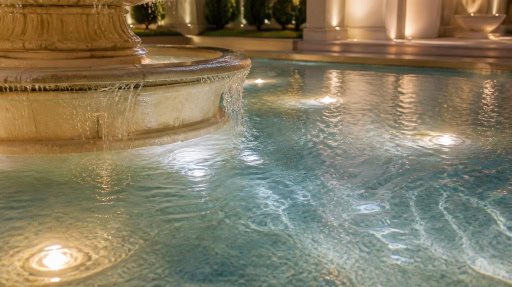
Construction and Sealing Differences
The real difference lives inside the fixture, not on the surface.
A true underwater light uses multi-layer sealing. The cable entry is potted with epoxy resin, the housing seams are glued and pressure sealed, and the gaskets are made from water-resistant silicone rather than cheap rubber.
Standard outdoor lights skip most of this. They rely on a simple rubber grommet at the cable and screw pressure at the seams, which is fine for splashes but not for constant water pressure.
Waterproof Rating Comparison
This is the spec that gets abused most.
IP65 means the fixture resists water jets from any direction. It handles rain and splashing, but it is not made for submersion.
IP68 means the fixture can stay submerged continuously at a defined depth. For anything sitting in a fountain basin, IP68 is the baseline, not a bonus feature.
Here is the catch. A housing can be printed IP68 while the actual build only reaches IP65 level protection. The label is easy to fake, the internal structure is not. For the official definitions behind these codes, the IEC IP rating standard (IEC 60529) is the reference to point suppliers back to.
Submerged vs. Dry-Installed Applications
Where the light sits changes everything about your selection.
Fully submerged fixtures live underwater and take constant pressure, so sealing and material choice become critical. Dry-installed lights mount above the waterline and shine onto the water, which makes them easier to service and far more forgiving.
A practical tip from project work: if your fountain design allows a dry-mounted position, it usually means longer fixture life and simpler maintenance. Submersible is often necessary, but it is also where most sealing failures start, so it deserves stricter checks.
Types of Fountain Lights
Once you know what “underwater rated” really means, the next step is matching the fixture type to your project. Picking the wrong type early creates problems that specs alone cannot fix.
Fully Submerged Fixtures
Fully submerged fixtures sit completely underwater, usually at the base of a nozzle or along the basin floor. Because they light the water from within, they produce the most dramatic effect—the water column itself appears to glow.
They are the go-to choice for spray jets and vertical fountains, where you want the rising water to carry the light. The trade-off is maintenance access, so plan how you will reach each fixture before you commit to a layout.
Floating Light Kits
Floating light kits rest on the water surface and shine downward or outward. They are quick to deploy, need no fixed wiring in the basin, and work well for ponds or temporary setups.
Because they are easy to reposition, they suit clients who want flexibility or seasonal displays. They will not give you the deep submerged glow of a fixed light, so treat them as accent or convenience options rather than the main effect.
Color-Changing (RGB) Lights
RGB lights mix red, green, and blue LEDs to produce a wide color range, and RGBW models add a white chip for cleaner whites.
These are the standard for musical or programmable fountains where color shifts with the show. One thing to confirm is color mixing quality, since cheap RGB units often show visible color separation instead of a blended beam, especially in clear water.
If there is any chance you will want dynamic effects later, choose RGB from the start. Single color fixtures cannot be upgraded down the line.
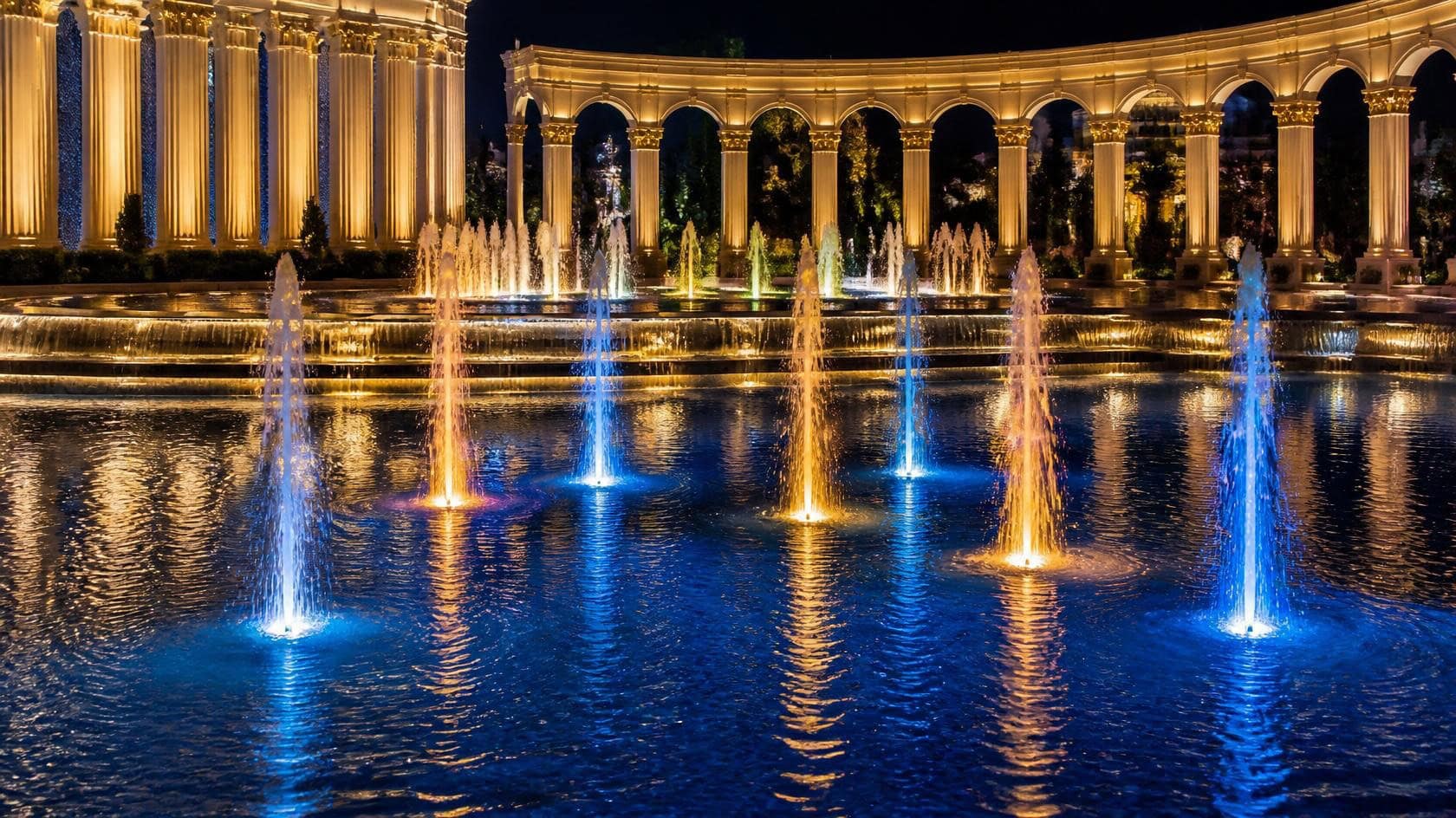
Which Type Fits Your Fountain Size
Matching type to scale keeps the project on budget.
For small ponds and residential fountains, a few submersible or floating lights usually cover it. For mid size commercial fountains, submersible RGB fixtures on the nozzles give the strongest effect. For large or musical installations, plan for multiple submersible fixtures with a proper control system, which we cover further down.
4 Key Specs
Four specs decide whether the light survives and performs. Get these right and most other details fall into place.
Ingress Protection: Why IP68 Is the Baseline
We touched on this earlier, but it deserves its own place on your checklist because it is the single most abused spec in this category.
For any fixture that sits in water, IP68 is the floor, not a premium upgrade. IP67 handles temporary immersion, but a fountain runs continuously, so you want a rating built for permanent submersion at a stated depth.
Two things to verify before you buy. First, ask for the tested depth and duration, since IP68 without numbers is meaningless. Second, ask for a third party test report rather than a self declared claim. A supplier who cannot produce one is telling you something.
Lumen Output per Fixture
Brightness in a fountain is trickier than brightness in air, and this is where a lot of projects come up short.
Look at lumen output per fixture, not just wattage. Two lights at the same watts can push very different amounts of light into the water depending on LED quality and optics.
Here is the part buyers forget. Water absorbs light, so a beam that looks strong on a bench looks weak once it travels through a moving water column. A quick procurement tip: for jets and taller water features, plan for higher output than you think you need, because underlighting a finished fountain is expensive to fix later.
Color Temperature
Color temperature sets the mood, and it is easy to overlook until the fixtures are already glowing.
Warm white, around 2700K to 3000K, gives a soft and inviting look that suits residential ponds and garden fountains. Cool white, around 5000K to 6500K, reads crisp and modern and makes water sparkle in larger commercial settings.
If you are running RGBW, confirm the quality of the white channel separately. A muddy white ruins the effect even when the colors look fine.
Housing Material and Corrosion Resistance
This is where hidden failures live, and the damage rarely shows up until the fixtures are already installed.
Stainless steel and quality aluminum are the two common choices, but the grade matters far more than the label. For submerged use, especially in salt, chlorinated, or hard water, 316L stainless is the reliable pick.
The failures we see most are the slow ones. A light works perfectly at install, then fogs up, takes on water, and burns out its board six months to a year later, all with no visible damage on the outside. The usual culprit is cheap 201 or 202 stainless sold as plain “stainless steel,” which develops rust spots within months in hard or salt water and lets moisture creep through the seals.
Poorly coated aluminum does the same, since the coating flakes once the water pH drifts and the exposed metal starts to corrode, slowly pushing against the gasket until it leaks. Ordinary rubber gaskets add to it by swelling and cracking over time, and hot spring or chemically treated water speeds the whole process up.
The tricky part is that everything looks fine on day one, so you cannot judge material quality by eye at delivery. The takeaway for procurement is simple. Ask for the exact material grade in writing, request 316L for demanding water, and treat vague “stainless steel” claims as a red flag.
Safety and Compliance
Underwater lighting mixes electricity and water, so safety is not a nice to have. Getting the compliance basics right also protects you when the fixtures cross borders and clear customs.
Low-Voltage Systems (12V / 24V) and Transformers
The standard safe approach is low voltage.
Most quality underwater fountain lights run on 12V or 24V DC, powered through a transformer that steps mains voltage down. This dramatically reduces shock risk compared with running mains voltage into the water.
Two practical points. Match the transformer capacity to the total wattage of all fixtures on the circuit, and leave headroom rather than running it at its limit. Also confirm the transformer itself carries an outdoor or waterproof rating, since a well-sealed light paired with an exposed transformer just moves the weak point. For the wiring principles behind low-voltage water features, the IEC 60364-7-702 standard for pools and fountains is the framework installers follow.
Fish and Plant Safety
If the water holds fish or plants, lighting choices change.
Stick to low voltage systems and fixtures with fully sealed housings so there is no current leakage into the water. Avoid excessive heat near plants and livestock, which is one more reason LEDs beat older hot running lamps.
Also think about run time. Long hours of colored light can stress fish and encourage algae, so a timer is a simple safeguard. Guidance from resources like the RSPCA on pond and fish welfare is worth a look for stocked ponds.
Required Certifications and Test Reports (CE, RoHS, IP Testing)
Certifications are your paper trail, and for export they are non-negotiable.
Ask for three at minimum. CE for European market conformity, RoHS for restricted hazardous substances, and a genuine IP68 test report from a recognized lab.
One tip that saves headaches later: ask for the actual test certificates, not just logos on a datasheet. A logo is easy to print, but a report with a lab name, test conditions, and a date is much harder to fake. You can confirm what CE actually requires through the official EU CE marking page.
Energy Efficiency and LED Benefits
For any fountain that runs for hours each night, efficiency is not a minor spec. It decides your running cost, your replacement cycle, and how much heat sits in the water beside your fixtures.
Understanding Lumens per Watt
The number that really tells you how efficient a light is lumens per watt.
Lumens measure how much light you get. Watts measure how much power it draws. So lumens per watt tells you how much brightness you get for each watt of power, and a higher figure means more light for less energy.
When comparing fountain lights, do not judge by wattage alone. A 9W light with a higher lumens per watt rating can easily outshine a cheaper 12W one while costing less to run. Ask suppliers for the lumen output, not just the wattage, so you are comparing real brightness rather than power draw.
LED vs. Halogen
For underwater use, the choice between LED and halogen is not close.
LEDs draw far less power for the same brightness, so they cut running costs on any fountain that operates nightly. They also run much cooler, and since heat degrades seals and stresses aquatic life, a cooler fixture is safer in the water and kinder to its own gaskets.
Halogen lights burn hot, fail sooner, and cost more to run. For a modern install there is little reason to specify them. The U.S. Department of Energy on LED lighting sets out the efficiency and lifespan case in detail if you need to justify the choice to a client.
Choosing Efficient Drivers and Transformers
An efficient LED is only as good as the power supply behind it.
Because most underwater fountain lights run on low voltage, they need a driver or transformer to step mains power down safely. A cheap or undersized unit wastes energy as heat, delivers unstable voltage, and shortens the life of the lights it feeds.
Look for a driver rated for the total wattage of your fixtures with some headroom to spare, and confirm it is suitable for outdoor or damp locations. A quality driver protects both your efficiency gains and the fixtures themselves.
Color, Controls, and Smart Lighting Options
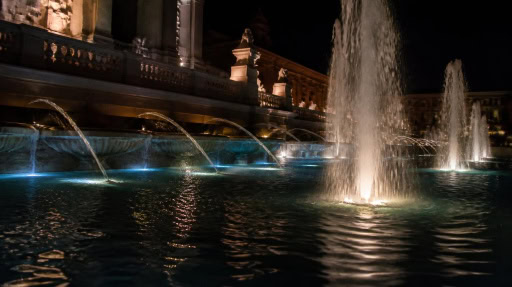
Color and control are what turn a working fountain into a feature people remember. Matching the control system to the project scale keeps things simple to own and easy to expand.
Color-Changing and Remote Controls
For most residential and small commercial fountains, color-changing lights with a remote are the practical choice.
RGB fixtures mix red, green, and blue for a full color range, while RGBW adds a dedicated white chip. That white channel matters, because RGB alone produces a weak, tinted white that rarely looks clean, so RGBW is the safer pick when you want both color effects and a proper white.
A basic remote lets the owner switch colors, modes, and brightness with no wiring or programming, which suits home fountains and simple displays well.
DMX Control Systems for Larger Installations
Larger and more ambitious projects call for a professional control standard.
DMX is the industry standard for coordinating many fixtures at once, so effects stay perfectly in sync across a large fountain or a public water show. It gives designers precise control over timing, color, and sequencing that a simple remote cannot match.
One point to settle early is compatibility. Confirm the exact control protocol your fixtures use and, where possible, source the lights and the controller together so they are matched from the start. Sorting this out before ordering is far cheaper than discovering a mismatch on site.
Smart App Compatibility
App control adds convenience for owners who want to manage lighting from a phone.
A good app lets you change colors, set scenes, and program schedules without a physical remote. Before buying, check which app the fixture uses, whether it supports the platforms your client needs, and whether it can group multiple lights together.
Treat app control as a usability feature, not a substitute for DMX. For synchronized shows across many fixtures, DMX remains the reliable choice.
Design and Aesthetics
Beyond the technical specs, how a light looks and how it is hidden shapes the final result.
The best fountain lighting is felt more than seen. Slim, low-profile fixtures tuck neatly against basins, nozzles, and edges, so the eye sees the water and the glow rather than the hardware. A well-placed light emphasizes movement, texture, and reflection instead of drawing attention to itself.
Color temperature plays a role too. Warm white feels natural and inviting for gardens and residential settings, while cool white or full color suits modern architectural and commercial displays. Aim the beams to graze the water and highlight motion, and keep fixtures out of direct sightlines wherever possible.
Good design is where the technical choices and the visual result finally meet. The right materials, sealing, and controls only matter if the finished fountain looks effortless.
FAQs
Can underwater fountain lights electrocute you?
Properly specified and installed, no. This is exactly why low-voltage systems and correct grounding matter so much. Most quality fountain lights run on 12V or 24V, well below the mains voltage that poses a serious shock risk, and a compliant install includes proper grounding and a GFCI or RCD on the supply. The danger comes from cheap fixtures, damaged cables, or DIY wiring that skips these protections. Match a certified low-voltage light with correct electrical safety devices, and the risk is minimal.
What happens if the voltage is mismatched?
Nothing good. Running a 12V light on a 24V supply can burn it out almost instantly. Running a 24V light on 12V leaves it dim and unstable. Voltage mismatch is one of the most common causes of early LED failure and can void your warranty. Always confirm that the fixture voltage, the driver output, and the supply all match before powering up, and account for voltage drop on long cable runs so the light still receives its rated voltage at the end of the line.
Can I get custom underwater fountain lights for a specific project?
Yes, and for larger or unusual installations it is often the smarter route. Custom lighting can cover beam angle, color temperature, RGBW configuration, housing size, cable length, and mounting style, so the fixture fits your fountain instead of forcing the design around a stock part. It also lets you specify the details that matter most underwater, such as a verified stainless-steel grade and a tested IP68 seal, from the start rather than hoping an off-the-shelf unit measures up. When you request a custom fixture, confirm the minimum order quantity, the lead time, and whether the supplier provides test reports and matched drivers with the order. A good manufacturer will walk you through these options before production, which is far cheaper than adapting the wrong fixture on site.
Ready to Specify Your Fountain Lights?
Choosing the right underwater fountain lights comes down to a few decisions that carry the whole project: a genuine IP68 rating backed by test data, the correct low-voltage and grounding setup, corrosion-resistant materials proven by a material report, and a control system that fits your project scale. Get those right, and the design and efficiency benefits follow naturally.
If you are ready to specify fixtures for your next fountain, a good next step is to compare real specifications side by side, request the test certificates that back up the ratings, and confirm spare-part availability before you commit.
As a manufacturer of certified low-voltage underwater lighting, RC Lighting supply fixtures with verifiable IP68 test reports, documented stainless-steel grades, and matched drivers and controls for projects of any size. Contact us for a quote or request our product catalog to compare specifications for your installation.