What Are Underwater Spotlights?
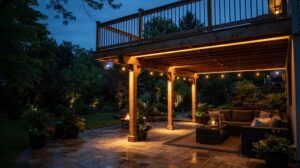
Underwater spotlights are a type of spotlight designed to function underwater. As a refresher, spotlights focus their illumination on a single area. This makes underwater spotlights a great way to highlight a particular feature either underwater or directly above the water.
Benefits of Installing Underwater Spotlights
- Illuminate the Water – With underwater spotlights installed, you can easily see what is within the water, even at night. This lets you see the interior details of a fountain, pool, or birdbath. On a dock, it lets you see obstacles that your boat could hit or you could swim into.
- Expand Functionality of the Feature –Because you can see the water and the structures containing it at night, installing underwater spotlights lets you use the space or feature at night in addition to during the day.
- Can Light Surrounding Area –Depending on the spotlight you choose and its strength, it can also help light up some of the areas directly around the water feature. This could include other elements of the fountain or space directly around the feature.
- Safety – Having the water feature lit up helps ensure that everyone who comes on the property knows that it is there. This prevents accidents. That prevention is particularly important for water features because, in addition to the risk of tripping and falling, there is also a risk of drowning, especially for smaller children or animals or deeper water features.
- Security –Combining the underwater spotlights with other landscape lighting can deliver a well-lit property. This helps keep your space secure by deterring wild animals, even seemingly harmless ones like raccoons or skunks and criminals.
- Easy to Install –Because they are frequently low-voltage lights, underwater lights can be fairly straightforward to install. This means that if you are handy, you can save on installation costs and do it yourself.
- Available as LEDs –The best underwater spotlights will use LED lights. These give you all of the advantages of LED lights in addition to the benefits of underwater spotlights. As a refresher, LEDs are more energy-efficient, delivering savings on your electric bill. They also last longer and require less maintenance. They even tend to have better and more uniform light quality.
What Are The Different Types of Underwater Spotlights?
Pool lights
Pool underwater spotlights are IP68 sealed low-voltage fixtures made for chlorinated swimming pools, resisting long-time submersion and chemical erosion. They have single white or RGB color-changing options to customize pool night scenes safely for swimmers.
Most are recessed into pool walls during construction, with retrofit surface models for finished pools. Their focused beams highlight pool steps, water jets and mosaic tiles while marking pool boundaries to boost nighttime safety.
Pond lights
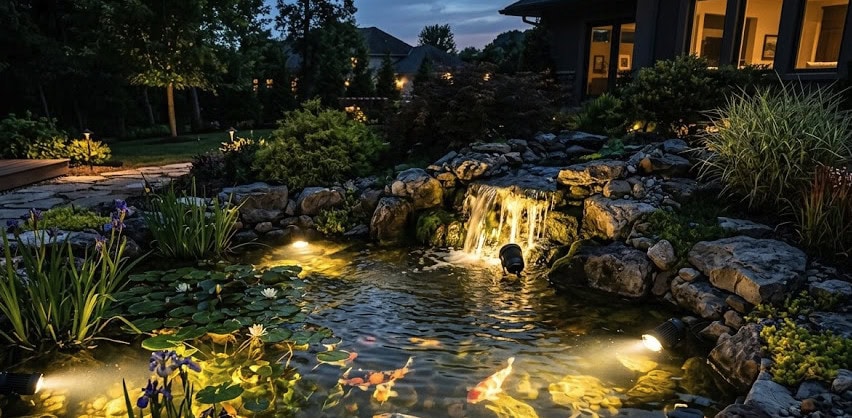
Pond spotlights suit freshwater koi ponds and garden water features, with anti-sludge casings and mild low-lumen beams that won’t disturb fish or burn aquatic plants. Brass and stainless steel versions work for both inland and coastal brackish ponds.
Equipped with weighted ground stakes, they can be freely placed beside waterfalls, lily pads and rockeries without fixed installation. Their soft dim light creates quiet natural night landscape after dark.
Fountain lights
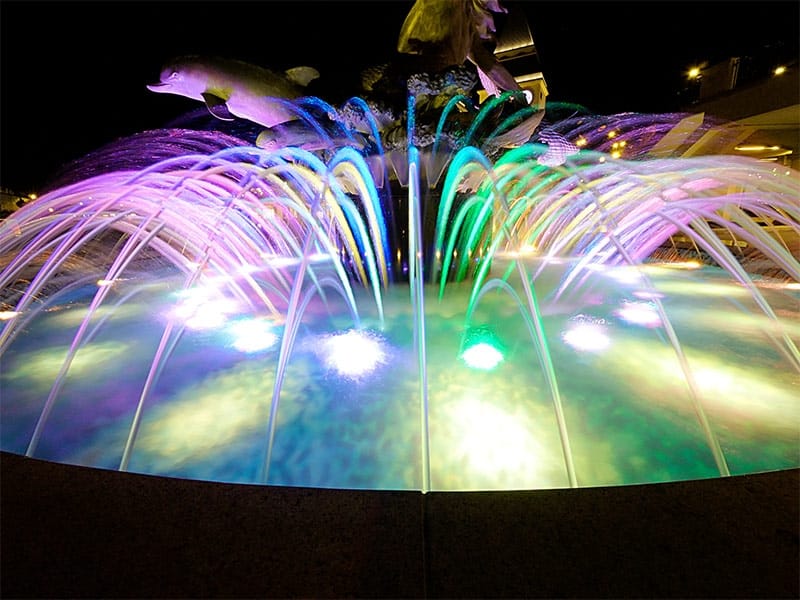
Fountain spotlights adapt to flowing splashing water, with compact small bodies that fit inside fountain basins and jet nozzles. Anti-splash lenses avoid blurred light, and RGB beams refract beautifully through rising water sprays.
Fit residential courtyard fountains and commercial plaza water sculptures. Narrow beams outline each water stream separately; remote control supports quick color and brightness adjustments for daily use or parties.
Dock lights
Dock lights are marine-grade saltwater fixtures with thick stainless steel or solid brass housings to fight severe salt fog, tide submersion and ocean wave impact, offering top anti-corrosion performance among underwater lights.
They balance decoration and navigation safety: bright beams light dock pilings for safe boat mooring at night, while cool-toned glow reflects on seawater to create classic coastal waterfront scenery.
Spa lights
Mini compact spa spotlights fit hot tubs and whirlpools, resisting high-temperature warm water, disinfectants and strong jet turbulence. Soft dim color cycles deliver a soothing relaxing atmosphere for soaking.
They sync with spa main control panels without extra remotes. Gentle narrow beams highlight spa trim and massage jets, and smooth casings repel lotion and oil residue to cut cleaning frequency.
Where Are Underwater Spotlights Used?
You can use underwater spotlights anywhere water and architectural design meet.
In residential and commercial landscaping, they are particularly common in ponds, swimming pools, and decorative fountains, where they transform static water features into dynamic nighttime focal points.
By placing the light source beneath the surface, you eliminate the surface glare that occurs with overhead lighting, allowing the light to refract beautifully through the moving water.
Beyond standard landscaping, you can also find them installed on boat docks, piers, and boardwalk areas where you want to light up the water for both safety and aesthetic appeal.
In these marine environments, submersible spotlights illuminate underwater marine life, assist with nighttime boat docking, and secure the dark perimeters of waterfront properties.
Whether it is a cascading backyard waterfall, a commercial resort reflection pool, or a public marina, underwater spotlights are essential for creating dramatic, safe, and visually captivating aquatic environments.
How to Choose Underwater Spotlights
1. Waterproofing
The first thing you should always check when looking at underwater spotlights is whether they are waterproof. There should be a waterproof rating, and the product information should let you know that you can leave the spotlight underwater.
Keep in mind that some spotlights are designed for above-ground use outside and can therefore handle rain. Those spotlights cannot necessarily handle being submerged. As such, you need to confirm that your chosen lights are submersible.
2. Consider LEDs
Although other options are available, it is typically best to opt for LED underwater spotlights. This will give you all the benefits associated with LED lights, including energy efficiency, durability, longevity, and improved quality of light.
3. Voltage
The best underwater spotlights will have a low voltage as this reduces the risk associated with having the lights right by the water. You also don’t need a higher voltage, and a low voltage makes it easier for the average person to install the lights without a professional’s help.
4. Brightness
As with any other type of lighting, consider how bright you want the spotlights to be. Remember that spotlights tend to be brighter than other types of lights just due to their design.
The best way to judge brightness is by checking the lumen output. Wattage only indicates power consumption, while lumens accurately represent actual light brightness for underwater lighting scenarios.
5. Beam Width or Angle
You will also want to think about the width of the light beam. Spotlights tend to be more focused with narrow angles, but you can easily find options with wider angles if you want to illuminate a wider area. The best options will even let you adjust the angle of the beam.
6. Material
Pay attention to the material of your chosen underwater spotlight as well. It should be a material that will handle being submerged. Although there are other options, the most popular are stainless steel and brass.
If you install lights in fish ponds, avoid low-quality copper-finished fixtures with unprotected coatings. Pure solid copper housing is safe for aquatic environments, but degraded, unsealed copper paint and oxidized layers can release harmful copper residues into the water, causing toxicity to fish and aquatic life over time.
How to Install Underwater Spotlights
1. Choose Your Placement
Before you can start installing the underwater spotlights, figure out where you want to put them and how many you need. This will also be when you decide how far apart they should be. Most of these factors will depend on personal preference and your ideal brightness level.
2. Install When Dry
Even though the spotlights will be used underwater, it is best to install them when the fountain, pond, or water feature is dry. If you cannot install them when it is dry, hire a professional instead of doing it yourself, as it will get much more complicated (and they may still need to drain the water).
3. Make the Holes
Do not drill holes on the spotlight body, as this will damage its waterproof seal and lead to leakage or short circuits. Always use the fixture’s pre-made mounting bases and reserved wire holes, and complete all openings during construction instead of modifying finished fixtures.
4. Take Care of Wiring
Once the holes are in place, you can place the wiring through them. Make sure to put plenty of sealant around the wire.
5. Finish Installation and Seal
Wrap up by securing your light into place with screws or bolts. Remember to seal up any areas that water could potentially leak through, including the holes you drilled and the back of the light.
Frequently Asked Questions
Can these LED underwater spotlights be safely installed in saltwater marine environments?
Standard underwater fixtures will quickly corrode and fail when exposed to harsh marine environments. To prevent this, you must select spotlights explicitly rated for saltwater use, which are constructed from marine-grade 316L stainless steel or specialized composite polymers. These premium materials resist galvanic corrosion and salt pitting, ensuring long-term operational durability for coastal docks, boat slips, and beachfront water features.
Do LED underwater lights comply with commercial swimming pool safety regulations?
Yes, high-quality underwater LED spotlights are engineered to comply with strict safety regulations, such as the National Electrical Code (NEC) and UL certifications for submersible lighting. They operate on low-voltage power systems (typically 12V or 24V AC/DC) via safety isolation transformers to completely eliminate the risk of electrical shock. Commercial contractors must ensure these certifications are active before installation to successfully pass local building inspections for public pools and fountains.
How do I integrate underwater spotlights with smart automation and DMX color controllers?
Modern low-voltage underwater spotlights can be integrated into centralized smart home systems, commercial building automation grids, or DMX controllers. For multi-color RGB or RGBW fixtures, specialized external decoders and signal amplifiers are used to manage synchronized color-changing sequences and dimming levels. Always check the manufacturer’s technical wiring diagram to confirm compatibility with your specific protocol, such as DALI, KNX, or standard smart relays.
Can I order underwater spotlights configured with pre-measured waterproofing cables for large-scale aquatic projects?
Yes, commercial developers and contractors can source submersible spotlights engineered with exact, pre-measured cable lengths to match their precise wiring layouts. As an ISO 9001 approved LED lighting manufacturer in China, RC Lighting provides heavy-duty, IP68-rated underwater spotlights featuring factory-sealed cable connections to guarantee complete waterproof integrity. Our professional engineering team manufactures these specialized aquatic fixtures to the highest quality standards, providing your resort or commercial pool project with reliable performance and excellent service.
Why Choose Underwater Spotlights from RC Lighting
With underwater spotlights from RC Lighting, you don’t have to worry about anything. The company always starts with the best raw materials and uses an efficient ISO9001-certified production cycle. You also get the benefit of seven years of experience and numerous certifications to give you extra peace of mind.
RC Lighting puts all products through rigorous testing to ensure they can handle tough use, and that includes a soaking test and a water pressure test, both of which are crucial for underwater applications, like in the case of these spotlights. Some of the other tests confirm the lights can handle high-pressure sprays, high temperatures, freezing temperatures, and aging.
Conclusion
Underwater LED lights are a convenient way to illuminate your pond, swimming pool, fountain, dock, or any other area with water. They can enhance the appearance of your space and improve its safety and security. You can find great underwater spotlights to fit your needs at RC Lighting, so explore our selection.