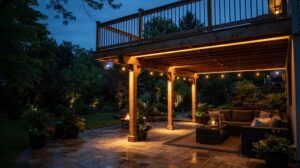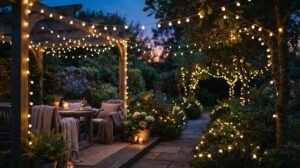
Choosing garden strip lights? Learn the right IP ratings, voltage, brightness, and warm-white color for outdoor use — plus design tips for a clean, lasting finish.
Want to make the garden look stunning after dark without spending a fortune on running costs? LED garden strip lights are one of the easiest ways to do it. They light up pathways, wrap around flower beds, and add a warm glow to decking, all from a slim, flexible strip you can tuck almost anywhere.
We have supplied outdoor strip lighting for landscape projects, hotels, and residential gardens for years, and we have seen what works and what fails after the first rainy season. So this guide is built on real installs, not just spec sheets.
In this guide, you will learn why LED strip lights suit gardens so well, where to use them, how to pick the right type, what waterproof rating you actually need, and how to get the brightness and color right. Let’s start with why they are worth it.
Why Use LED Strip Lights in Your Garden?
Traditional garden lighting often means bulky fixtures, visible cables, and high electricity bills. LED strips solve most of that in one go. Here is what makes them a smart choice.
Safer, Better-Lit Pathways and Steps
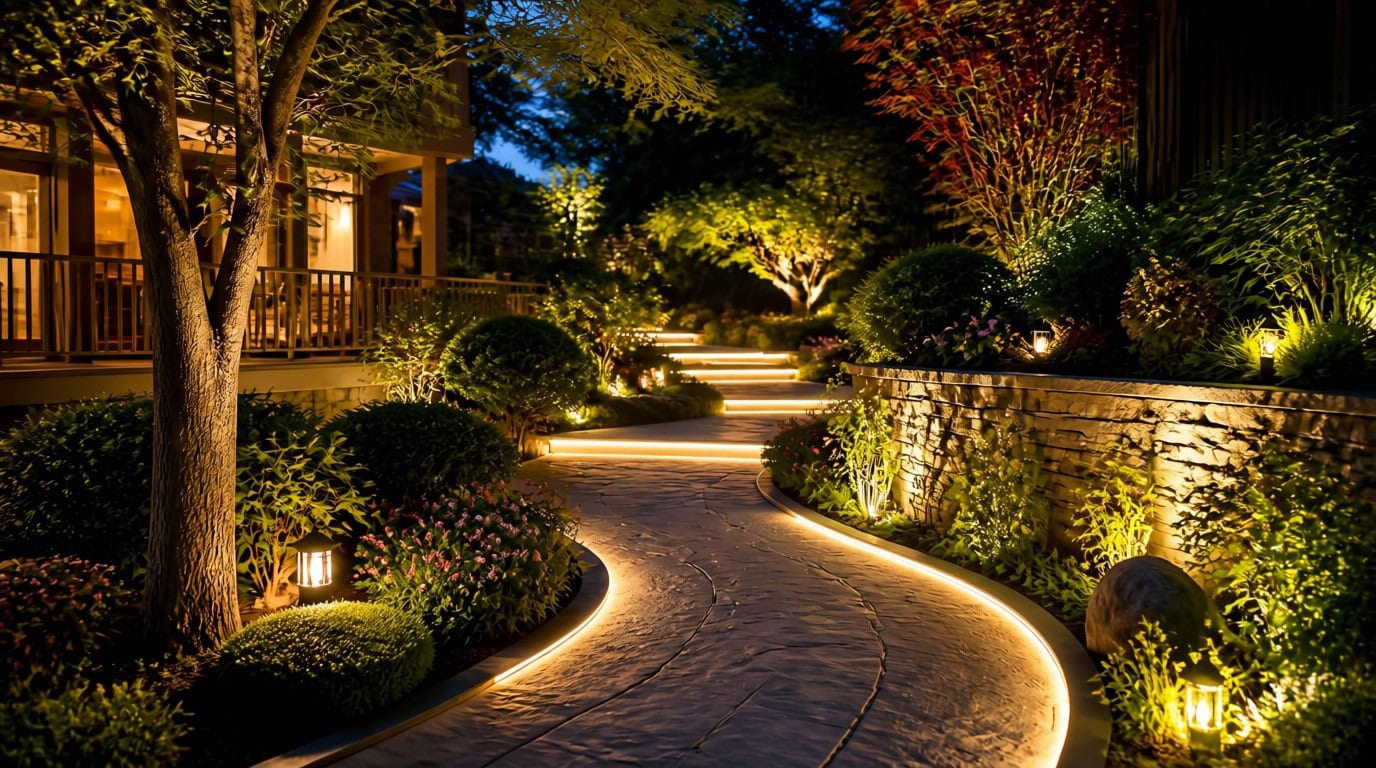
Dark steps and uneven paths are a real trip hazard at night. A thin strip along the edge of a step or path throws down soft, even light exactly where you need it. Your guests can see where they are walking, and you avoid those harsh, glaring spotlights that ruin the mood.
Because the light is low and continuous, it guides the eye naturally. That makes a garden feel both safer and more welcoming.
A Warm, Modern Look for Any Outdoor Space
Strip lights hide easily under railings, inside pergolas, or behind planters. You see the glow, not the fixture. This “hidden light source” effect is what gives high-end gardens that clean, modern feel.
You can also pick the color. A warm white glow feels cozy and relaxed, while color-changing options let you switch the mood for a party or a quiet evening.
Long Lifespan and Low Running Costs
Quality LED strips can last around 50,000 hours, which is far longer than halogen or incandescent options, according to the U.S. Department of Energy. They also use far less power for the same brightness.
For a garden that runs lights most nights, that adds up to real savings over the years. You spend less on replacements and less on your electricity bill.
Where to Use Garden Strip Lights
Where to Use LED Strip Lights in the Garden
Once you know how flexible these strips are, the hard part is choosing where to put them. Here are three spots that give you the best results with the least effort.
Pathways, Steps, and Decking
This is the most popular use, and for good reason. Run a strip along the edge of a path, under the lip of a step, or beneath the top board of your decking. The light points down and outward, so it lights the surface without shining in anyone’s eyes.
Aluminum channels help a lot here. They protect the strip from foot traffic, spread the light more evenly, and give a neat finished edge. We always recommend them for any spot people walk close to.
Flower Beds, Trees, and Borders
Tucking a strip behind a low border or along the base of a planter creates a soft wash of light on your plants. It makes flower beds pop at night and draws attention to the shapes of shrubs and small trees.
For a subtle look, point the strip away from the viewer so only the plants are lit. This is a simple trick that instantly makes a garden feel designed rather than just lit.
Ponds, Water Features, and Fountains
Water and light look great together, but this is also the trickiest spot. A strip around a fountain or along a pond edge adds a beautiful shimmer. The catch is that any strip near or in water needs the right waterproof rating, and getting that wrong is where a lot of projects go wrong. More on that shortly.
Types of Garden Strip Lights and How to Choose
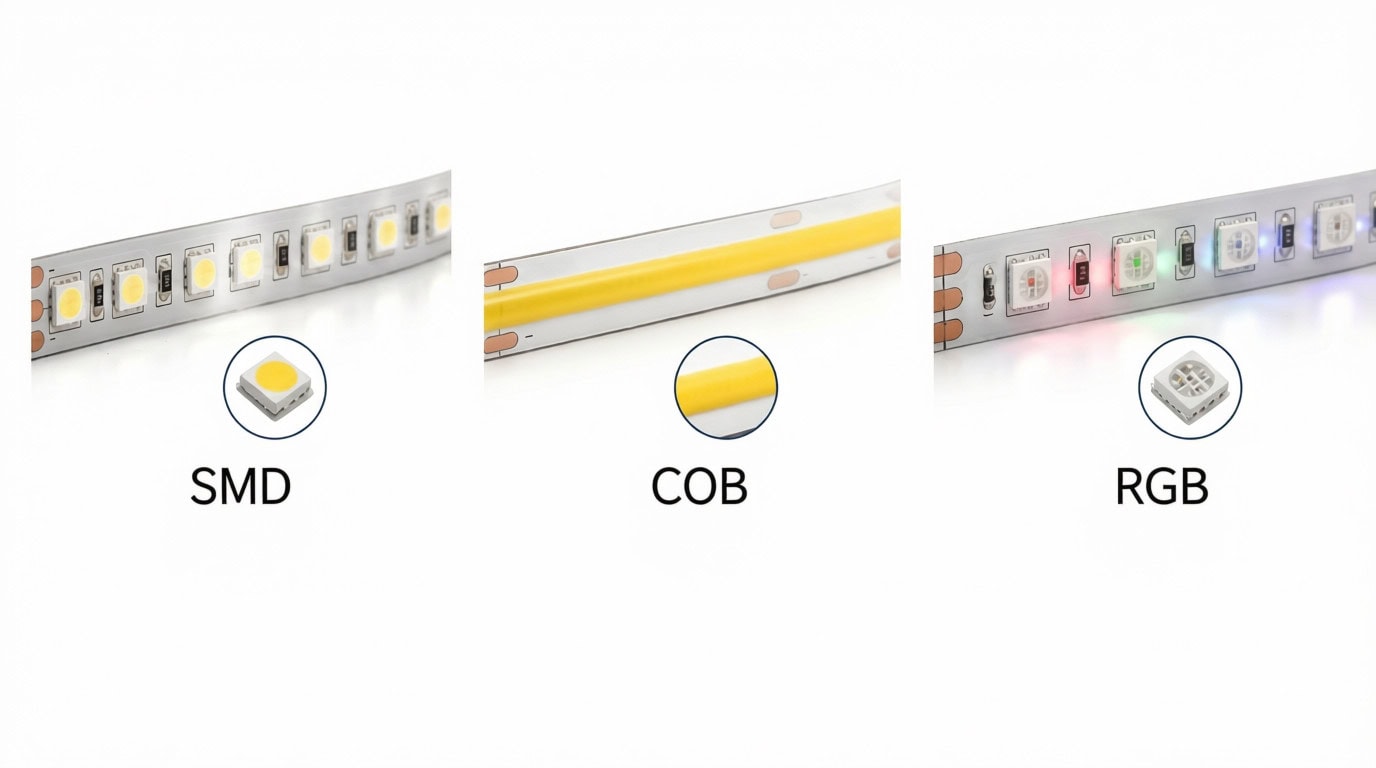
Not all strips are built the same, and knowing the main types helps you match the right one to your garden. Here are three common types you will come across.
SMD LED Strips
SMD (Surface Mounted Device) strips are the most widely used type. They place individual LED chips at set spacing along the strip, so you can see separate points of light up close. They come in many brightness levels and colors, and they are usually the most budget-friendly option. SMD strips are a solid all-round choice for most garden uses, especially where the strip is hidden from direct view.
COB LED Strips
COB (Chip on Board) strips pack the LEDs tightly under a phosphor coating. This creates a smooth, continuous line of light with no visible dots. For garden edges, railings, and any spot where the strip is on show, COB gives a cleaner, more premium look. It is a great pick when the appearance of the light line matters as much as the light itself.
RGB and Tunable White Strips
These strips let you change the look of your lighting. RGB strips shift through a full range of colors, which is handy for parties, holidays, and seasonal displays. Tunable white strips let you adjust between warm and cool white so you can set the mood for the evening. If you want flexibility rather than one fixed color, this type is worth the extra cost.
Waterproof Ratings Explained (What IP65, IP67 & IP68 Mean)
Waterproof Ratings Explained (What IP65, IP67 & IP68 Mean)
This is the single most important section for garden lighting. Outdoor strips fail early far more often from water damage than from anything else. The IP rating tells you how protected a strip is, so let’s break it down.
IP stands for Ingress Protection. The two digits tell you how well the strip resists solids and water. For gardens, the second digit is the one to watch. These ratings are defined by the international standard IEC 60529.
- IP65: protected against water jets and rain. Good for covered areas, under eaves, or spots that only get splashed.
- IP67: protected against short periods of immersion. Suitable for open garden areas exposed to heavy rain.
- IP68: protected against continuous immersion. This is the only rating for strips that sit underwater, such as inside a pond or fountain.
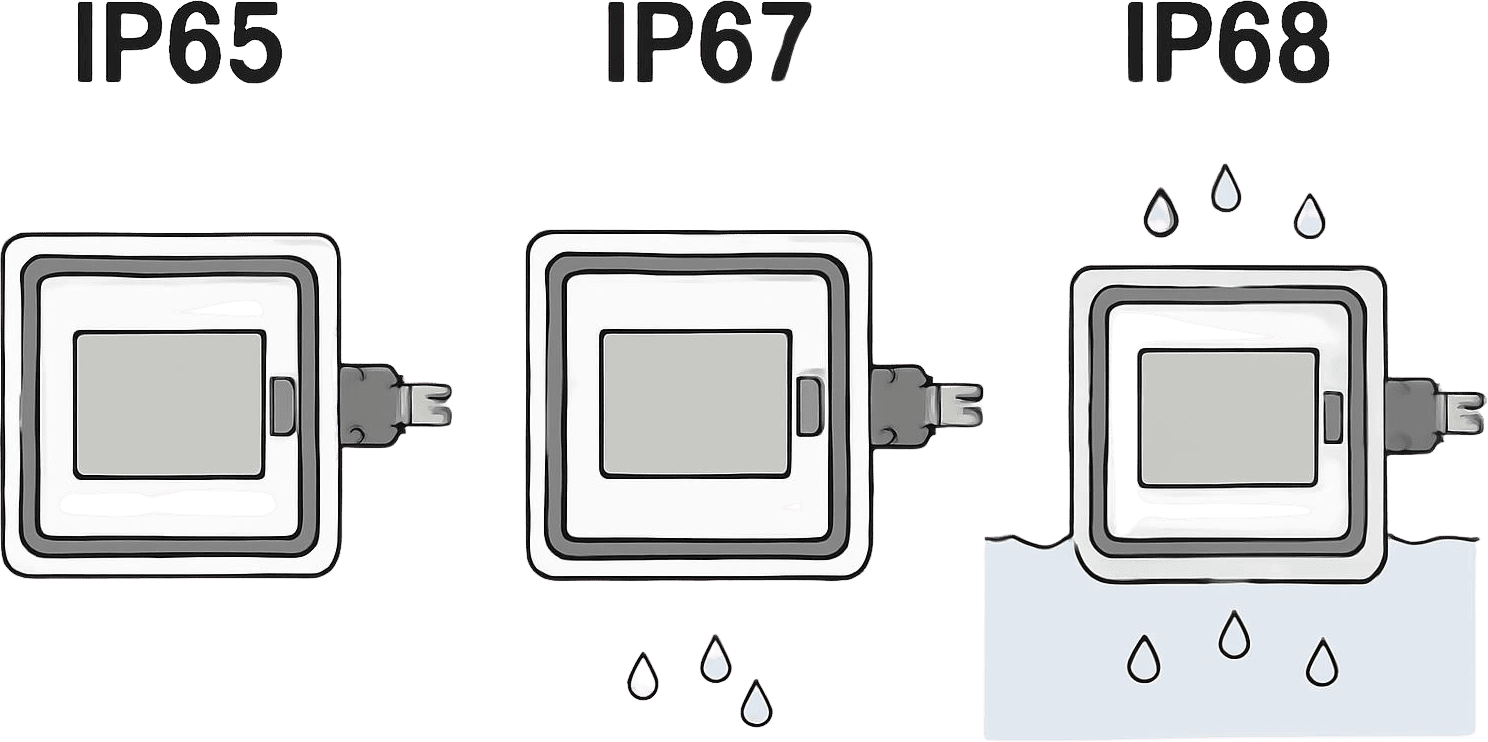
Which Waterproof Level You Need for Your Garden
Think of your garden in zones. Sheltered areas under a pergola can use IP65. Open beds and pathways that take direct rain should be IP67. Water features need IP68 with no compromise.
As a simple rule: IP65 for sheltered spots, IP67 for open ground, and IP68 for anything in or under water. When in doubt, go one level higher than you think you need.
A Simple Way to Check if a Strip Is Truly Waterproof
A high IP rating on the box does not always mean the whole install is waterproof. The wire connections and cut ends matter just as much as the strip itself.
In practice, most waterproofing failures we see are not caused by the strip at all, but by unsealed cut ends. Water wicks in through the exposed copper and travels down the strip, killing a whole section weeks later. So before you power anything on, seal every cut end with silicone or the supplied end cap, and keep connectors out of standing water. That one habit prevents the majority of early outdoor failures.
Choosing the Right Voltage and Power for Outdoor Use
Getting the electrical side right keeps your lighting safe, even, and reliable. You do not need to be an electrician, but you do need to plan ahead.
12V vs. 24V: Which Is Safer and Easier
Most garden strips run on 12V or 24V DC, powered through a driver that steps down from mains. Both are low voltage, so both are safe to handle around water and plants.
The difference is performance. 24V handles longer runs with less light loss than 12V, which matters when you are lighting a long path or border. For most gardens, 24V is the easier and more forgiving choice.
Each strip has a power rating in watts per meter. Multiply that by your total length to get the load, then pick a driver that comfortably exceeds it. Leaving around 20% headroom extends the driver’s life, and make sure the driver is rated for outdoor use.
How Long a Strip Can Run Before It Dims
On long runs, the far end of a strip can look dimmer than the start. This is voltage drop, and it is one of the most common complaints with garden installs. People often blame a faulty strip when the real cause is simply feeding one long run from a single point.
The fix is easy if you plan for it. For runs beyond the strip’s rated maximum length, feed power from both ends or split the run into shorter sections, and choose 24V so the light carries further. Sorting this out at the design stage costs nothing, but fixing it after everything is glued and channeled is a real headache.
Do You Need Mains Power, Low Voltage, or Solar?
Low-voltage systems (a mains driver stepping down to 12V or 24V) are the standard choice for reliable, bright garden lighting. They give consistent output and support longer runs.
Solar-powered strips are convenient where running a cable is difficult, but output and runtime depend on sunlight, so brightness can vary. For accent lighting in a hard-to-reach corner they work well; for a main pathway you rely on every night, a wired low-voltage setup is the safer bet.
Getting the Right Brightness and Light Color
Brightness and color temperature shape the entire mood of a garden at night. Get them right and the space feels warm and inviting; get them wrong and it looks either dim and gloomy or harsh and clinical.
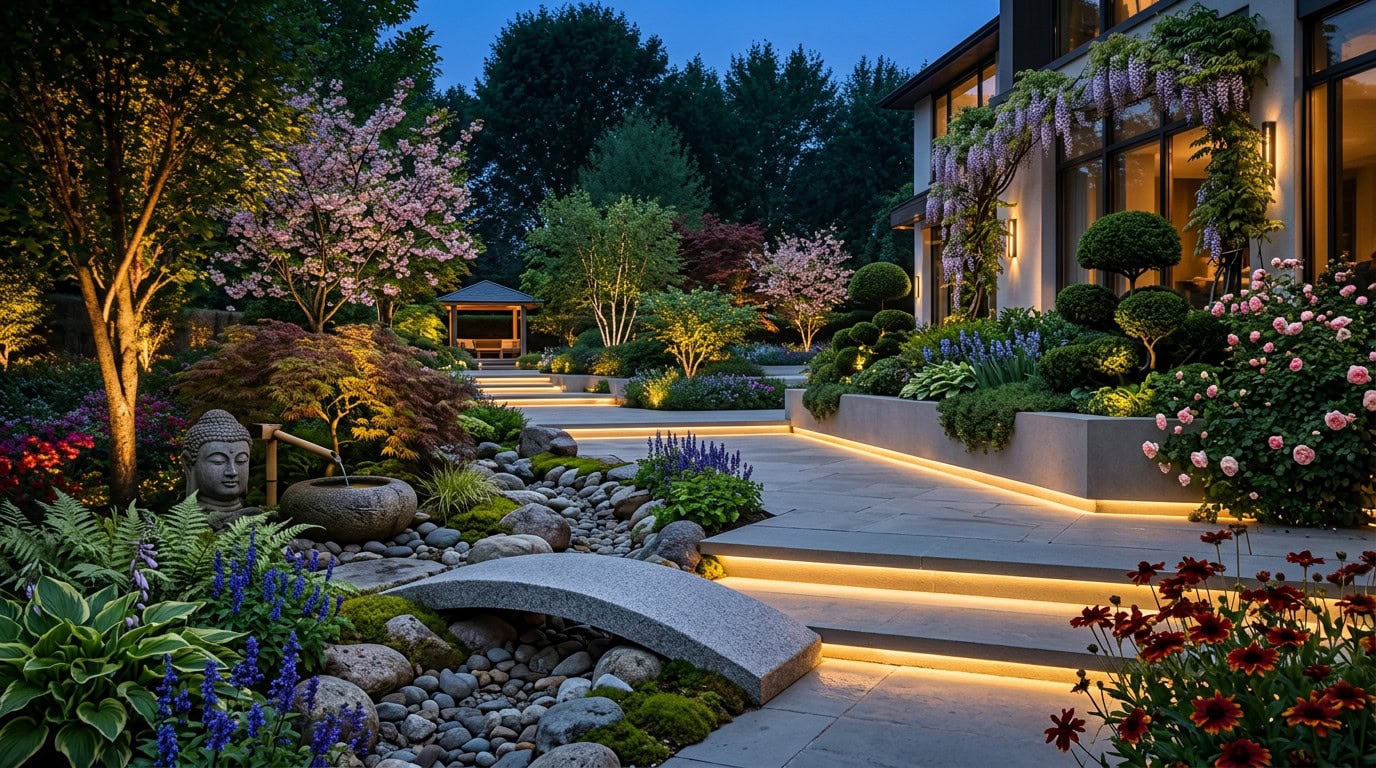
How Bright Should Garden Strips Be?
Brightness is measured in lumens per meter, not just watts. For most garden work you want accent-level output, not floodlight levels. Overly bright strips wash out the very features you are trying to highlight and cause glare.
As a general guide, use lower output for ambient background glow along borders, and higher output where you need to define a path or light a step for safety. Pathways and stairs benefit from more light for practical reasons; flower beds and feature walls usually look best with a softer, more restrained glow.
Warm White vs. Cool White
Color temperature is measured in Kelvin (K). Warm white sits around 2700K–3000K, while cool white runs 5000K and above.
For gardens, warm white is almost always the better choice. It feels natural and relaxing, complements planting and wood, and matches the tone most people want in an outdoor living space. Cool white can look stark and slightly cold outdoors, though it has its place for security lighting or a modern, minimalist design.
If you are unsure, warm white around 3000K is the safe default for planting, patios, and seating areas.
Why Light Quality Affects How Plants and Stone Look
Beyond color temperature, light quality matters, and this comes down to CRI (Color Rendering Index). CRI measures how accurately a light source shows true colors, on a scale up to 100. Daylight scores 100.
Low-CRI strips make greenery look flat and stone look washed out. A strip with CRI 90 or above renders the reds in flowers, the greens in foliage, and the natural tones in stone and timber far more faithfully.
In our experience, CRI is the spec buyers most often overlook. Two strips can share the same wattage and color temperature yet look completely different on the same wall, purely because of CRI. For gardens where you are lighting plants and natural materials, choosing CRI 90+ is worth the small extra cost.
Garden Lighting Design Ideas
With the technical choices settled, this is where the fun begins. A few simple techniques make a big difference to how professional the final result looks.
Continuous “Dotless” Lighting for a Clean Look
Standard strips can show individual LED “dots,” especially through a diffuser or up close. Dotless (COB) strips spread the light evenly for a smooth, continuous line with no visible points.
For clean architectural lines, hidden coving, or any place the strip is visible, dotless strips give a far more premium finish. They are ideal for edging steps, seating, and feature walls where you want the light, not the source, to be seen.
Hidden and Discreet Placement
The best garden lighting hides the source and shows only the effect. Tuck strips under step nosings, along the underside of railings, behind planters, or inside aluminum channels recessed into walls.
Aluminum profiles do double duty here: they conceal the strip, act as a heatsink to extend its life, and give a crisp, finished edge. Hidden placement turns a strip of lights into a designed lighting effect.
Dimming and Zone Control for Different Moods
A garden is used in different ways at different times, so one fixed brightness rarely suits every occasion. Adding a dimmer lets you drop the output for a quiet evening or lift it when entertaining.
Splitting the garden into zones takes this further. Separate control for the patio, the path, and the feature planting lets you set the mood exactly, and only light the areas you are actually using, which also saves energy.
Maintenance and How Long Garden Strips Last
Good garden strip lights should last for years with very little attention. A little routine care goes a long way toward protecting your investment and keeping the light output consistent.
Simple Upkeep to Extend Lifespan
Most maintenance is quick and seasonal. Wipe down the strips and any diffusers to clear dust, pollen, and grime that dull the light over time. Check that connectors and cut ends are still sealed, and clear away leaves or soil that trap moisture against the strip.
Once or twice a year, inspect the driver and make sure its housing is dry and ventilation is clear. Catching a loose connection or a cracked seal early prevents a small issue from becoming a failed section later.
Protecting Strips From Weather, UV, and Pests
Outdoor strips face three long-term enemies: water, UV, and pests. Water is managed through the right IP rating and sealed connections, as covered earlier.
UV is the slow one. Over years, sunlight can yellow low-quality silicone coatings and diffusers, shifting the color and cutting output. Choosing UV-resistant strips and channels matters for any strip in direct sun.
Pests are the overlooked one. Rodents and insects can chew exposed cabling. Running wires inside aluminum channels or conduit protects them and keeps the install tidy at the same time.
Frequently Asked Questions
Can I cut garden strip lights to any length?
You can cut most strips, but only at the marked cut points, usually every 50mm or 100mm. Cutting elsewhere can disable a whole segment. For outdoor use, every cut end must be resealed with an end cap or glue to keep water out.
Do garden strip lights get hot enough to be a fire risk?
Quality low-voltage LED strips run cool compared to older lighting, so the fire risk is very low. Heat becomes an issue only when strips are coiled up, run undersized, or paired with an overloaded driver. Mounting them on an aluminum channel dissipates heat and helps them run cooler.
Will garden strip lights attract insects?
LEDs attract far fewer insects than traditional bulbs because they emit little to no UV. Warm white strips attract even fewer bugs than cool white, which is another reason warm white suits outdoor seating and dining areas.
How much does it cost to run garden strip lights?
Running costs are low. LED strips draw only a few watts per meter, so even a large garden setup costs very little to run each evening. Adding a dimmer or zone control and a timer lowers this further by only lighting areas in use.
Can I get custom garden LED light strip made for my project?
Yes. For larger or non-standard projects, custom lighting is often the better route than adapting off-the-shelf strips. Custom options typically include cut-to-length runs, specific color temperatures and CRI levels, tailored IP ratings for each zone, custom aluminum channel profiles, and pre-fitted connectors to match your exact layout.
Conclusion
Choosing garden strip lights comes down to a few clear decisions: the right IP rating for each zone, a safe low-voltage system with enough power and headroom, warm white light with CRI 90+ for natural-looking planting and stone, and smart, hidden placement for a clean finish.
Get those fundamentals right and the rest is easy. Seal your cut ends, plan for voltage drop on long runs, and give the strips a little seasonal care. Do that, and your garden lighting will look great and keep performing for years.
Why Choose Garden Strip Lights from RC Lighting?
RC Lighting has rich experience in outdoor lighting, and we build garden strip lights for real outdoor conditions. Our range includes properly rated IP65, IP67, and IP68 options, UV-resistant coatings for long-term sun exposure, high-CRI warm white for true-to-life color, and dotless COB strips for a premium, continuous finish.
We also help with the details that matter, from correct driver sizing to voltage drop planning on long runs, so your project performs the way it should from day one.
Planning a landscape lighting project? Send us your garden layout and requirements, and our technical team will recommend the right IP ratings, voltage, brightness, and channel options for each zone.