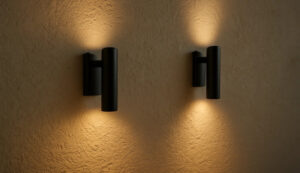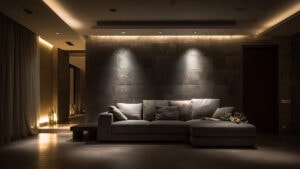
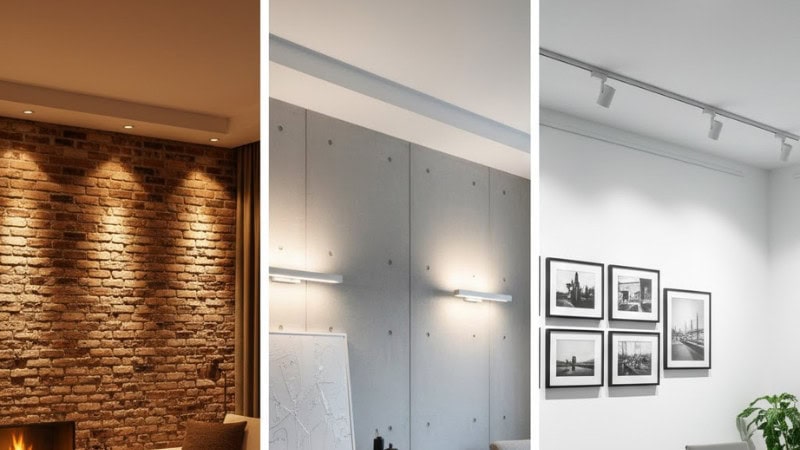
The wrong color temperature chosen in the architectural wall washing aspect might cause premium materials to look flat and dull, textures to be flattened, or even leave an unfriendly look. We will show you how to choose the right CCT (Correlated Color Temperature) when it comes to stone, brick, and concrete surfaces.
In this guide, we break down how 2700K, 3000K, and 4000K actually look on real surfaces and explain which one works best for stone, brick, and concrete. If you want a quick answer:
- 2700K = warm, cozy, flattering
- 3000K = balanced, natural, most universal
- 4000K = bright, crisp, modern
Below, we’ll show you when to use each one, why it matters, and how to avoid common lighting mistakes professionals see every day.
What CCT Means in Lighting
In simple words, CCT measures the level of “warmness” or “coolness” of the light, such as that emitted by traditional incandescent bulbs. The lower the Kelvin, the yellower and cozier the light is. The more the number increases, the brighter and purer in sound the light becomes.
Choosing the color temperature of architectural task lighting, you are actually determining the focus and mood of how people will feel viewing the wall, creating an inviting atmosphere, and whether the natural features of the wall will be bright or dull.
| CCT (Kelvin) | Description | Mood/Feeling | Typical Use Environment |
|---|---|---|---|
| 2700K | Warm, yellowish-white, similar to incandescent | Cozy, intimate, inviting | Residential, Heritage, High-end Hospitality |
| 3000K | Soft white, slightly clearer than 2700K | Welcoming, balanced, versatile | Retail, Public areas, General Architectural |
| 4000K | Neutral to cool white, crisp | Modern, professional, sharp | Commercial, Urban exteriors, Galleries |
Different CCTs affect viewer brightness perception and scene choice, implying that color temperature determines how visually appealing and clear a room seems.
How CCT Affects Human Visual Comfort
Lighting has an impact on how pleasant a location feels. Warm colors are 2700K, which gives a feeling of warmth, and warm light is best used for residential, heritage, or hospitality needs. However, 3000K is also very welcoming, although it is more transparent.
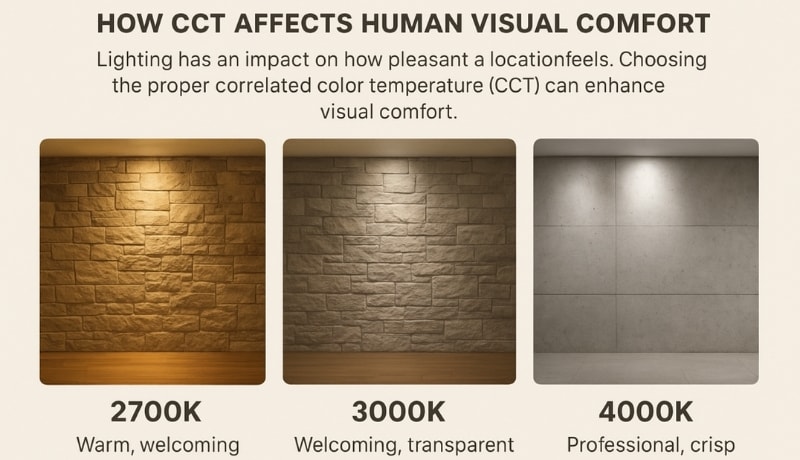
Nevertheless, as the frequency travels higher to 4000K, the tone is more professional and crisp. This is fine with concrete wall wash designs where clarity and precision are favored.
However, on more natural substances, such as stone and brick, cooler light at 4000K may appear slightly aggressive, even disappearing into the habitual colors.
Light in wall washing applications does not simply light up, but the light works across the surface, interacting with shadows and texture. This communication implies that selecting proper CCT may result in a deeper visual image or a two-dimensional picture.
Which CCT Fits Your Material?
Various materials react radically to various color temperatures, especially in working spaces where functionality is crucial. At this point, the selection of the CCT wall lighting becomes a science and an art at the same time.
CCT lighting influences how exhibited surfaces are perceived and preferred, demonstrating the need to choose the right colour temperature in architectural lighting to improve material textures and visual clarity.
| Material | CCT to Enhance Warmth/Texture | CCT for Clarity/Modern Look | General Recommendation |
|---|---|---|---|
| Stone Walls | 2700K (Richer, organic) | 3000K (Bright but warm) | 3000K (Default balance), 2700K (Heritage) |
| Concrete | 3000K (To neutralize coldness) | 4000K (Accuracy, sharp lines) | 4000K (Modern), 3000K (Comfort focus) |
| Brick Walls | 2700K (Boosts reds/earth tones) | 3000K (Retains heat, less saturation) | 2700K (Cozy/Residential), 3000K (Commercial) |
1. Natural Stone Walls
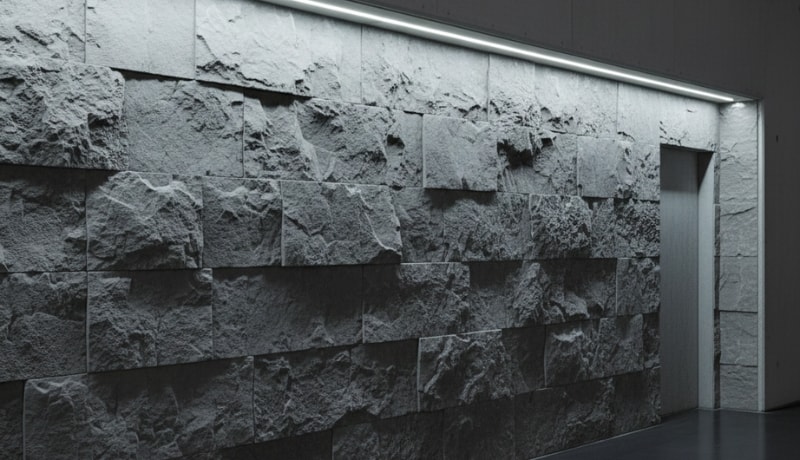
Stone surfaces generally vary in natural color and have imbalanced textures. In order to emphasize these things, you require something warm, such as an orange-toned light.
- At 2700K, Stone is richer and warmer.
- At 3000K, it keeps the natural warmth while brightening the surface.
- At 4000K, the surface can look too flat and lose depth.
Imagine a stone wall at 2700K – it is more natural and organic. Most architectural designers using stone wall CCT lighting use a starting point of 3000K, unless warmth is an especially important factor (such as hotel exteriors or heritage), when lighting.
The effect of warmer CCTs(2700K to 3000K) is a friendly, intimate, and appealing ambience for residential and hospitality settings, according to research.
2. Concrete Surfaces

If concrete is not properly lit, it might look cold and one-dimensional. In contrast to brick and stone, architectural light may stand out with some clarity.
- 3000K is used to neutralize the roughness and improve the visibility.
- 4000K is fitted very well in contemporary urban designs where the architectural accuracy is the center of attention.
In the case of concrete wall lighting, where the space is modern and has smooth lines, then 4000K will be reasonable. However, in case there is comfort in the setting (retail or reception space, etc.), 3000K can be a superior choice.
3. Brick Walls
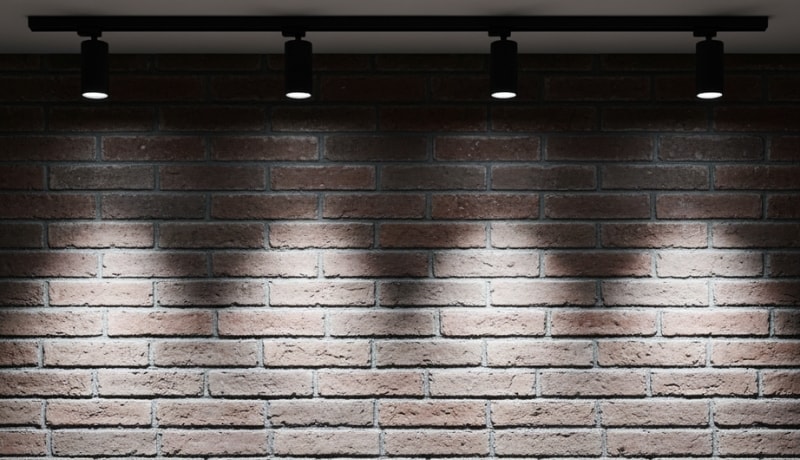
Brick has strong red or earthy tones, and appropriate lighting enhances rather than diminishes its richness.
- 1700-2700K assists in improving the reds and browns.
- 3000K retains the heat and preserves visual control.
- Do not use 4000K unless going out of your way to expose the color to a lack of saturation.
As far as cozy spaces are concerned, the majority of designers connect 2700K with brick wall lighting, and 3000K when it comes to commercial or balanced use design.
How to Balance CCT with Your Lighting Design
The selection of CCT not only grows with the material of the wall but also with the way the selection fits into the entire wall washer lighting plan, where neutral white can be effective. Color temperature offers different atmospheres; cooler light produces a crisp, contemporary feel, whereas warm light creates an intimate, relaxing, and comfortable atmosphere.
3 Common CCT Mistakes to Avoid
Using 4000K on Red Brick: This is a major “no-go.” Cool light washes out the natural warmth of the clay, making expensive brickwork look gray and cheap.
Forgetting the Environment: If the streetlights outside are a warm 2000K sodium vapor, putting a 4000K wash on your building will make it look disconnected and “alien” to its surroundings.
Ignoring Beam Angles: A high-quality CCT needs the right beam to work. A beam that’s too wide will blur the shadows and flatten the texture of stone, regardless of how good the color is.
Layering CCT for Visual Depth
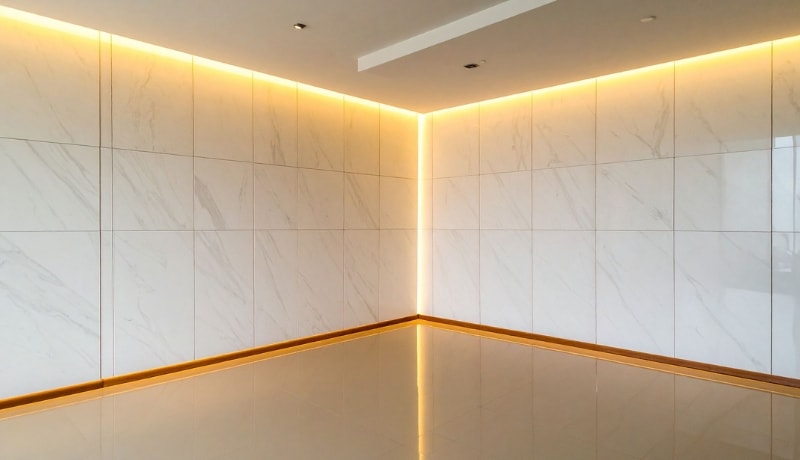
One CCT is not necessarily appropriate to cover the whole design, as the light emitted can vary significantly. Layered lighting is being embraced by many architects, wherein they combine wall washing, grazing, and accent lighting, as well as indirect lighting. For example:
- The Main Wall Wash (3000K): Use this for the primary surface to keep it natural.
- Accent Grazing (2700K): Use warmer floor uplights to hit the bottom of the wall. The contrast with the 3000K wash creates incredible depth.
- Ceiling/Indirect Light (3500K): A slightly cooler top-light can make the space feel taller and more open.
This serves not only aesthetic three-dimensionality but also tone. In LED wall washer color temperature layering, there should be a smooth and purposeful transition between various CCTs.
How Brightness and Beam Angle Change CCT Perception
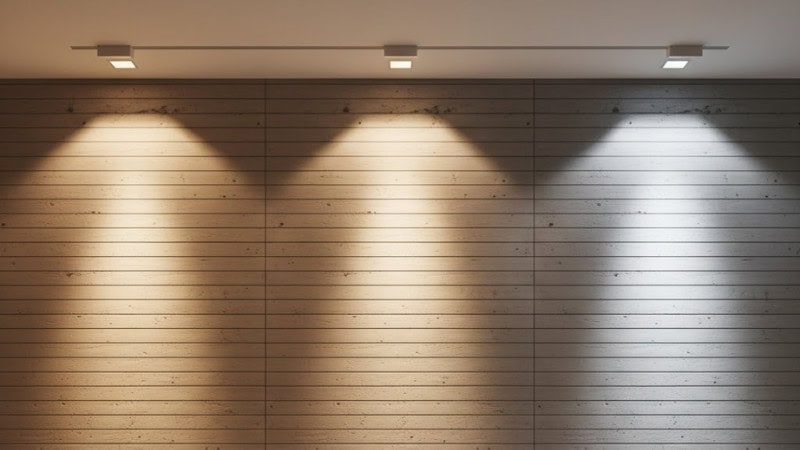
The strength of light influences the perception of the color temperature. Warm parameters (2700K) might need some extra brightness to avoid the appearance of darkness. Temperatures with less intensity are usually perceived as brighter when cooler (4000K).
The beam angle has an effect on the evenness of the spread of light, as well as on the surface. A slim beam makes the surface seem more dramatic, whereas a broad beam that can help to mix color temperatures is left with a fainter and more gentle disposition of light. Wider optics are paired with warmer CCTs and do well in more subjectively soft environments.
Context Matters: Indoor vs. Outdoor Standards
Let’s check the context in the interior and the exterior use:
Interior Use:
- Residential / Hospitality – 2700K
- Modern Office / Gallery – 3500–4000K
- Mixed-use / Public area – 3000K
Exterior Use:
- Hotel facade / Patio – 2700K
- Modern buildings are 3000K or 4000K according to the environment.
- Light in cities, Urban lighting, Lighting 4000K preferred, Precision.
Surrounding light sources and fixtures should be taken into account when selecting CCT to be used in lighting a wall. Using a mixture of 2700K and 4000K that would transition without caution would not look good. Unless contrast is deliberate, consistency is frequent.
How to Maintain the “Perfect Look” Over Time
Effective wall washer lighting design doesn’t stop with installation. Understanding how CCT works over time might help you keep that flawless appearance.
LED Lighting Aging and Color Shift
Even the premium LEDs may have some minor change in color over time, which tends to be towards a cooler color. In projects where the consistency of CCT is a very important consideration, consider:
- Selecting fixtures from a well-known company.
- Color adjustment systems are to be used.
- Arranging routine monitoring of colors.
Cleaning and Lens Care
Layers of dust or filth may affect how light reflects, making warm tones look colder or even completely muted. In wall cleaning applications, lens clarity is critical.
Frequency of cleaning:
- Indoors: every 4–6 months
- Outdoors or in the neighborhood of construction dust: once every 130 days.
Seasonal Adjustments
The appearance of light varies over the years:
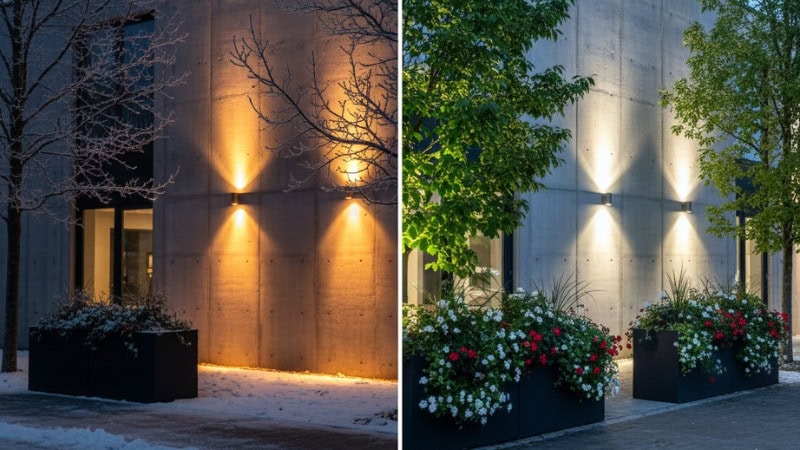
- Walls usually appear darker in winter – 2700K or 3000K will give back the feel of warmth again.
- When it is above 3500-4000K in summer, it might be used to contrast with extreme natural heat.
Conclusion
The decision on 2700K vs 3000K vs 4000K on architectural wall washing is reduced to knowing their unique impacts. Material-specific thinking is the key to successful wall washing CCT choice. The stone thrives in warm light that beautifies the natural beauty.
The concrete needs neutral colors that underline its architectural accuracy. Brick is responsive to the hot weather that admires its old constructions, unless you are aiming to have an aesthetic of the modern world.
The most appropriate decision may frequently rely on whether the wall must feel welcoming or structurally characterized. It is strongly advisable to do on-site tests before implementation; it may be an excellent idea on paper, but when it is laid on actual surfaces, it may look very different.
Need Help Choosing the Best Lighting Temperature for Your Project?
If you’re unsure whether 2700K, 3000K, or 4000K will best portray your wall as natural or as refined, RC lighting can assist in reviewing the surface, design purpose, and lighting installation for clear visibility.
Send over your project details or pictures of the wall, and we will recommend the ideal CCT combination that best suits your locality.
Let’s make your walls come to life with light that speaks the language of your architecture.
FAQs
Q1. How does CCT affect the appearance of architectural walls?
Warm CCT (2700 3000K) helps to add natural tones and make spaces friendly, while cool tones (4000K) focus on detail. Neutral CCT (4000K) puts focus on structure and detail and can sometimes make the images cold.
Q2. Which CCT is best for highlighting textures in stone, brick, or concrete?
CCT (Color Correlated Temperature) is less critical than the lighting technique (such as grazing light near the surface) in emphasizing the texture, but a somewhat neutral CCT (3000K to 4000K) is usually preferred to provide a balance between warmth and clarity.
Q3. Can I mix different CCTs on the same wall?
You can, but you have to be careful. Mixing 2700K and 4000K can look like a mistake if the transition isn’t smooth. We usually suggest a “layered” approach: use 3000K for the main wash and 2700K for ground-level accent lighting to create depth.
Q4: Is 4000K too bright for residential walls?
In most cases, yes. 4000K can feel a bit “sterile” or like a hospital for a home exterior. Stick with 2700K or 3000K for a more welcoming vibe.