
Different house rooms have different purposes, and to highlight every room, you must incorporate the right home lighting. For example, the widely used LED lighting options should take up a 76% share of the global lighting market by 2026.
You can opt for LED recessed downlights, and spotlights. But make sure you pay close attention to the color temperatures chosen for the LED bulbs.
For most people, there’s a huge debate over 3000K vs. 4000K LEDs. However, we have compared both of these temperatures to solve the dilemma.
About Lighting Temperature
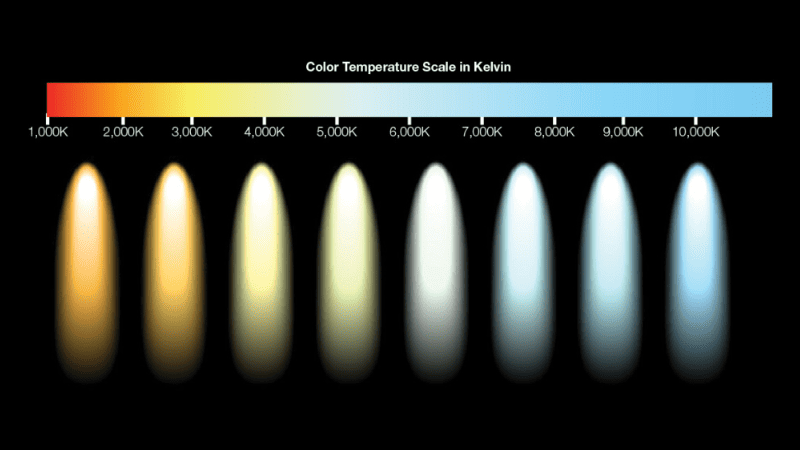
Before we start discussing which type of lighting is best for your house, let’s understand lighting temperature first. Lighting temperature, the same as color temperature, is the light color you see when you look at a light bulb.
For example, if you look at an LED bulb with a temperature of 2700K, you will find a warmer yellow light, which creates a warm and cozy atmosphere, or perhaps, you will notice a natural daylight-like color if the color temperature is 5000K.
So where does this come from? Picture a theoretical black body radiator heating up. As it gets hotter, it glows through different colors, red, then orange, yellow, white, and eventually blue at the hottest point.
This is why color temperature is measured in Kelvin (K), the same unit used for heat. A lower number means a warmer, more golden light, while a higher number means a cooler, whiter light.
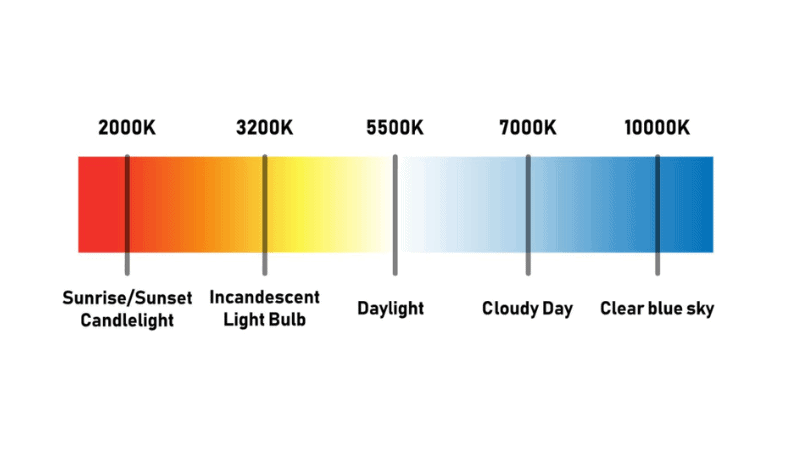
So when you see a bulb labeled 5000K, it falls toward the whiter side of that range, giving you a cooler light with that crisp, daylight-like glow. Kelvin temperature is crucial in such calculations, with a scale of up to 10000K. Here’s a list to assist you in comprehending the spectrum of light hues available:
- 2700K – warm white
- 3000K – soft white
- 3500K – neutral white
- 4100K – cool white
- 5000K -bright white
- 6500K -daylight
The household lighting options mainly include 3000K and 4000K LED bulbs. That’s why there’s normally a huge debate among homeowners relating to the suitability of 3000K vs. 4000K LED bulbs.
3000K Color Temperature
The 3000K LED bulbs give off a warm light that is more yellow than white. Since different color temperatures produce different colors, comparing 3000K vs. 4000K makes the difference clear: 3000K LED bulbs give off a yellowish, warmer light, while 4000K bulbs appear whiter and more neutral.
However, a 3000K LED bulb also integrates with white color but is slower. This warmer yellow lighting is best for in-house objects that require a natural light finish.
For instance, if your house comprises an earthy tone, opting for the 3000K is the best option. This warmer light is most suitable for housing plans and indoor residential spaces.

For your information, most interior designers and decorators suggest avoiding the cozy atmosphere of your kitchen, especially if it’s white.
Is 3000K LED Lights Cool or Warm?
While the 3000K color temperature is on the white scale side of the Kelvin temperature, it’s warmer and yellower than the higher light temperature range. The color temperature and yellow highlights aren’t that different from an incandescent bulb. That’s why most people love to include the 3000K LEDs for a traditional look.
However, the 2700K LED or any other bulb type is more yellowish. This color might be more visible and noticeable if you use the energy-efficient COB LED downlights. This light temperature is not a good option for task lighting.
4000K Color Temperature
In the 3000K vs. 4000K color temperature debate, 4000K represents a cool white color. This might be the perfect solution to your lighting needs and requirements if you have a white-colored household interior, such as soft white-colored cabinetry in the kitchen.
For instance, the cooler light of 4000K bulbs is suitable to highlight any bright-colored objects around the house. This color temperature in LED bulbs is suitable for residential and commercial spaces.
More importantly, it helps to reflect on the white surfaces inside the house but is inadequate for an abode with wood or earthy tones.

Most of the time, people intend to use a cool transition that moves from warm yellow to warm white and then to a cooler white light, mainly over white surfaces.
Is the Light from 4000K LEDs too Bright?
Hanging between blue and yellow, 4000K LED lights are highly suitable for those looking to create an amazing mix of light in their house.
People choose to go with dimmable LED downlights for the best mix of light between 4000K and 3000K. The dimmable bulbs allow users to control the LED color temperatures.
While 4000K light bulbs aren’t too bright and don’t impose any blue light exposure, it’s certainly appropriate for rooms like living rooms, bathrooms, and kitchens in residential spaces with an aesthetic setting.
Despite that, 4000K isn’t the most widely used color temperature for houses or even commercial spaces because preferences vary from one person to another.

As a beginner interior decorator or enthusiast, you should test different light fixtures with several color temperature ranges to see which one suits you the best. Remember that homes with contemporary interior decor look great with warm white LED light bulbs or, often, cool white.
Meanwhile, houses with traditional interior decor look better in a cozy and inviting atmosphere with a yellow light source, such as direct sunlight, yellow lights, etc. Most contemporary houses today tend to go for 4000K or above due to the neutral white and cool white.
Surprisingly, the nice transition from 2700K to 3000K and then 4000K appeals to many homeowners.
3000k vs. 4000k LEDs: General Overview
The shift from 3000K to 4000K is a noticeable one. It moves from a warm, yellowish glow to a cooler, crisper light.
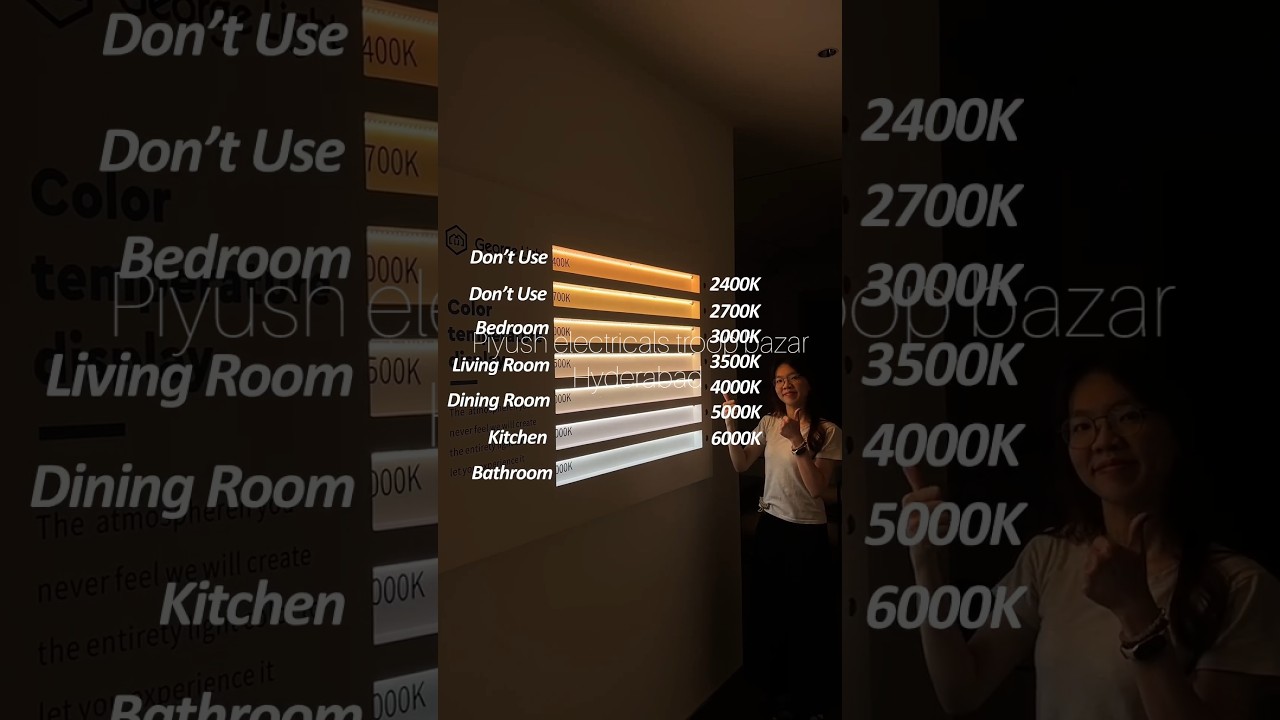
3000K works well in living rooms, bedrooms, and spaces with wood tones, where a cozy feel is the goal. 4000K suits kitchens, bathrooms, and home offices, where a brighter, more alert light is useful.
As a general rule, anything 3000K and below is considered warm white, while 4000K and above is considered cool white. The range in between, from 3000K to 4000K, is often labeled neutral white.
Here’s a simple breakdown of what to expect from 3000K, 4000K, and 5000K color temperatures:
| Color Temp | 5000K | 4000K | 3000K |
|---|---|---|---|
| Applications | Security (Outdoor Lighting) | Bathrooms, Garages, Work Areas | Bedrooms, Living Rooms |
| Appearance | Daylight | Cool White | Warm White |
| Feeling | Invigorating | Energizing | Comfy |
How Do I Choose Between Them?
You already know how 3000K and 4000K differ. Now comes the key question. Which one is the perfect option?
Here’s the good news. Both are LED, so both save you money on electricity. That takes price off the table and lets you focus on what really matters, which is how the light feels in each room.
And light does more than you think. Warm white at 3000K helps your body release melatonin, so you relax and wind down. That is why it feels so good at night. Cooler white at 4000K flips that around. It wakes your brain up and helps you stay focused.
So how do you actually pick? Just walk through these six things. Dimming, everyday use, your health, where you’ll install it, and the mood and design you want. Let’s go through them one by one.

1. Dimming Options
Your dimming plans should shape which color you pick, not the other way around.
Say you won’t dim much or the room has one clear job. Then just choose by mood. Relaxing space? Go 3000K. Task space that needs clarity? Go 4000K.
Planning to dim often? Here’s the catch. A dimmer only lowers brightness. It won’t turn 4000K into a warm glow. So start with 3000K, then pair it with a dim-to-warm driver, and the light melts into a softer, golden tone as it fades.
Some people still love crisp light and worry it feels harsh turned down low. A plain dimmer keeps 4000K cool, just darker. Fine for a workspace, less so for winding down at night.
And when a room can’t settle on one role, like a kitchen you also dine in, don’t force the choice. A tunable fixture swings between 3000K and 4000K, cool for tasks, warm for relaxing.
2. Utility
It would be best if you didn’t forget about utility when choosing between 3000K and 4000K color LED light temperatures. You may already know that different living spaces can have different lighting needs. For instance, when you enter the living room and turn the yellowish-warm white lights on, they instantly transform the mood into a more relaxed state.
Similarly, 4000K white light allows you to focus on the details of objects and observe more precisely. This is thanks to the bright light that 4000K LEDs often produce. For that fact, 4000K LED white spotlights are best for kitchens, garages, and bathrooms.
Wherever you need high clarity inside the house, opting for a whiter light like 4000K white light is the best choice. You can also opt for lower color temperatures for impressive displays and aesthetics.
For displays and accent areas, track lighting gives you more flexibility, since you can aim each head and mix color temperatures to highlight artwork, shelving, or a feature wall.
For example, when resting in your living room or home office and reading your favorite book, warmer white light can help you relax and assist in melatonin release.
Since white light from a 4000K LED can hinder the sleep cycle by affecting melatonin and other sleep hormone production and release, it’s best to stick with 3000K when it comes to relaxation.
Interestingly, warm light from 3000K LEDs can also help hide imperfections around the house, such as small cracks or spots.
3. Health
You have to consider health as well. For example, you can’t stare into the sun for long without damaging your eyes. The case is the same for household lighting if you make the wrong decision. You have to learn about this light damage that can arise from extremely bright white lighting.

Extremely bright light can cause eye strains which can be a potential eye health concern in the future. An incandescent light bulbs is inefficient in energy consumption and produces glares that aren’t suitable for a home office or any other part of the house.
Lower temperatures are more suitable for residential lighting, while commercial applications could involve bright white lights. Since a 4000K LED bulb produces more blue light, it can contribute to eye strain from prolonged exposure.
However, considering this factor, you can understand why people tend to go for the 3000K light, especially inside bedrooms.
4. Applications
Here’s a list of residential and commercial applications for different color temperatures and home lighting choices.
- Task Lighting: This type of lighting requires high focus and clarity. That’s when you opt for 4000K LED lighting.
- Utility Work: For household chores, garage work, and maintenance, 4000K LED lighting is the best option.
- Ambient Lighting: This is one of the few options to take up any color temperature. The main purpose of ambient lighting is to match the mood and aesthetics of the room. Hence, opting for a color temperature like the main room can help.
- Bedside Lamps: This utility falls under heavy use for those who love reading to sleep. Since it’s a relaxing activity, you don’t have to stay alert with a 4000K light; thus, you can opt for 3000K.
- Outdoor Lighting: Outdoor lighting has many uses, including security. For that reason, you can go for 4000K LED light bulbs or even higher that emit a lot more blue light.
- Accent Lighting: You can use 4000K accent lights to focus on the artwork.
5. How does Warm Light/ Warm White/ Natural Light Color Affect Mood?
As discussed earlier, we must mention that color temperatures can affect mood. A warm color temperature (i.e., warm yellow light) inside a room can trigger sleep hormones such as Melatonin to help you relax and fall asleep. This can help you to fall asleep faster and more effectively.
Apart from warm light, a cool light-covered room can make an individual more alert. This is because serotonin release can boost mood and energy levels.
Spaces built for focus and active conversation at home perform best with 4000K neutral white light. If your priority shifts to unwinding and curated ambiance, lean into 3000K LEDs or lower color temperatures.
6. Design Style and Existing Décor
Your furniture, cabinets, and wall colors should have a say in this decision too. Lighting doesn’t sit in a vacuum, it either flatters what’s already in the room or fights against it.
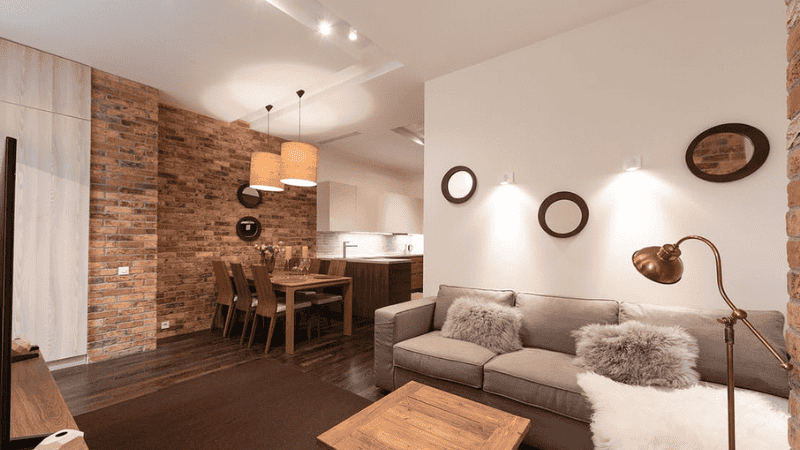
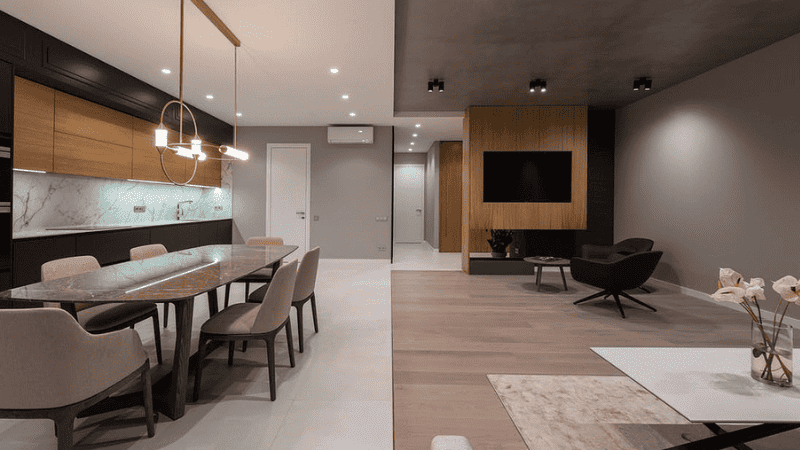
Warm 3000K light plays beautifully with warm materials. Think wood floors, oak or walnut cabinets, exposed brick, and earthy paint tones like beige, cream, terracotta, or deep red. Under 3000K, these surfaces look richer and more inviting, which is why traditional, rustic, and farmhouse-style homes almost always lean warm.
Cooler 4000K light suits the opposite palette. Modern and minimalist spaces built around white walls, gray tones, stainless steel, marble, and glass look crisp and clean under neutral white.
Here’s a quick way to decide. Look at your dominant surfaces first.
- Warm woods and earthy tones → 3000K makes them glow.
- Cool grays, whites, and metals → 4000K keeps them clean and modern.
- A mix of both → match the light to the room’s main material, or use a tunable fixture so you’re not locked in.
One thing most guides skip: your walls tint the light too. Because they reflect so much of it back into the room, warm-gray walls can make 4000K look dull and slightly dirty, while bright white walls can push 3000K toward yellow and dated. So before you settle on a color temperature, check your largest reflecting surfaces—not just your furniture.
3000K vs 4000K: Which One Fits Each Room in Your Home?
The right choice between 3000K vs 4000K depends on how each room is used, not just personal taste. Both are common color temperatures for LED lighting, but they create very different moods and levels of brightness.
Kitchen: 3000K or 4000K?
Kitchens with white cabinetry or a modern, minimalist layout often look better under 4000K cool white light, since it matches clean, bright surfaces and makes food prep easier.
A homeowner with white shaker cabinets installed 3000K LEDs first. The warm yellow tint distorted fresh produce colors, making greens and reds look muted even at the same lumen output. Upgrading to 4000K brought back natural, true-to-life tones for ingredients.
Traditional kitchens with wood cabinetry or warm toned countertops tend to suit 3000K warm white light better, as it keeps the space feeling cozy rather than clinical.
Bedroom and Living Room
These rooms are built for relaxing, so 3000K soft white lighting is almost always the better choice. The warmer color temperature creates a gentler glow that supports winding down, instead of feeling like an office under bright white light.
Bathroom and Home Office
Both spaces benefit from 4000K. Bathrooms need clearer, more accurate light for grooming and skincare tasks, while home offices need brighter, more alert task lighting to support focus during work hours.
General Rule of Thumb
As a simple guide, rooms built for tasks such as kitchens, bathrooms, and offices tend to work better with 4000K. Rooms built for relaxation such as bedrooms and living rooms tend to work better with 3000K. Matching color temperature to both room function and existing decor style gives better results than choosing one Kelvin value for the entire house.
Why Two “3000K” Bulbs Can Still Look Different?
We see this all the time in production and in customer feedback. Two lights both say 3000K. But the customer tells us one looks a little green, one looks a little pink, or it just doesn’t match another brand. This is a real problem, and it happens more often than you’d think.
Here’s the thing. “3000K” only means the light sits roughly around 3000K. It doesn’t tell you the exact color your eye will actually see. So two lamps can both say 3000K and still look different. One leans green. One leans pink. One leans yellow. Another looks closer to a clean neutral white.
The spec that explains this is Duv. At the same 3000K, the color point can sit in different spots relative to the black-body curve. When it does, your eye picks up a different tint. As a quick rule, a positive Duv tends to look green, while a negative Duv tends to look pink or red.
There’s a second factor too, and that’s SDCM, also called the MacAdam Ellipse. It tells you how closely the LEDs in one batch match each other. A rating of 2 or 3 SDCM holds much tighter than 5 SDCM. So once the fixtures go up, they match each other far better on the wall.
That’s why we don’t just control CCT on our projects. We also control LED binning, SDCM, Duv, and batch to batch consistency. And when a job needs really tight color matching, like a hotel, a high-end store, or a building facade, we push clients to approve a physical LED sample before we run production. Signing off on the “3000K” number alone isn’t enough. That number is a starting point, not a promise of the exact look.
Frequently Asked Questions
Is 3000K or 4000K better for outdoor and porch lighting?
For most home exteriors, 3000K is the popular choice because it feels welcoming and blends well with warm siding, brick, and landscaping. 4000K gives a brighter, more security-focused look and is common for driveways, garages, and pathways where visibility matters most. Many homeowners use 3000K near entryways and 4000K for functional or security zones.
Will 4000K make a small room feel bigger than 3000K?
Often, yes. Cooler, crisper light like 4000K reflects more evenly off walls and reduces the “closed-in” feel that warm light can create in tight spaces. For small bathrooms, hallways, or compact offices, 4000K can make the room feel more open and clean, while 3000K tends to make small spaces feel cozier but more enclosed.
Which color temperature is better for taking photos or video at home?
Often, yes. Cooler, crisper light like 4000K reflects more evenly off walls and reduces the “closed-in” feel that warm light can create in tight spaces. For small bathrooms, hallways, or compact offices, 4000K can make the room feel more open and clean, while 3000K tends to make small spaces feel cozier but more enclosed.
What if my project has rooms that each need a different color temperature?
That’s very common in larger homes and commercial spaces, where lighting needs shift from room to room. Tunable or custom-specified fixtures let you match each area’s function and finishes without locking into one temperature throughout. If you’d like help mapping this out, our team at RC Lighting can plan color temperatures room by room and recommend fixtures that fit your project—reach out for a custom lighting consultation.
Closing
Choosing the right lighting options for your house can elevate your interior decor. The decor is instrumental to the comfort you experience inside the house. 4000K is a much better option for focus and alertness inside the house, while 3000K is better for relaxation and convenience.
Here’s what we covered throughout this post to help you choose the right lighting method for your house:
- Difference between 3000K and 4000K lights
- Importance of 3000K and 4000K lights
- Applications of 3000K and 4000K lights
- How to choose the right lighting option for your house
Buying LED Lights from RC Lighting
Now that you are aware of the most interesting and common color temperatures, you should know that the job of choosing the right household lighting isn’t done. To ensure you can achieve the color temperature of your choice, you have to get in touch with the right light producer.
RC Lighting is one of the most popular LED light manufacturers and produces a range of downlights, track lights, spotlights, and more.
With China-based manufacturing, the company focuses on the needs and requirements of its customers. Send us your query regarding your LED light requirements, and let us help you make the most of your consideration.