You are pricing a media facade project, and the supplier quotes do not line up. One bid comes in at half the price of another for what looks like the same job. Which number reflects the real cost? And which one hides the overruns you pay for later?
This is the core problem for owners, contractors, and lighting integrators. The fixtures rarely drive the total price. Add control systems, mounting, cabling, labor, and maintenance, and the LED modules often make up less than half of what you spend.
We have helped teams build estimates and compare bids on projects of every scale. The same costly gaps show up again and again, usually in the line items people skip during early budgeting.
This guide breaks the cost down into the variables that matter most. Let’s start with what really drives the price.
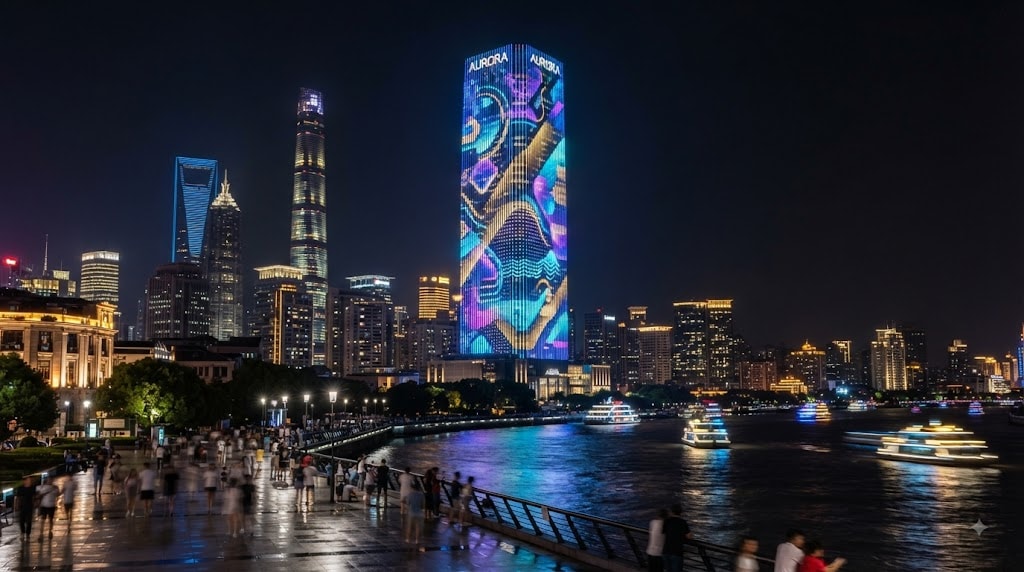
What Really Drives Media Facade Lighting Cost?
Many first budgets share the same blind spot. They price the lights and treat everything else as a small add-on. That is where the estimate starts to drift.
A media facade is a system, rather than a set of fixtures. Each part of that system carries a cost, and some of the larger ones may seldom appear on a fixture spec sheet.
The Main Cost Drivers
There are six factors tend to shape the total more than the rest. Getting these right helps your estimate hold up.
Fixture quantity and pixel pitch. Tighter pixel spacing means more nodes per square meter. A higher-resolution facade uses more fixtures than a low-resolution one, so the cost rises accordingly.
Control system. This includes controllers, signal distribution, and playback software. Video content generally needs a more capable setup than static color washes, which raises this line.
Structural mounting. Fixtures need brackets, a frame, or a secondary support structure. On older buildings, you may also need to reinforce the facade before installation.
Cabling and power. Longer cable runs, more circuits, and higher power draw mean more conduit and larger distribution panels.
Installation labor. Working at height on a facade is slower and more specialized than ground-level work. Access equipment and permits add to this cost.
Maintenance over time. Lower-grade fixtures tend to fail sooner. A cheaper bid can cost more over a ten-year span once you include replacements and access.
So when a bid looks low, it helps to ask what it actually covers. The difference between two quotes often is not the hardware. It is the items the lower bid did not include. We will break down these contributing factors one by one below.
Cost Breakdown by System Component
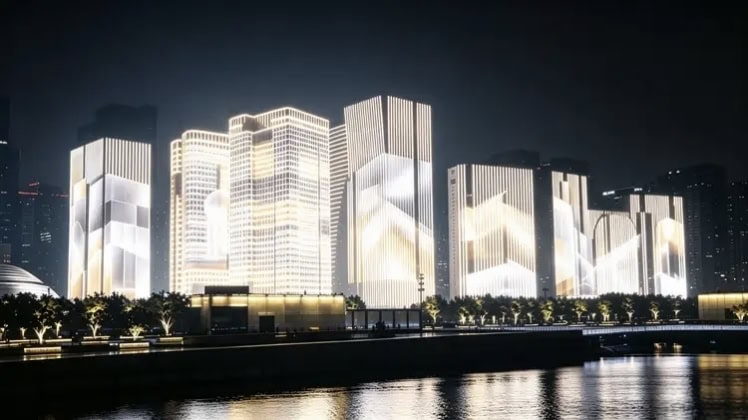
LED Modules, Linear Facade Fixtures, and Pixel Density
This is usually the largest line on the quote. The fixtures do the visible work, so they carry the most weight in your budget.
Two things drive the cost here:
- Type of fixture. Linear facade fixtures cost more than simple wash lights, and media-grade pixel fixtures cost more again.
- Pixel density. Higher density means more LEDs packed into the same area, and more control channels to run them.
Think of pixel pitch as the distance between each light point. A tighter pitch gives you sharper images and smoother animation. It also raises the price fast, because you need more fixtures to cover the same wall. This is exactly why dynamic LED displays sit at the top of the cost range.
Ask yourself one question early. Does the design need real video content, or just color and motion? A simple color-changing wash can look stunning at a fraction of the pixel-grade cost. Match the fixture to the effect you actually want, and you avoid paying for resolution nobody will notice from the street.
Mounting, Cabling, and Installation Labor
Physical installation is where quotes drift the most from the original estimate. Most people assume the fixture price is what blows the budget, but in our own facade projects that’s rarely the case.
A linear facade layout helps here. It uses fewer mounting points and shorter cable runs than scattered individual fixtures, which trims your labor hours.
However, site conditions are the wild card. Every building is different, and the same design can cost more on a complex surface than on a clean, flat wall. What we’ve seen get out of control most often is cable routing and installation access. A project may use only 1,000 fixtures, but on site you still have to run power cables, DMX signal cables, junction boxes, power boxes, and control cabinets. If the building didn’t pre-install conduit and routing paths, the crew ends up needing aerial work platforms, suspended gondolas, scaffolding, facade drilling, and re-piping. On some jobs, these access costs run higher than the fixtures themselves.
Thus, one rule keeps you safe. Always check the installation quote against the actual mounting surface, not just a generic per-meter rate.
Power Distribution and Control Systems
Once you know your fixtures, you can size the power and control layer. This part often surprises first-time buyers.
Every extra fixture pulls more power. Long runs and multiple circuits need plenty of conduit, and a heavy power draw calls for larger distribution panels. Dense, high-resolution facades sit at the top of this range, so the line tends to scale with your fixture count.
The control system adds its own cost. Basic setups run on a simple controller with preset scenes. Digital media facades need a video processor and a content management system, plus network switches to keep every pixel in sync. As the canvas grows, so does the control gear.
There’s also a cost most quotes hide: DMX addressing and commissioning. If the design stage doesn’t map out fixture addresses, power zones, and signal zones up front, troubleshooting moves to the site—days of manual checking at height that could have been handled on paper. Plan the control network before installation, not during it.
Here is where people trip up. They spec beautiful fixtures, then forget to budget for the brains that run them. Plan the power and control layer alongside the fixtures, not after. A quote that looks cheap on hardware can hide a thin control package that fails on day one.
A Buyer Selection Matrix for Comparing Component Grades
Installation costs are hard to lock down early. But component grades are something you can compare side by side before you commit. That comparison is where a simple selection matrix earns its keep.
Component | Economy Grade | Premium Grade | What the Premium Buys |
LED module / facade light | Standard output, basic finish | Enhanced finish or tuned output (e.g., $209 vs. $239 per unit) | Color quality, consistency, longevity |
Control system | Static or preset scenes | Remote digital control with live data inputs | Lower operating labor, dynamic content |
Cabling and power | Minimal spec | Weather-rated, serviceable runs | Fewer failures, easier maintenance |
Weatherproofing | Basic sealing | Full exterior IP rating | Survival beyond the first season |
The goal is not to buy premium everywhere. It is to spend where the upgrade earns its place. If a tuned output does not change what people see, the standard module is often enough.
Component grades are only half the equation. What you mount them on matters just as much. Then, we will look at how facade type and design complexity move the total cost.
How Building Facade Type and Design Complexity Change the Total Cost
There is a wide variety of facade types and design styles; if you want to achieve a stunning look, you should be prepared to allocate a budget for this aspect as well.
Here is how the main variables move your total cost.
Pixel Pitch, Resolution, and Content Requirements
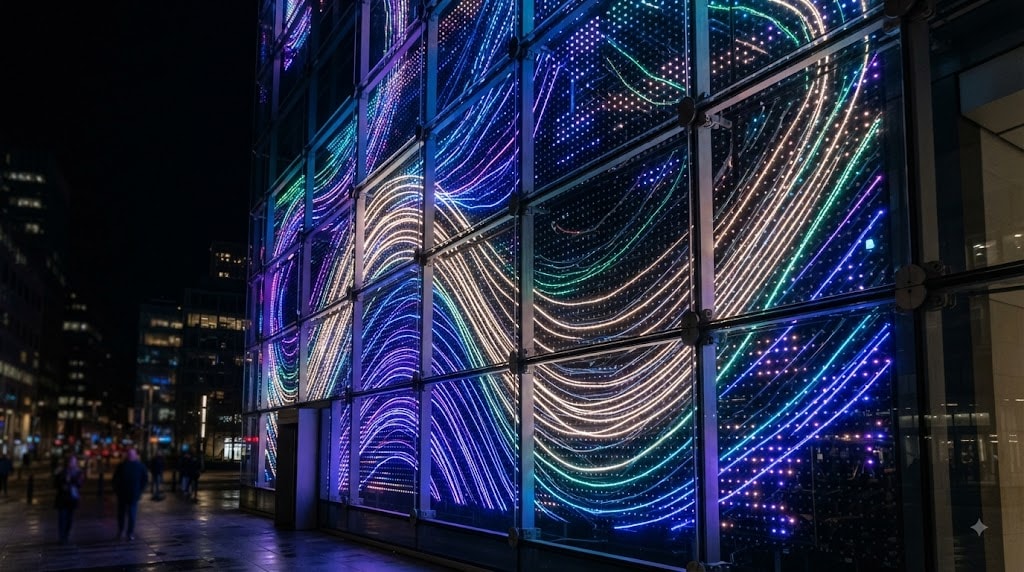
Pixel pitch is the distance between two LED points, measured in millimeters. A smaller pitch packs in more LEDs, so the image looks sharper up close. It also raises your cost per square meter fast.
Start with viewing distance. A facade seen from across a plaza does not need the fine pitch you would use on a lobby wall. Matching pitch to distance is one of the easiest ways to protect your budget.
Content plans matter just as much. Static logos and simple color washes run on modest resolution. Full-motion video and live data feeds demand tighter pitch, stronger processors, and a control system that can keep up.
So decide what will actually play on the screen first. Then size the pitch to that plan. Over-specifying resolution for content you will never run is one of the most common ways buyers overspend.
According to the U.S. Department of Energy, LED technology also delivers large efficiency gains over older sources, which affects your operating cost across the display’s lifespan.
LED produces equivalent brightness with far less power, trimming monthly utility bills. Its long rated life also lowers recurring maintenance costs: fewer service visits, fewer replacement components, and less downtime over the facade’s full service period.
Facade Height, Material, and Structural Conditions
Height changes everything about installation. Work above a few stories often needs scaffolding, cranes, or rope-access crews. Those line items can rival the cost of the lights themselves.
The wall material sets your mounting method. Glass curtain walls, concrete, brick, and metal cladding each call for different anchors, brackets, and load calculations. Some surfaces need a structural engineer to sign off before anyone drills.
Ask three questions early:
- Can the wall carry the added weight and wind load?
- Do you need custom brackets, or will standard mounts fit?
- How will crews reach the work area safely?
Structural conditions also affect cabling. Longer runs on a tall facade mean more weather-rated cable, more conduit, and more labor to route it cleanly.
Get a site survey before you finalize any number. A quick assessment of height, material, and access often reveals costs that a spec sheet alone will hide.
Energy, Maintenance, and Operational Costs of Media Facade Lighting
Performance, Lifespan, and Energy Consumption
Energy is a recurring bill, and facade displays run for hours every night. Over a few years, power draw can rival a big slice of the original hardware cost. So it pays to know what drives it.
Start with efficacy. This number tells you how many lumens each watt produces. Two panels can look similar on a datasheet, yet the one with higher efficacy gives you the same brightness for a smaller power bill.
Lifespan feeds into cost too. Quality fixtures often hold up for 50,000 hours or more before output drops noticeably. Cheaper diodes fade early, shift color, or dim unevenly across the panel, which forces replacements sooner than you planned. The U.S. Department of Energy offers useful background on how LED quality affects real-world lifespan.
Do not read the LED spec alone. Power supplies, cooling fans, and idle standby all pull current even during a simple show. Ask your supplier for the full system wattage, not just the diode rating, or your estimate will run low.
Then run the math over five years. A fixture that costs a little more but delivers better efficacy and a longer life usually wins on total cost.
Content Operations and Control System Support
A dark or frozen screen costs you more than a dim one. The control system is the brain that keeps content playing, so it deserves real attention during planning.
Match the controller to your content plan. Simple color scenes need little. Scheduled campaigns, live feeds, and remote updates need a content management system that can handle them without constant hand-holding.
Someone has to run the screen too. You either train an in-house operator or lean on your supplier for remote support. Both cost money, so decide the model early.
Ask a few practical questions before you commit:
- Can you update content remotely, or does someone visit the site?
- Does the system flag faults and send alerts automatically?
- How long does firmware and software support last?
- Are updates included, or billed as extras?
Strong support keeps the display working the way you planned. Weak support turns small glitches into expensive site visits.
Frequently Asked Questions
How much does media facade lighting cost per square meter or square foot?
There is no single per-square-meter rate. Every project is designed around the facade type and the desired visual effect, and costs are quoted per fixture or per installed system once the layout is defined. Outdoor LED fixtures span many form factors, output levels, and distribution patterns, and whether the facade is solid or vertically divided changes how many directional fixtures are needed.
How much does it cost to retrofit a media facade onto an existing building?
Retrofits almost always cost more than new builds because of hidden work. Aging wiring, weak anchor points, and unknown load capacity can trigger structural or electrical costs no spec sheet predicted. Occupied buildings may also force night or weekend crews at premium rates. Order a site survey before you finalize any number.
Do I need permits for a media facade, and how long do they take?
Most large facades need structural and electrical permits, and many cities limit brightness, operating hours, and advertising content. Approval can take weeks or months, especially near landmarks or in heritage districts. Check local rules before you finalize the design, since a permit delay costs far less when you plan for it than when it stalls a finished order.
When does a media facade need custom lighting instead of standard fixtures?
Custom lighting becomes necessary when your building’s shape, height, or material does not fit standard fixtures. Curved walls, tapered towers, and unusual finishes often need bespoke brackets or tuned fixtures, which the Burj Khalifa example shows at scale. A flat, standard wall rarely needs custom work. The more unique the surface, the more custom engineering you pay for.
How much does custom media facade lighting add to the cost?
Custom work raises cost in three places: engineering, tooling, and lead time. Bespoke brackets, non-standard pixel layouts, and tuned output all require design hours and sometimes new molds before production starts. There is no fixed markup, so ask your supplier to separate custom charges from the base fixture price. That way you can see exactly what the customization is costing you.
Conclusion
You now know why two facade quotes can look so different for the same job. The fixtures are rarely the reason. The real spread lives in the control system, the mounting, the cabling, the labor, and the years of energy and upkeep that follow.
Put that knowledge to work before you commit to a number. Match the pixel pitch to how far away people will stand, rather than the sharpest option available. Book a site survey so the wall’s height, material, and access shape your budget early. And press each supplier to show what their quote covers, line by line.
Get a Cost Estimate Built Around Your Facade
Because height, material, use, and local rules all move the price, no two media facades share the same quote. An accurate number comes from a spec tied to your actual site.
RC Lighting is an ISO 9001 certified LED lighting manufacturer in China, and our engineering team helps buyers size pixel pitch, brightness, and weatherproofing to their conditions and budget, with quality-guaranteed products at competitive prices.
Ready for a number you can trust? Request a free project consultation and get a media facade lighting quote built around your site.