Facade lighting can turn a building into a landmark, or let even beautiful architecture disappear into the skyline after dark. The difference almost always comes down to the decisions made before the design begins.
In our work lighting commercial and heritage buildings, we’ve seen the same handful of overlooked factors quietly ruin otherwise promising projects.
This guide walks you through the 12 factors that shape a successful facade lighting design, from what you’re lighting and the surrounding environment to budget, technique, and control. Get these right, and you protect both your building’s value and its visual impact.
Let’s start with what a facade actually is, then move into the factors that matter most.
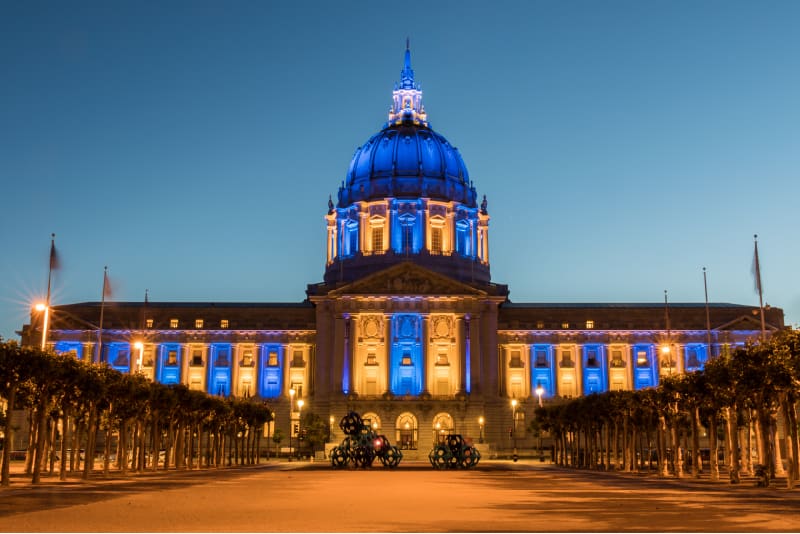
What is a Facade?
Facades, on their own, refer to the exterior side of a building, that is, the side facing the front. How a facade look is so important because, often, its concept determines the overall feel of the building, might affect how light transmits to the environment, and even the energy efficiency of that building.
Now that you know what facades are, you might figure out the transformative power of facade lighting designs, turning bland buildings into attention arresters. And if you don’t, I got you covered.
Experts have submitted that buildings with properly designed light concepts are distinct and can improve the overall feel of their immediate environment. They create an impression of class that attracts the high-enders.
Importance of Facade Lighting
Properly conceived facade lighting designs could highlight the main features of a building.
It can provide an artistic feel to the facades with shadows. Experts have stated that shadows are as important as lighting. Some leading lighting manufacturers say that while lighting illuminates the full features, silhouetting could provide entirely orgasmic or goose bumps effects for art lovers.
Facade lighting is waterproof and versatile. If you are trying to light up exteriors, the chances are that you would be searching for options that could continue working fine even when there is no shield from the elements. Facade lighting might be able to help. Beyond aesthetics and, of course, environmental security, facade lighting is waterproof.
Many big structures worldwide are now lit up with innovative ways to stand out from others. Facade lighting has become increasingly important in ensuring its visibility and security. Not only that, facade lighting has now assumed a more critical role in city planning and development. It provides nighttime as much as it provides daytime elegance.
Lighting design is a process and is one of the best ways to maximize space. Experts often advise that architects consider lighting concepts from the earliest design stage. Doing this would allow lighting to be optimized much later to enhance the perception of space, reinforce the activity within the space or highlight prominent areas.
You may already know that lighting design is more than determining the correct lux or intensity levels. It is also about the physiological visual demands and the emotional appeal to people. Hence, it is crucial to think long and hard before you choose or design your lighting scheme, especially if you are a newbie in the industry.
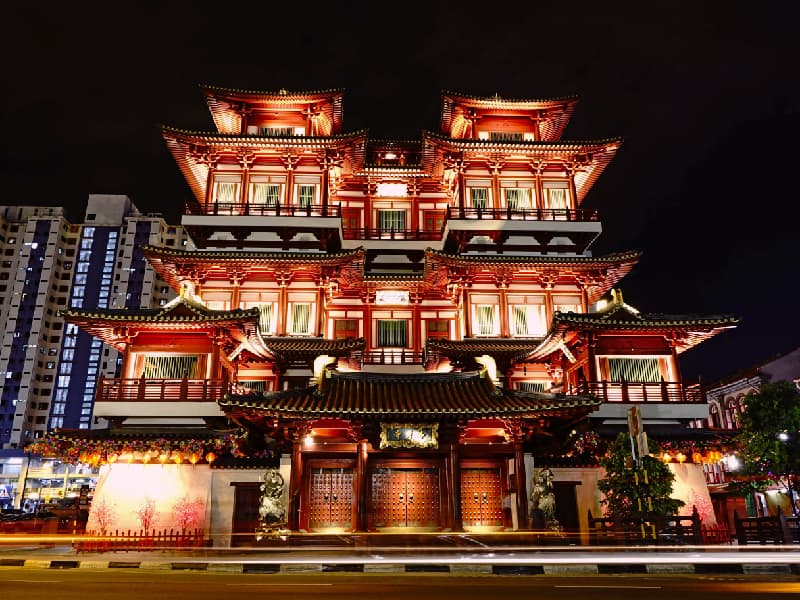
12 factors you should consider
To make this easy, I have put together in this article 12 factors you should consider before choosing a facade lighting design for your upcoming projects:
What do you want to light?
You rarely need to light an entire facade. In many projects, illuminating the right elements creates more impact than washing the whole surface with light.
Start by deciding what deserves attention. That might be the main entrance, structural columns, a distinctive roofline, decorative detailing, or a textured material like stone or brick that reveals character under grazing light.
Lighting everything equally often flattens a building and wastes energy. Choosing a few key features gives the facade depth, hierarchy, and a clear visual identity after dark.
How do you want to light it?
The starting point of any lighting project is determining the intent of the design. This will govern each design decision, like what mood you want to present, the people you want to appeal to, the style of lighting to choose from, and many more.
It is also imperative to consider the type of building you want to light. For example, a mall or plaza could have an extravagant lighting style, whereas a workstation or a bank could attain landmark status through a dynamic lighting style.
Always carefully check if the facade has a unique design, pattern, symmetry, rhythm, scale, contrast, mood, or balance, which you might want to highlight through lighting.
What kind of environment is it?
Environments for work and places that serve the public usually prioritize safety and good communication. Thus, in choosing a facade lighting concept, the functionalities of security and clarity should top your priority list.
On the other hand, environments designed for sales and exhibitions focus on the items and the user experience of viewing the products. Hence, you should choose a lighting concept to fit these functions.
A retail storefront, for instance, might use bright accent lighting to spotlight featured products in the window and draw passing pedestrians inside.
Residence or tourism spaces are more personal. Therefore, you should consider facade lights that can create an ambiance of relaxation and comfort.
Match the lighting concept to the function, and the space does its real job.
What are the functional requirements of the space?
A building can have more uses than those above. Using the space could determine the kind of facade lighting to accompany it. In thinking about functions, you should consider visual ease, glare, and task illumination. There are lighting requirements and recommended light levels for different tasks, which you can find in the CIBSE guide.
Some other important questions to provide answers to include:
- What activities will take place in the environment?
- How often will the activities take place?
- What time of the day will you be using the space?
- How important are these activities?
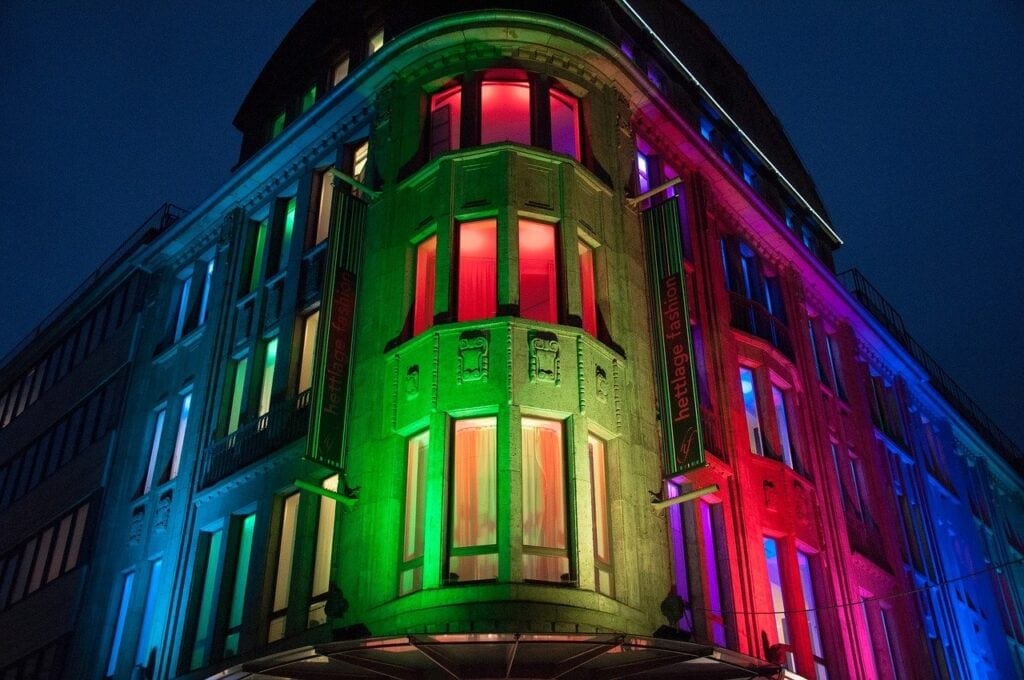
Behavioral effects on people.
Do you know that lighting can have meaningful effects on the health and behavior of people?
It can sufficiently improve and stabilize mood, helping people better focus and be aware. Psychologically, it can also decrease depression tendencies and better cognitive performance, like reaction time and activation. Therefore, it is essential to consider how your lighting design would affect the users.
The type of aesthetics required.
Lighting designs can alter how we perceive a space. No matter how excellent an architectural design is, the absolute masterpiece could look bland, uninspiring, and lifeless if you do not design its facade lighting properly. Similarly, proper lighting design concepts could make a monument from an ordinary building.
So before choosing any fixtures, define the impression you want to create.
Do you want the building to feel inviting, drawing people in with warm, welcoming light? Or atmospheric and dramatic, using contrast and accent lighting to make a bold statement?
This choice shapes everything that follows, from color temperature to lighting technique to how much of the facade you highlight.
Budget
You can only do so much as your budget permits. Take a seat and count the cost before picking a design on the catalog, so you do not get halfway and discover that the projected finishing expenses have spiraled out of your control.
Look at your budget from the start and brainstorm creative solutions to help you achieve the same desired effect without breaking the bank.
How will you use light and shadows?
To create interest and atmosphere around your facade, you should also be skilled at creating depth and texture through expert light and shadows. Soft shadows could draw attention to the lit area as you can use them to highlight features of a focal point in a facade, perhaps an art on the wall, an ornament, or a city block.
You can also use light to give the impression that a facade is more prominent. One straight light in the middle of a facade could illuminate the center while darkening the rest of the wall. This would draw the attention away from the facade.
Suppose you want to make the facade appear larger. In that case, however, you might need to illuminate the walls with the brightest light, drawing the viewers’ attention to the surrounding walls while making the entire building visible.
What kind of light will you use?
You can choose to use direct or indirect light. If you use natural light, while it may be bright and directional, giving you control over the area you would like to illuminate, it can also cause a flash, leading to headaches and exhaustion. You can use anti-glare baffles to manage this, however.
Indirect light, however, reflects on a fitting surface, causing viewers to see a diffused light on a surface. Indirect light may create a relaxed atmosphere, as glare is absent. Hence, it reduces strain on the eye.
You should know that using only indirect light on facades could create a bland and dull space. I would advise that you try out a combination of light and shadow for the best effects.
Once you decide on the type of light, the next question is which fixture delivers it. Different luminaires create different results, so matching the tool to your goal matters. Here are the most common types used on facades:
- Linear lights (wall grazers): Sit close to the wall and reveal texture on stone, brick, or concrete.
- Wall washers: Mounted slightly away from the surface to spread even, glare-free light across a flat facade.
- Floodlights: Placed farther back to cover large or tall surfaces with broad illumination.
- Spotlights: Use narrow beams to highlight columns, entrances, or sculptures.
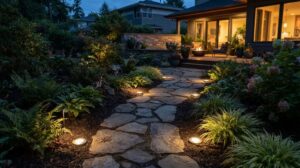
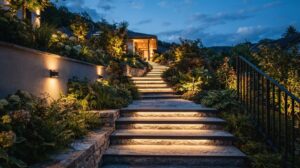
- In-ground uplights: Recessed at the base of the wall to emphasize height while staying hidden during the day.
- RGBW linear bars or pixel lights: Controlled by DMX for dynamic or color-changing effects.
Whatever you choose, always check the fixture’s IP rating (IP65 or higher for outdoor use), beam angle, and color temperature before you commit. These three factors decide whether the fixture actually delivers the effect you planned.
What color of light do you want to use?
There are cold and warm colors. Cold colors usually have more blue, whereas warm colors have more yellow.
These color types have environments and purposes for which they are best suited. You should pay attention to this before choosing a design concept. You can use cold lighting to create a natural daytime effect around open workstations or parks. You should use it at high lighting levels.
On the other hand, warm lighting is the best fit for residences. It looks a lot better at low levels of light, however.
Task lighting
Task lighting refers to providing light for specific tasks done around a facade. Some spaces will require different light because of the functions done around them. For example, a busy club avenue will require doused color lighting to align with the atmospheric conditions. It is often best to consider your task lighting requirements before choosing a design.
How will you control the light?
Technology now gives you more control than ever. The key questions are where and how you control the lights, since both shape the user experience.
Common options include:
- Manual switches for basic on/off
- Timers or photocells that switch on at dusk automatically
- Motion sensors that light zones only when needed
- App or central control (like DMX) to adjust brightness, timing, and color from one place
For large buildings, a central system works best. It lets you set scenes and schedules without touching a single fixture. Just keep your design concept in mind, so the controls support the mood you want.
Then, you need to know different facades need different techniques. Here are four common types.
Perforated facade: Has openings that allow creative, layered lighting for striking effects, both day and night.
Solid facade: A smooth, flat wall with no texture. It reacts strongly to how light hits it, so larger surfaces need a careful layout to avoid hot spots or dark patches.
Vertically divided facade: Has vertical lines like columns. Use narrow beams with up-lights and downlights to strengthen the vertical rhythm.
Horizontally divided facade: Horizontal lines cast heavy, long shadows. Increase the luminaire offset (mount it farther from the wall) to soften them.

Other Tips to Remember During Facade Lighting Design.
- The height of the building
- The width of the building
- The position of the light source
- The facade material
- The peripheral light in immediate contexts
- Strive to avoid light pollution
Some Lighting Techniques You Can Use
Grazing
For this, you can locate a light source close to the facade. Ensure to allow for the concentration of illumination at the base, such that the illumination reduces as it goes up the building.
Direct View
Here, you place light fixtures on the facades. It is best used for glazed facades.
Accentuating
You can also place light fixtures close to create dramatic effects. This is mainly for columns, openings, and the like.
Washing
Here, you place the light fixtures a little distance from the facade to provide a uniform wash on the facade. It is best used for specular finished and flat facades.
Flooding
You can locate light fixtures far away from the facade to provide uniform illumination. This is why it is called floodlighting.
FAQs
How much does facade lighting cost?
Facade lighting costs vary widely based on building size, fixture quality, and control systems, but most projects range from a few thousand dollars for small facades to tens of thousands for large commercial buildings. Per-fixture costs typically fall between $50 and $300, with linear grazers and RGBW pixel bars sitting at the higher end. Installation, wiring, and drivers can add 30–50% on top of the fixture cost. For an accurate figure, request a quote based on your specific building dimensions and design goals.
How much electricity does facade lighting use?
Modern LED facade lighting uses far less energy than older halogen or metal-halide systems, often cutting consumption by 60–80%. A typical LED wall washer draws between 10 and 40 watts, so running costs stay low even with nightly use. Adding timers, dimmers, or motion sensors reduces energy use further by limiting full-brightness hours. Choosing efficient fixtures upfront keeps long-term operating costs manageable.
Do I need a permit for facade lighting?
In many areas, yes—local codes often regulate brightness, glare, and upward light spill to control light pollution. Historic buildings and commercial zones tend to have stricter rules, and some regions require dark-sky-compliant fixtures. Checking with your local planning authority before installation helps you avoid fines or a forced redesign. When in doubt, work with a lighting provider familiar with local compliance requirements.
Can façade lighting be customized for my building?
Yes, custom facade lighting is common for projects that need specific beam angles, color temperatures, sizes, or IP ratings. A tailored solution ensures fixtures fit your building’s exact dimensions and design intent instead of forcing you to compromise with standard products. Custom configurations also simplify installation and deliver a more cohesive final look. Contact our team to discuss custom lighting solutions built around your project’s requirements.
Conclusion
What is most important in facade lighting design is ensuring that architects and designers think about it from the early stage. This way, you can have a well-balanced building. Of course, numerous factors to consider while developing a lighting design concept are multiple. However, the chief among them is to give credence to the end-users and the project’s overall purpose.
It’s time to get proper facade architectural lighting. At RC Lighing, we help you match custom lighting solutions to your building’s design goals, so the result looks intentional rather than improvised. Reach out to our team for tailored fixture recommendations or a project quote.