4 coastal outdoor lighting ideas that actually survive salt air and sea spray. See the IP ratings, materials, and power options that make fixtures last.
Planning outdoor lighting for a coastal deck or patio takes more than picking a style you like. Salt air and constant moisture wear down standard fixtures fast, often within a single season.
This guide breaks down four coastal outdoor lighting ideas built specifically for shoreline exposure. Each one includes the material grade, IP rating, or power option that actually holds up near the water.
We’ll cover recessed step lights for safe footing, marine-grade post caps for a finished look, salt-spray rated string lights for entertaining, and solar or low-voltage path lights for walkways. Along the way, you’ll see exactly which spec details matter most for each fixture type.
Let’s start with why coastal conditions demand a different lighting approach in the first place.
Why Coastal Outdoor Lighting Matters for Decks and Patios
Coastal decks and patios face unique challenges ordinary backyards do not. Salt air, high humidity and strong windswear down fixtures fast. A standard outdoor light may rust or fail quickly near the shore.
Good coastal lighting does more than add charm. It keeps your space safe after dark. Lit steps and walkways prevent trips and falls. It also protects your investment. The right coastal outdoor lights resist corrosion and hold up in coastal weather.
Beyond safety and durability, lighting unlocks your outdoor living area. With thoughtful fixture placement, you can use your deck or patio long after sunset. It creates a calm coastal mood for dinners, gatherings or quiet evenings by the water.
That is why coastal lighting needs careful planning. You cannot pick any outdoor fixture. You need designs built for shoreline conditions, matched to your deck or patio layout.
Recessed Step and Rail Lighting for Safe Footing
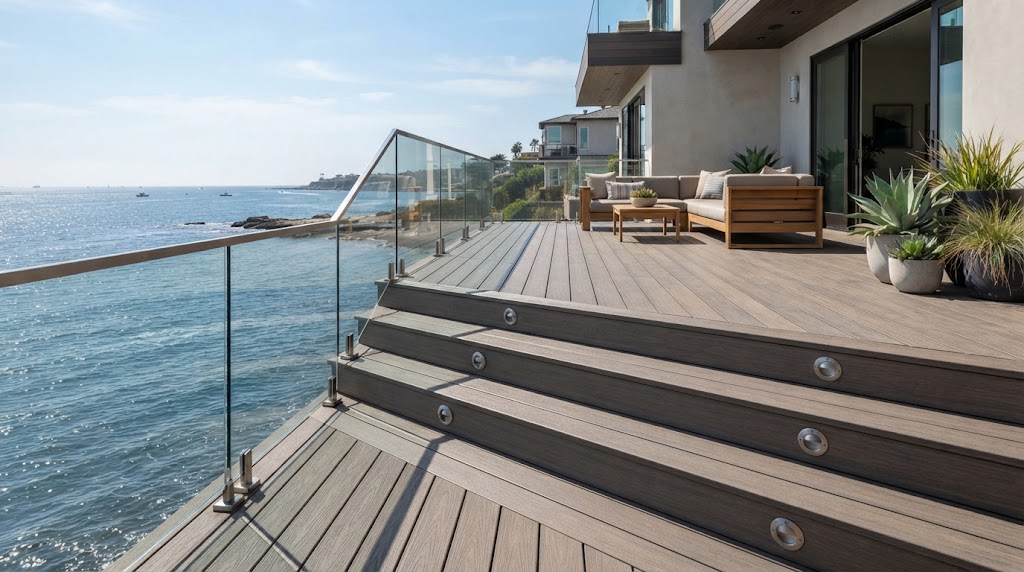
Deck steps are one of the most common places for nighttime falls, especially near the water where sand, wet feet, and uneven light make footing unpredictable. Recessed step lighting solves this by putting light exactly where your feet need it.
This is one of the simplest deck lighting ideas to implement, but coastal conditions raise the stakes on fixture quality.
Where to Place Step and Rail Lights
Install recessed lights on the riser of each step, not just the top or bottom. This keeps every step visible, not just the ones near a light source.
For railings, space fixtures every 3-4 feet along the top or bottom rail. Consistent spacing avoids dark gaps that undermine the safety benefit.
There are a few placement tips you ought to keep in mind:
- Angle step lights slightly downward to reduce glare for anyone walking up.
- Avoid placing fixtures where standing water or sand can pool against the lens.
- Keep wiring runs as short as possible to reduce the number of coastal-exposed connection points.
The Aesthetic Payoff, Not Just Safety
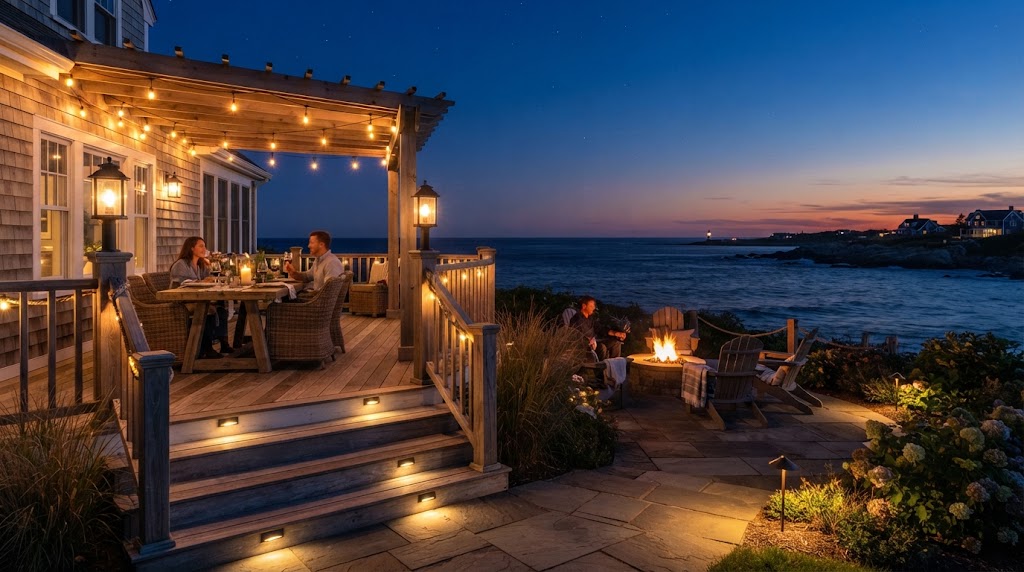
Recessed lighting does more than prevent falls. Because the fixture sits flush with the surface, it disappears during the day and leaves the deck’s clean lines untouched.
At night, the effect changes completely. A row of small, evenly spaced points of light traces the shape of your stairs and railing, giving the deck a defined, high-end outline against the dark yard or shoreline.
This low, ambient glow also sets a calmer mood than a single bright overhead light. It’s a look often associated with resort patios and waterfront restaurants, since it lights the space without overpowering the view of the water or night sky.
Why IP Rating Matters More Near the Water
Standard deck lights are often rated for basic outdoor use, but that rating rarely accounts for salt spray, blowing sand, or direct wave mist. You need a fixture rated for both water and particulate exposure.
Look for a minimum IP66 rating, and IP67 if the deck sits close to the tide line. The IEC 60529 standard defines exactly what these ratings mean, including protection against powerful water jets and fine dust or sand.
A lower-rated fixture might work fine on a fenced-in backyard patio. Near the shore, that same fixture can let in moisture within a few months, causing corrosion inside the housing.
Post Cap Accent Lighting for a Finished, Boutique Look
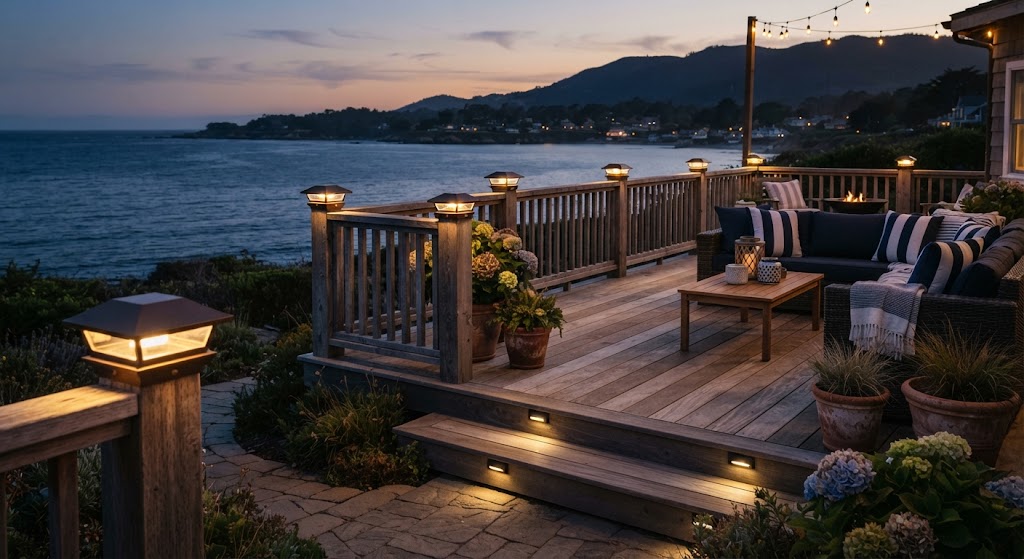
If you want your railing to look intentionally designed rather than just “lit up,” post cap lighting is one of the most elegant lighting solutions to try. Instead of one light source doing all the work, a small glow tops every post, turning the railing itself into a design feature that elevates your outdoor space.
It’s a look you’ll recognize from upscale waterfront restaurants and resort decks — understated during the day, quietly elegant at night.
The Effect: A Layered, Designed Look
The idea works because post caps sit at hand rail height, above your step lights and below any overhead fixtures. That middle layer of light fills the visual gap between ground glow and sky, making the whole deck feel intentionally lit rather than randomly lit.
Pair it with recessed step lighting (covered above) for the strongest effect. Together, they trace both the horizontal line of the railing and the vertical rhythm of the posts, giving the deck a defined outline after dark.
For a softer feel near the water, choose caps with a 360 degree diffused glow rather than a sharp downlight. The diffused option scatters light more like a lantern, which reads as warmer and less commercial against a dark shoreline.
Durability for Coastal Conditions
This idea only works long term if the fixture survives coastal exposure. A cracked or chalky post cap ruins the clean look it’s meant to create.
For that reason, the caps worth choosing are usually marine grade 316 stainless steel or UV stabilized composite. Both hold their finish far longer than standard outdoor rated fixtures in salt air.
A Simple Styling Rule
Keep every post cap identical across the whole railing. Mismatched finishes or brightness levels are the fastest way to make this idea look unfinished instead of designed.
Salt-Spray Rated String Lights for Dining and Entertaining
String Lights for a Warm, Entertaining Atmosphere
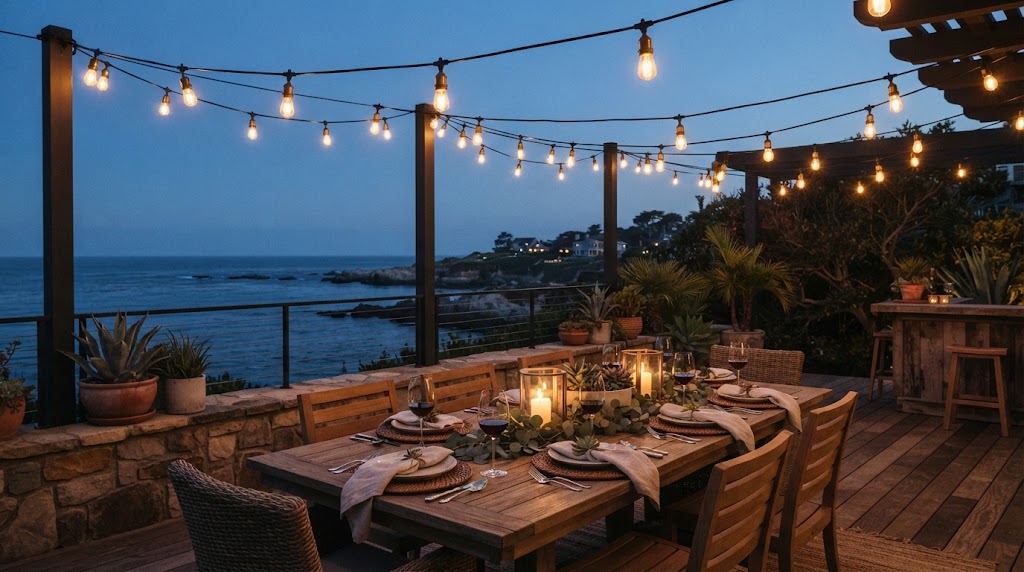
If post cap lighting creates a polished outline, string lights create the mood. This is the idea most people picture when they think of a coastal deck at night. Warm bulbs strung overhead, casting a soft glow over a table full of food and drinks.
It’s an easy way to turn a plain deck into a space people want to linger on after sunset.
The Effect: Instant Ambience Without a Full Redesign
String lights work because they add light exactly where people gather, not just along edges or steps. Strung above a dining area, seating cluster, or open stretch of deck, they create a canopy effect that feels festive without needing any structural changes.
This makes string lights one of the fastest ways to upgrade a deck’s evening atmosphere. A single string can transform a bare railing or empty overhead space into the visual centerpiece of the whole deck.
For a coastal look, warm white bulbs tend to read as more relaxed and beach appropriate than cool white or multicolor options. Globe bulbs in a matte or frosted finish also diffuse light more softly, which suits an outdoor dining or lounge setting better than a bare bulb look.
Making the Look Last in Salt Air
Standard indoor or big box string lights rarely survive a coastal season. Salt spray corrodes exposed metal sockets quickly, and UV exposure fades plastic housings within a year.
Look for string lights rated at least IP65, which indicates protection against both dust and low pressure water jets. This rating matters more directly near the coast than a general outdoor rating, since it reflects how well the fixture resists wind driven spray, not just rain.
Also,we find that shatter-resistant or rubberized bulb housings outperform glass. Strong winds can whip string lights into railings or walls, and these tough casings won’t break easily.
A Simple Hanging Rule
Anchor string lights at both ends with weatherproof hooks or cup hooks rather than nails, which can rust and stain composite or wood railings. A slight sag between posts also reads as more relaxed and intentional than a tightly stretched line.
Solar and Low-Voltage Path Lighting for Walkways
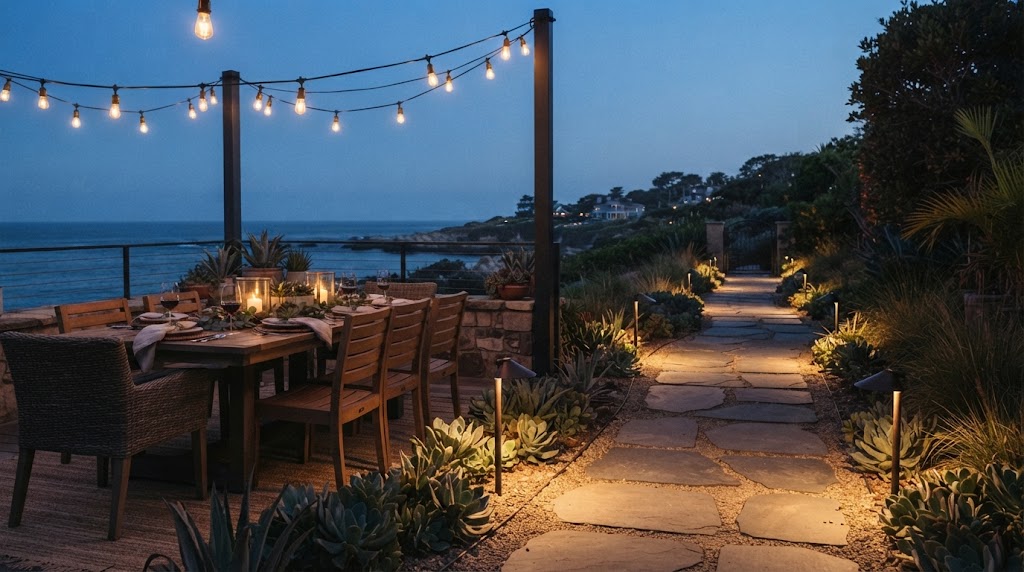
Once the gathering areas are lit, the next idea is guiding people safely between them. Path lighting marks the walkway, the garden edge, or the transition from patio to lawn, so guests never have to guess where solid ground ends.
This is less about mood and more about function, though it still adds to the overall patio lighting layout ideas you’re building across the space.
The Effect: Clear Wayfinding Without Overlighting
Path lights work best spaced every 6 to 8 feet along a walkway, staggered slightly rather than lined up like an airport runway. This spacing lights the ground enough to see edges and steps without washing out the softer glow of your string lights or post caps elsewhere on the patio.
Low, downward facing fixtures also keep glare out of guests’ eyes, which matters more on a dark coastal evening than sheer brightness.
Solar Versus Low-Voltage: What Actually Works Near the Coast
Solar path lights are the easier install, since there’s no wiring or trenching involved. In full-sun coastal locations, they often perform well, since the exposure that ages fixtures faster also charges them faster during the day.
That said, solar output still drops on overcast days or through a run of storms, which coastal areas see more of in certain seasons. If your walkway needs reliable lighting every night regardless of weather, low-voltage wired lighting is the more dependable choice.
Low-voltage systems also allow brighter, more consistent output along longer paths, which matters for larger properties or commercial walkways where guests need dependable visibility year round.
A Simple Selection Rule
Choose solar for short, decorative paths in full sun. Choose low-voltage wired for main walkways, stairs, or any area where reliable nightly lighting is a safety requirement, not just a design preference.
FAQs
Do I need a licensed electrician to install low-voltage or hardwired coastal lighting?
Low-voltage lighting kits are often designed for DIY installation, since they run on 12 volts and don’t require the same safety precautions as standard household wiring. Hardwired systems, however, typically require a licensed electrician, especially near water where local codes often mandate GFCI protection for any outdoor circuit.
How often should coastal outdoor fixtures be cleaned or maintained to prevent corrosion?
Rinsing fixtures with fresh water every few weeks helps remove salt buildup before it settles into seams or housings. For properties directly on the waterfront, a quick monthly check of gaskets, lenses, and connection points can catch early corrosion before it reaches the wiring.
What color temperature works best for coastal outdoor lighting?
Warm white light, generally in the 2700K to 3000K range, tends to suit coastal settings best, since it mimics candlelight and complements natural surroundings like sand, wood, and water. Cooler color temperatures above 4000K often feel more clinical and can clash with the relaxed mood most coastal decks aim for.
Can I mix solar, low-voltage, and hardwired lighting on the same deck or patio?
Yes, and most well-designed coastal layouts do exactly this. Solar lights work well for decorative accents in full sun, while low-voltage or hardwired systems handle the areas where consistent nightly brightness matters most, such as stairs and main walkways.
Conclusion
You don’t need to install all four ideas at once, and you don’t need to get every spec perfect on the first try. Start with the zone that matters most right now, whether that’s safer steps, a more finished railing, or a walkway that needs better wayfinding after dark.
From there, the decision gets simple: check the one coastal-specific detail that matters for that fixture type, whether it’s an IP66 rating, marine-grade stainless, or IP65 protection, and choose accordingly. You can always add the next layer of versatile lighting options once the first zone is done.
Ready to Choose Fixtures for Coastal Outdoor Lighting?
Once you know which ideas fit your layout, sourcing fixtures built to handle salt air, sun, and shifting weather becomes a much easier decision. If you’re ready to explore coastal-rated fixtures suited to your specific deck or patio, our team can help you compare options and find the right lighting for your project, from IP ratings to material grade to power source.