Want your patio, trees, or fence line to glow with that soft, floating effect you keep seeing online? Hanging small LED light balls in the right outdoor spaces makes all the difference between a magazine-worthy display and a cluttered mess of wires.
We’ve worked with homeowners, hospitality properties, and outdoor designers to identify which mounting techniques and product types actually create that clean, effortless look — and which mistakes keep tripping people up.
In this guide, we’ll cover the best outdoor spaces for hanging LED light balls, the installation techniques that avoid clutter, how to choose the right ball type for your style, and what to check before you buy.
Let’s start with where to hang them for the biggest visual impact.
Where to Hang LED Light Balls for the Biggest Visual Impact
Not every outdoor space gives light balls the same visual payoff. Some spots make the glow feel intentional and layered, while others just look like scattered dots against empty air.
Patios and Porches
Patios work well because they already have structure, whether that’s a roofline, a railing, or a pergola beam to anchor the lights. Hanging balls above seating areas draws the eye upward and creates a natural focal point for evening gatherings.
Trees and Garden Beds
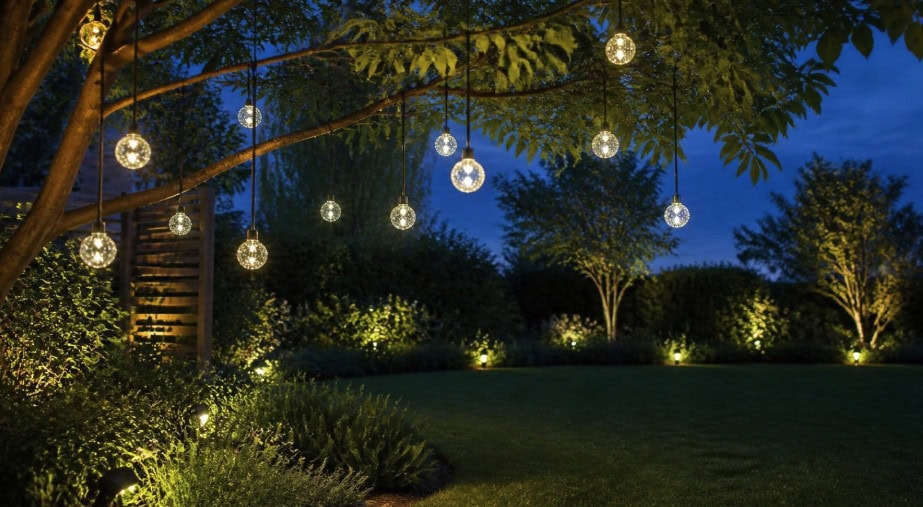
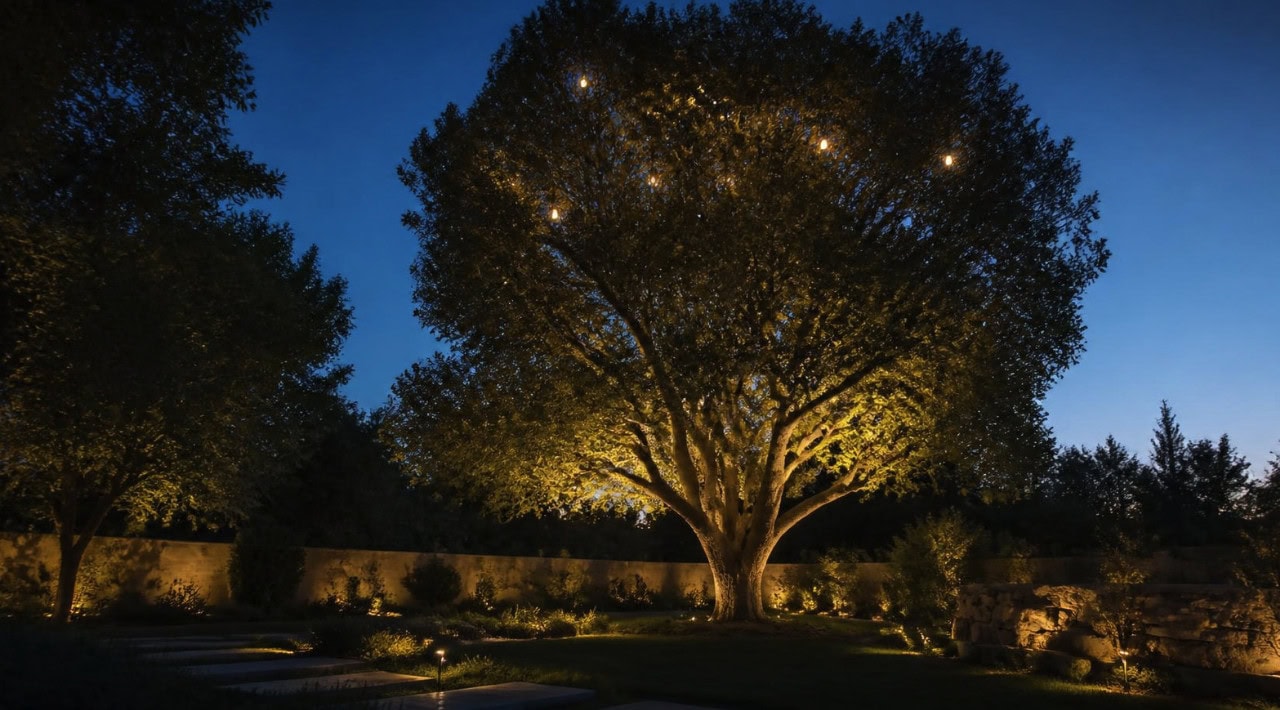
Trees offer the most dramatic effect, especially when the canopy is dense enough to let light filter through leaves instead of sitting on bare branches. Garden beds benefit from low, scattered placement rather than a single continuous line.
Pergolas and Gazebos
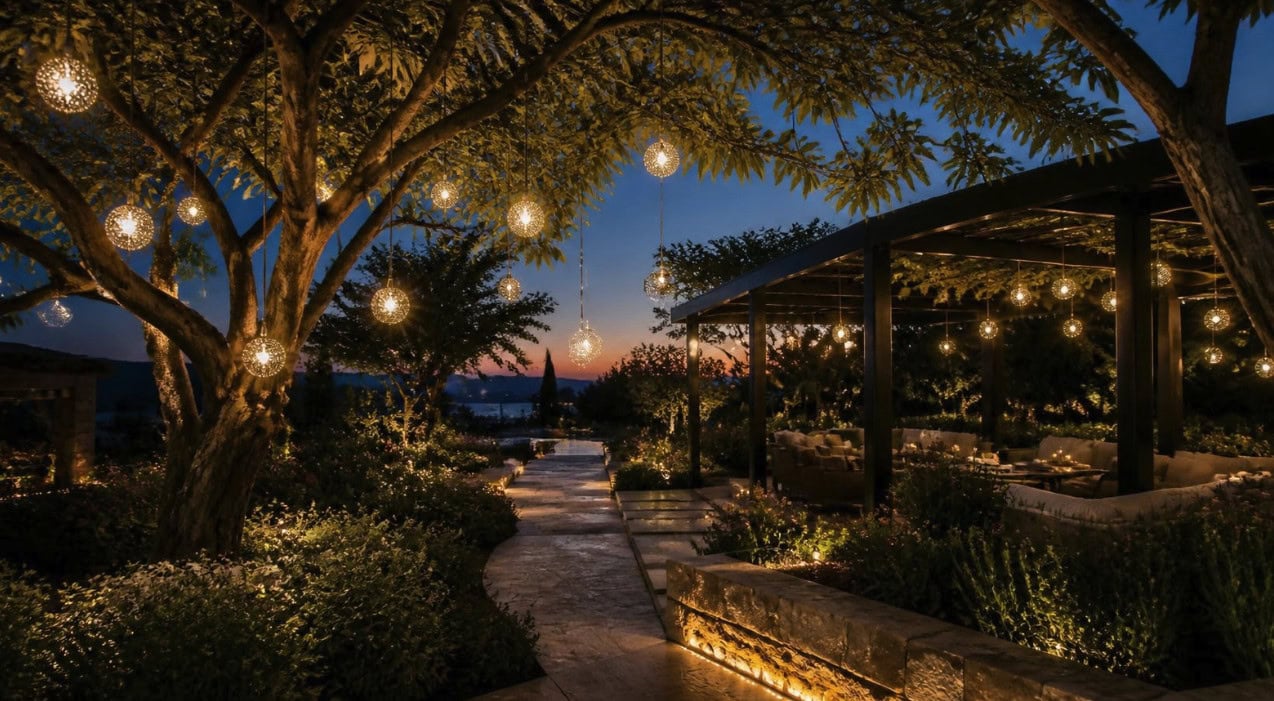
Structures with horizontal beams are ideal for vertical drops rather than flat runs, since the beam becomes a hidden anchor point that makes the light balls appear to hang from nowhere.
Pool and Water Features
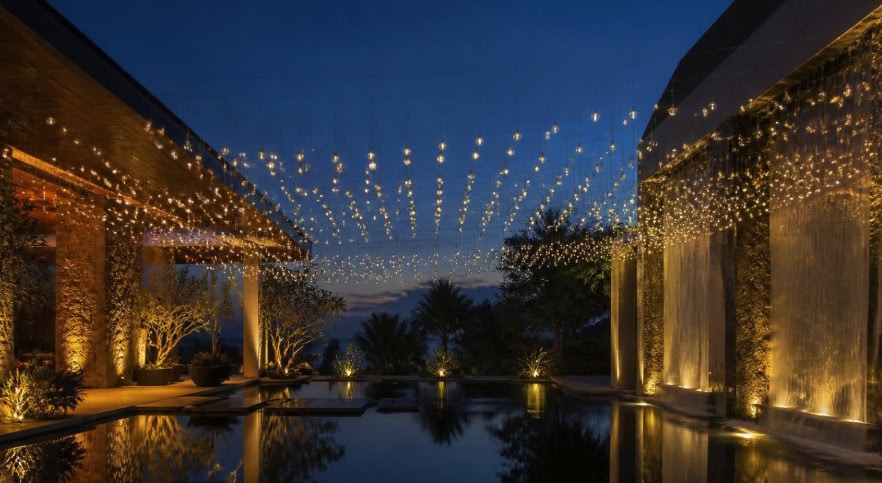
Reflections double the visual impact here. A few well-placed clusters near the water often outperform a fully lit perimeter, since the reflection does half the work.
Our field experience across residential and hospitality installs shows that straight-line, evenly spaced arrangements consistently draw the most “it looks flat” feedback, while diagonal, layered draping between two points tends to get the strongest reactions. Here’s exactly how that technique works.
How to Hang LED Light Balls for That Floating, Effortless Look
The mounting technique matters more than the product itself, since even premium light balls look flat if they’re strung in a straight, tight line.
The Two-Point Diagonal Drape
Instead of stretching a single straight strand, anchor each end of the strand at a different height and let the middle dip naturally rather than pulling it tight. This creates a soft arc instead of a rigid line.
Layering two strands at different heights adds real depth. Try one strand around 2.8 to 3.2 meters and a second at 2.2 to 2.5 meters, letting them cross or overlap slightly.
When installing, you should avoid setting the lowest point of every strand at the same height. Even small variations in where each arc dips create the layered look that a single flat line cannot achieve.
Layering Light Through Trees
Wrapping a tree trunk in one even ring of lights tends to look more like a holiday decoration than ambient lighting, so a three-tier approach reads more naturally.
Place a few sparse balls high on the main branches to outline the canopy, then weave more balls into the mid-level branches so light filters through the leaves instead of sitting on top of them. Add a handful of balls low on smaller limbs for a subtle finishing touch.
This filtered, uneven glow, with light peeking through leaves rather than draped over bare branches, is what most people are picturing when they imagine a professionally lit tree.
Short Clusters for Pergola Beams
On pergolas or gazebo structures, avoid pulling the strand flat across the horizontal beam. Instead, fix a point every 1.2 to 1.8 meters along the beam and let a short length of strand drop 30 to 60cm below each point.
Viewed from below, this creates scattered points of light rather than one continuous line overhead, which is usually the effect people are after when they picture string lights on a porch or outdoor dining area.
Common Installation Mistakes to Avoid
We have installed many of these light sets for customers and learned these lessons from real project feedback.
Exposed wiring and bulky battery packs are the number one complaint. This is especially true for solar lights. Even if you hang the globe lights perfectly a big battery case can ruin the whole look. Plan where your cables and batteries go before you start installing not after. This will fix most of the problem right there.
The second most frequent mistake is too even and level spacing. It ends up looking stiff and unnatural more like construction lighting than cozy ambient decor.
When the light string gets pulled tight and creates uneven gaps between globes that is actually the least common issue. It is usually a simple DIY error and super easy to adjust on the spot. Just gently shift the globes around.
Another thing to watch for. Identical brightness on every globe. If there is no subtle variation or focal point your setup will look dull even when the layout is good.
Do not run your light string along a fence at the exact same height the whole way. This setup gets lots of negative feedback. It looks flat and lacks visual depth.
Choosing the Right LED Light Balls for Your Desired Look
Not all small LED light balls are built the same way, and the right choice depends more on your outdoor conditions than on style preference alone.
Power Source
Solar-powered balls work best in locations that get consistent direct sunlight during the day, since shaded trees or covered patios rarely charge the panel enough for a full evening of light.
Plug-in strands give the most reliable brightness and are the better choice for spaces near an outdoor outlet, such as patios and porches.
Battery-powered balls offer the most placement flexibility since they don’t need a nearby power source, but they require more frequent maintenance to swap or recharge batteries.
Ball Size and Spacing on the Strand
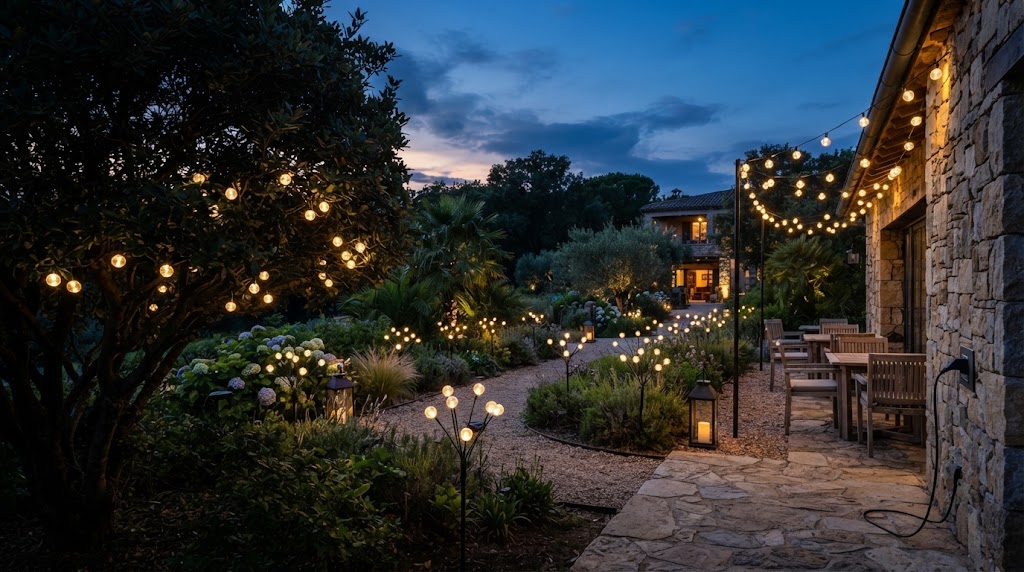
Smaller balls, typically under 3cm, create a softer, more scattered glow that suits garden beds and tree canopies. Larger balls, closer to 5 to 6cm, hold up better as standalone focal points along pergola beams or pool edges, where each point of light needs to carry more visual weight on its own.
Strand spacing also matters. Tighter spacing, around 10 to 15cm between balls, suits dense tree wrapping, while wider spacing, closer to 20 to 30cm, works better for open drapes across patios or fences.
Weatherproofing Rating
IP44 or IP65 balls are the baseline for most outdoor use, but the rating alone does not guarantee long-term durability.
Our quality reviews of returned products show most failures happen at the connector joints between the power source and the first ball on the strand not within the globe lights themselves. Water seeps into these joints instead of the sealed globe housings and this is the top reason strands stop working after months outdoors.
Confirming connectors are fully seated and properly covered matters more than just checking the IP rating number.
Color Temperature and Brightness
Warm white, around 2700 to 3000K, is the most common choice for ambient outdoor settings, since it mimics the soft glow of string lights rather than the sharper look of daylight-toned LEDs. Cooler tones, above 4000K, tend to suit modern or commercial spaces better than residential patios and gardens.
What to Check Before You Buy LED Light Balls for Outdoor Use
Buying a single set for a backyard patio is straightforward, but sourcing light balls for hospitality properties, event venues, or multi-unit installations involves a different set of checks.
Consistency Across Batches
Procurement Note: Color temperature and brightness can vary noticeably between production batches, even when the listed specifications are identical. For larger installations spanning multiple properties or phases, requesting samples from the same batch, or confirming batch consistency directly with the supplier, prevents a mismatched look between sections installed at different times.
Cable Length and Connector Compatibility
Confirm the lead cable length and connector type before ordering multiples, since mismatched connectors between different production runs are a common reason bulk orders end up with unusable extra strands.
Certification and Safety Standards
For any installation near water features, pools, or in regions with strict electrical codes, confirm relevant certifications, such as UL, CE, or ETL, apply to the exact product being ordered rather than to the manufacturer’s product line in general.
Minimum Order Quantities and Lead Times
Bulk orders for commercial or hospitality projects often involve longer lead times than retail purchases. Confirming production and shipping timelines early avoids scheduling conflicts with installation deadlines, especially for seasonal displays tied to a fixed event date.
FAQs
How many LED light balls do I need to cover a patio or pergola?
For a diagonal drape across a standard 3 to 4 meter patio, a single strand of 20 to 30 balls usually provides enough coverage without looking sparse. Larger spaces, such as pergolas spanning 5 meters or more, typically need two layered strands rather than one longer strand, since a single continuous run tends to sag unevenly at that length.
Can LED light balls be left outside year-round?
This depends more on the connector seals than the ball housings themselves. Strands rated IP65 or higher can generally stay outdoors through most seasons, but in regions with heavy snow or freeze-thaw cycles, removing and storing the strand during winter extends its lifespan and reduces the risk of connector damage from ice.
How long do LED light balls typically last before needing replacement?
Most quality LED strands are rated for 15,000 to 25,000 hours of use, which translates to several years under typical evening use patterns. Solar-powered sets often show reduced battery performance before the LEDs themselves fail, so a dimming strand doesn’t always mean the lights need full replacement.
Can multiple strands be connected end to end, and is there a limit?
Most manufacturers specify a maximum number of connectable strands, commonly between 3 and 5, before voltage drop starts dimming the far end of the run. For installations needing more coverage than that limit allows, running separate strands from independent power sources gives more consistent brightness than daisy-chaining everything from one outlet.
Do LED light balls attract fewer bugs than traditional outdoor lighting?
Warm white LEDs in the 2700 to 3000K range generally attract fewer insects than the cooler, bluer light emitted by traditional incandescent bulbs. This isn’t a guarantee against bugs entirely, but it’s a small practical advantage worth factoring in for outdoor dining areas.
Final Thoughts
Getting small LED light balls to look intentional rather than scattered comes down to a few decisions made before installation, not after. Choosing the right power source for your light exposure, spacing balls appropriately for the space, and draping strands with some natural variation in height all matter more than the specific product you buy.
For larger installations, whether that’s a hospitality property, event venue, or multi-phase residential project, the details that cause problems later are usually the ones that get overlooked early: connector durability, batch consistency, and realistic lead times. These are exactly the areas where sourcing directly from a manufacturer, rather than a reseller, makes the biggest difference.
Ready to Source LED Light Balls for Your Next Project?
As a manufacturer, we control the details that matter most for long-term outdoor performance, from connector sealing and IP rating consistency to batch-to-batch color temperature matching.
Whether you need a standard product line or custom specifications for a specific project, our team can support everything from sample requests to bulk production timelines.