Bad lighting on your business sign can waste months of marketing work, and this happens before customers even step foot at your door. If your outdoor commercial sign isn’t lit well enough to show off your brand clearly once it gets dark, prospects and business partners might already doubt how professional you are, before they try your products or services.
We’ve worked with lots of clients, and we’ve seen that the lights you pick plus how you install them directly change how well your sign works, both for visibility and for that crucial first impression.
This guide covers everything you need to sort out before buying lights. We’ll go over bullet, wash and flood lights to help you pick the right type. You’ll also learn installation tricks to avoid common headaches, plus how to choose fixtures that last for years out in the elements. Your sign lights should pull just as much weight as the sign itself.
Why Outdoor Sign Lighting Matters
Most commercial properties operate beyond daylight hours, whether through evening foot traffic, shift changes, or deliveries that arrive after business hours. When your sign is difficult to read after dark, visitors and prospective clients may struggle to locate your business or assume it is closed.
For retail storefronts, this often means lost walk-in customers who simply do not notice the entrance. For B2B facilities, poor sign lighting can delay deliveries, confuse visitors who are arriving for the first time, and create an unprofessional impression before a meeting even begins.
Great signage does more than improve visibility. It signals that a business maintains its property and pays attention to detail, two qualities that matter to both retail shoppers and B2B decision makers evaluating a potential partner.
This is why sign lighting deserves the same planning attention as the sign itself, rather than becoming an afterthought added after installation.
What to Plan Before You Buy
Before selecting any fixture, it helps to clarify a few practical details about your sign and site. These decisions shape which lighting options will actually work.
Display Size and Mounting Location
Your sign’s physical dimensions and its setback from the road define the type of lighting fixtures you can deploy.
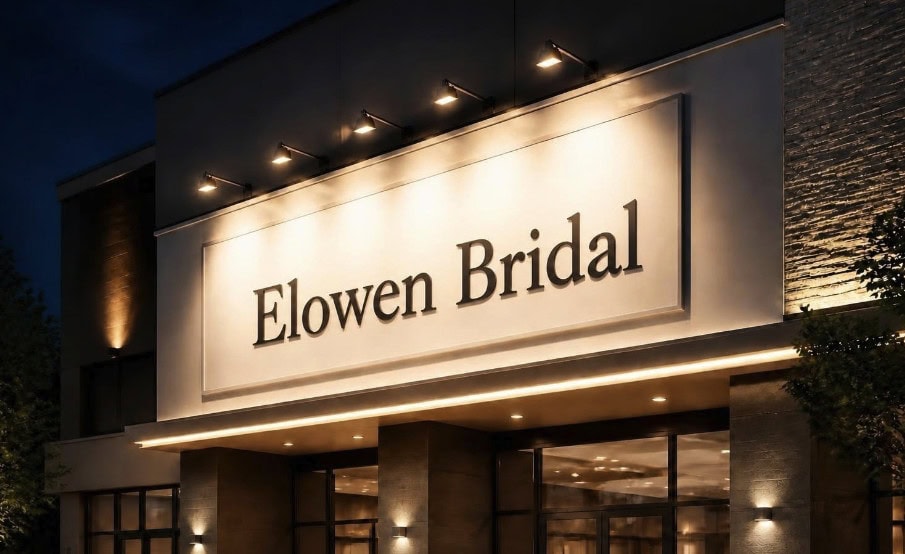
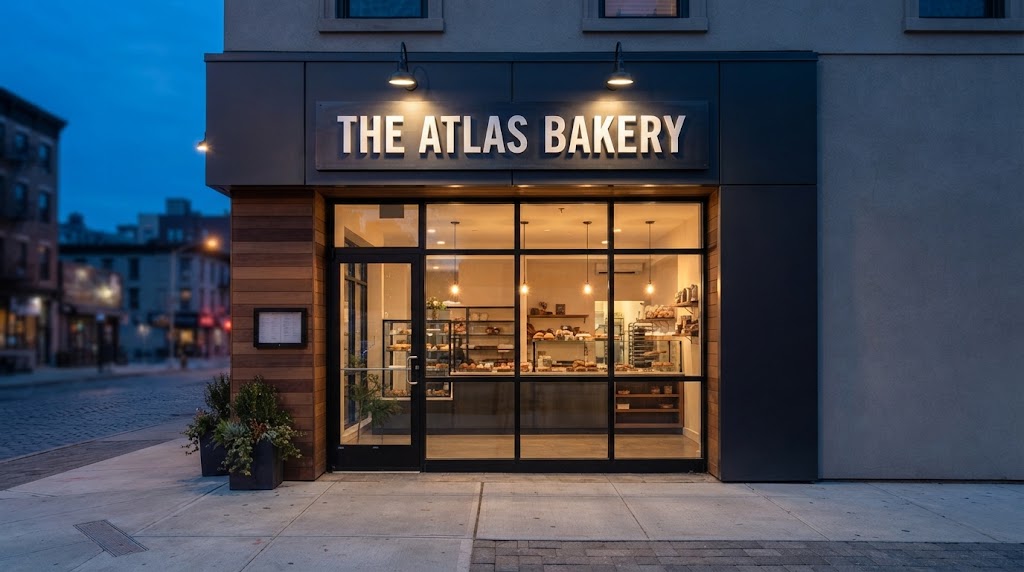
Compact wall signs with shallow depth pair well with small bullet lights mounted 12–24 inches from the sign face. This close placement delivers focused light without glare spill onto adjacent surfaces.
Large monument signs, often installed 5 feet or more back from the curb, need flood lights with long throw optics. These fixtures cast even illumination across the full sign face and prevent hotspots or dim bottom edges.
The mounting structure also shapes your fixture choices. Building facade signs give installers plenty of mounting points directly on the wall. You can stagger bullet lights at the top or sides of the sign to balance brightness across the face.
Freestanding monument signs have no building surface to attach lights to, so you will use ground stakes or short poles for fixture mounting. This ground-mounted setup requires wider beam angles to reach upward onto the sign panel.
Defining Your Lighting Goals
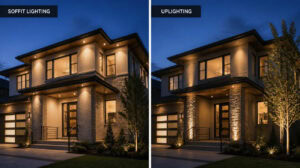
Uplighting, downlighting, and backlighting each create a different visual effect, and each suits different sign types.
Uplighting works well for dimensional letters and monument signs, since it emphasizes texture and depth. Downlighting tends to produce more even, glare free illumination across flat surfaces. Backlighting, often used for channel letters, creates a halo effect that makes the sign visible even from a distance.
Color temperature adds another layer of decision. Warm white tones, generally around 2700K to 3000K, suit signs meant to feel inviting, such as restaurants or boutique retail. Cool white tones, closer to 4000K to 5000K, tend to read as more modern and are common for corporate or industrial signage where clarity matters more than ambiance.
24/7 Identification Needs vs. Decorative Needs
Industrial and commercial sites often need signage that remains clearly visible around the clock, particularly for facilities with shift workers, deliveries, or emergency access requirements. In these cases, brightness and reliability take priority over aesthetic effect.
Retail storefronts, on the other hand, frequently use lighting as part of their brand presentation. Here, the decorative quality of the light, its color, warmth, and how it interacts with the sign material, plays a larger role than raw brightness. Knowing which category your site falls into early on will guide almost every fixture decision that follows.
Choosing the Right Fixture
With your site requirements defined, the next step is matching those needs to a fixture type. Outdoor sign lighting generally falls into three categories, each suited to different sign designs and mounting situations.
Bullet Lights for Accent and Dimensional Signage
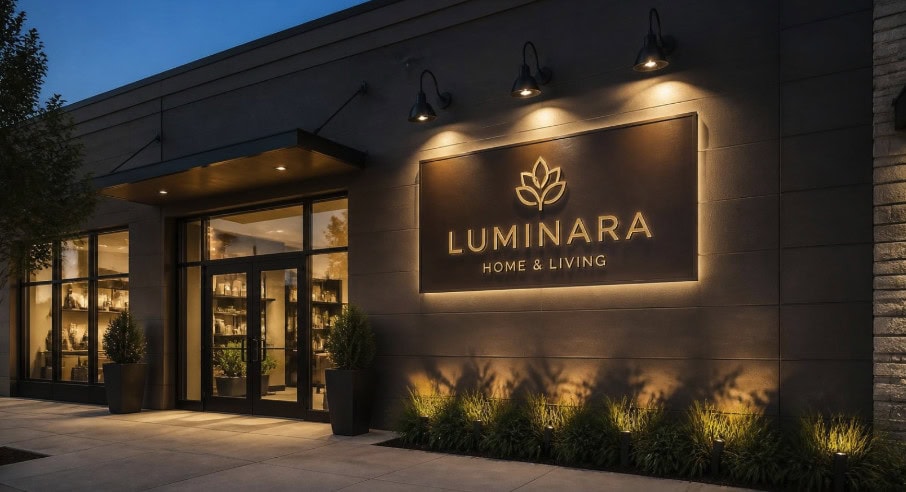
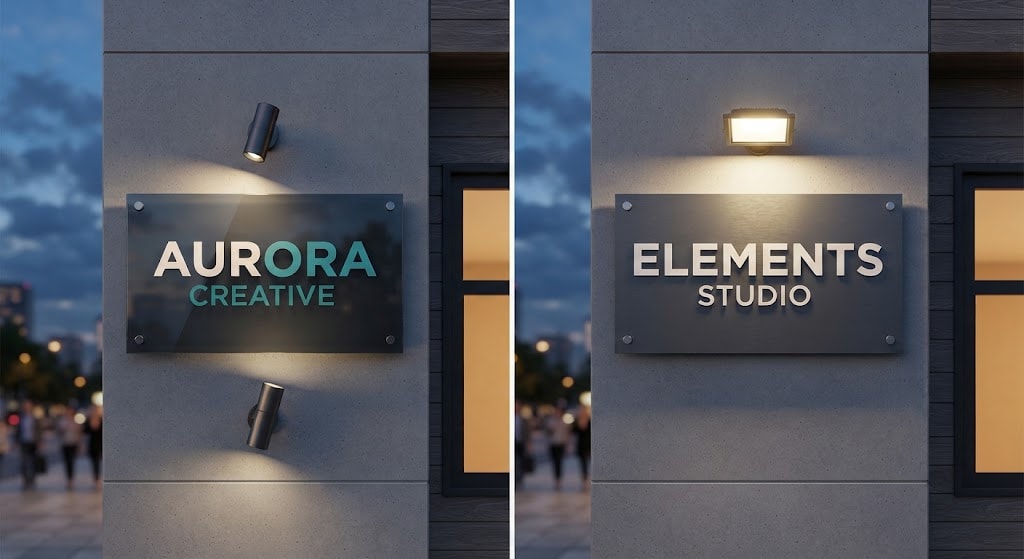
Bullet lights are compact, directional fixtures often used to highlight dimensional letters, logos, or smaller sign elements. Because they produce a narrow, focused beam, they work best when mounted close to the sign surface, typically within a few feet.
Wash Lights for Even, Glare Free Coverage
Wash lights spread illumination more broadly than bullet lights, producing a smoother, more even glow across a flat or moderately textured surface. This makes them well-suited for wall-mounted signs, painted logos, or building facades where consistent brightness matters more than dramatic contrast.
For wash lighting minimizing hot spots and shadowing, it tends to be the preferred option for signage that needs to remain legible from multiple viewing angles, such as signs visible from a parking lot or roadway.
Flood Lights for Large or Distant Signage
When a sign is large, set back from the road, or mounted at height, flood lights typically provide the necessary reach. Their wider beam angle and higher output allow them to illuminate large surfaces from a greater mounting distance, which suits monument signs, pylon signs, and building mounted signage viewed from far away.
The tradeoff is less precision. Flood lights are not typically used for small or detailed sign elements, since their broader beam can wash out fine detail rather than emphasize it.
Matching Fixture Type to Sign Material
Sign material affects how light interacts with the surface, which in turn affects fixture choice. Reflective or glossy materials, such as polished metal or acrylic, can create glare under direct flood lighting, making wash lighting or a more angled bullet light placement preferable.
Matte or textured materials, including stone or brushed metal, tend to handle direct illumination well and often benefit from the contrast that bullet or flood lighting provides.
Confirming material finish with your sign fabricator before selecting fixtures helps prevent this kind of mismatch after installation.
Installation Best Practices
Choosing the right fixture solves only part of the equation. How that fixture gets installed often determines whether the lighting performs as expected or creates ongoing maintenance issues.
Mounting Distance and Spacing
Mounting distance directly affects how evenly a sign is illuminated. Fixtures placed too close together can create overlapping bright spots, while fixtures spaced too far apart often leave visible dark gaps between them, both of which undermine the clean, even look most commercial signage is meant to achieve.
As a general starting point, spacing should scale with beam angle and mounting height, since a wider beam angle allows for greater spacing without creating gaps, while a narrower beam angle requires closer spacing to maintain even coverage.
Testing fixture placement before final mounting, rather than relying solely on manufacturer charts, helps confirm that spacing works for your specific sign dimensions and surface material.
Weatherproofing Considerations
Outdoor lighting does not just sit in open air. Fixtures must withstand cycles of dew formation, freeze-thaw stress, and corrosive particles carried by wind. Coastal sites carry salt spray that eats away at seals, while urban areas trap acidic grime that slowly degrades housing materials. Beam angle and lumen output shape light performance, but enclosure integrity directly decides how long your fixture will stay operational.
IP ratings tell you how well a fixture’s seal holds up, and picking the wrong rating creates hidden maintenance costs. IP65 blocks dust and splashing water. It works reliably for most elevated sign lighting, where standing water and direct irrigation jets are not a concern.
IP67 rated units maintain protection even when briefly submerged. This extra seal strength matters for low-mounted bollards or ground-level fixtures, where pooled rainwater or heavy sprinkler spray can flood housing.
Resist the urge to default to the highest IP rating for every project. A high IP rating adds upfront cost, and over-specifying rarely delivers tangible benefits for sheltered or high-mounted sign lights. Match your selection to local weather, mounting height, and nearby water sources to balance durability and project budget.
Common installation Mistakes and How to Avoid Them
A few recurring issues tend to shorten the lifespan of outdoor sign lighting or reduce its effectiveness.
Fixtures mounted without adequate drainage can trap water, accelerating corrosion even in rated enclosures.
Conduit runs left exposed to direct sun without UV rated protection can degrade faster than expected, leading to premature wiring failure.
Aiming fixtures without a nighttime test adjustment often results in glare or missed coverage that becomes obvious only after dark.
Each of these mistakes is preventable with a short verification step before considering the installation complete, such as a drainage check, a conduit material review, and a nighttime walk around to confirm beam placement.
Selecting Fixtures for Long-Term Performance
Material Comparison: Sand-Cast Bronze vs. Aluminum vs. Standard Housing
Housing material is one of the biggest factors separating a fixture that lasts fifteen years from one that needs replacement in three.
Sand-cast bronze is generally considered the most durable option for outdoor sign lighting, since it resists corrosion naturally and does not rely on a coating that can chip or wear away over time. This makes it a common choice for high-end commercial installations, coastal properties, and sites where fixture replacement would be costly or disruptive.
Die-cast aluminum offers a middle ground. It costs less than bronze and holds up reasonably well when properly powder-coated, but the coating itself becomes the weak point. Once scratched or worn through, exposed aluminum can oxidize and eventually pit, especially in humid or salt-air environments.
Standard housing, often a thinner aluminum or composite material with a basic finish, tends to suit lower-budget installations or sites with a shorter expected sign lifespan. It is not necessarily a poor choice, but buyers should treat it as a shorter-term investment rather than a decades-long fixture.
Dimmable Drivers, Photocells, and Solar Options
Photocells, which automatically turn fixtures on at dusk and off at dawn, are one of the more cost-effective automation features available. They eliminate the need for a timer that requires seasonal adjustment and reduce the chance of lights running during daylight hours, which shortens fixture lifespan unnecessarily over time.
Dimmable drivers allow brightness to be adjusted after installation, which is useful when a sign’s surroundings change, such as new nearby lighting that alters how bright the sign needs to appear at night. This flexibility costs more upfront but can prevent a full fixture replacement later if brightness needs adjusting.
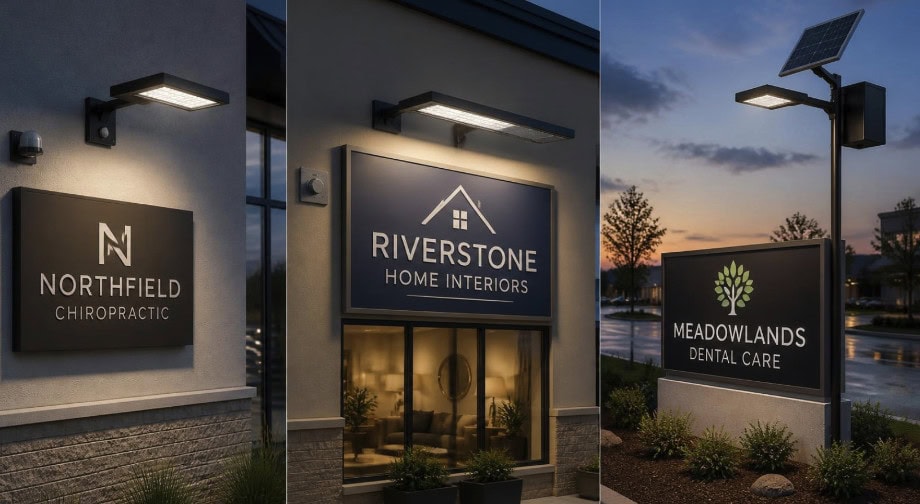
Solar-powered fixtures suit locations without easy access to electrical wiring, such as free-standing monument signs far from a building’s power source. The tradeoff is dependence on adequate sun exposure and generally lower output than wired alternatives, which makes solar a better fit for smaller accent signage than for large, high-visibility installations.
For most standard commercial sign installations, a photocell provides the clearest return on investment, while dimmable and solar options make more sense for specific site conditions rather than as a default upgrade.
When to Re-lamp
A fixture nearing the end of its useful life does not always announce itself with a bulb that simply stops working. LED fixtures typically dim gradually, a process called lumen depreciation, which can leave a sign noticeably less bright without an obvious failure point. Fading signage reduces nighttime visibility and weakens brand recognition for your business.
Color shift is another practical indicator. LEDs nearing end of life sometimes shift toward a cooler or warmer color temperature than when installed, which becomes noticeable when comparing older and newer fixtures side by side on the same sign. Inconsistent color breaks the uniform brand look customers expect.
Flickering, even if intermittent, usually points to a failing driver rather than the LED chip itself, and often signals that replacement is more cost-effective than repair.
FAQs
How many fixtures does a typical monument sign need?
This depends on sign width and mounting distance, but a rough starting point for a standard 8 to 10 foot wide monument sign is two to four flood lights, positioned to overlap coverage slightly at the center. Narrower or taller signs sometimes need additional fixtures stacked vertically rather than spaced horizontally, particularly if the sign has a tiered design with a base and cap section.
Signs with landscaping directly in front, such as shrubs or ornamental grasses, often need fixtures mounted slightly higher or angled more steeply than a bare installation would require, since foliage growth can block ground-level beams within a season or two.
What’s the best lighting approach for channel letter signs?
Channel letters are almost always backlit or internally lit rather than illuminated with external fixtures like bullet or flood lights. Most modern channel letter signs use LED modules mounted inside each letter, which is a different lighting approach entirely from the fixture types discussed for monument or wall-mounted panel signs.
If your channel letters already include internal LEDs, the external lighting decisions in this guide typically apply to secondary elements instead, such as a raceway, an accompanying logo panel, or a monument base beneath the letters.
How should I light a sign in a strip mall or multi-tenant building?
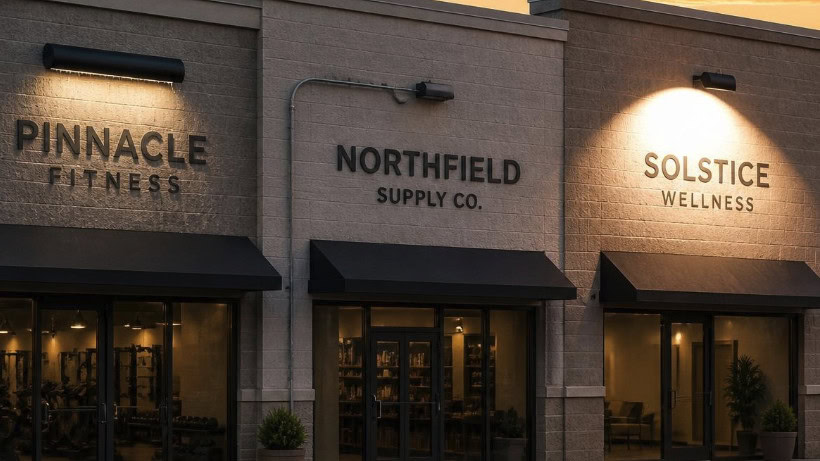
Multi-tenant signage introduces a coordination challenge that single-business signs do not face. Individual tenant panels within a shared pylon or monument sign often need separate, evenly matched lighting so that one business’s sign does not appear noticeably brighter or dimmer than its neighbors.
Property management or the landlord frequently sets lighting specifications for shared sign structures, including color temperature and brightness, to keep the overall sign uniform. Confirming these requirements before ordering fixtures avoids a mismatch that becomes obvious once installed next to existing tenant panels.
Does the direction my sign faces affect lighting needs?
Yes, orientation affects both glare and how much supplemental lighting is actually needed. Signs facing west or south often receive strong late-afternoon sun that can wash out the sign’s visibility during dusk transition hours, which sometimes calls for slightly higher lumen output to remain legible as daylight fades.
Signs facing north or shaded by nearby buildings tend to fall into darkness earlier and stay in shadow longer during the day, which can make lighting timing, such as photocell sensitivity settings, more noticeable to passersby if the sign turns on later than a similarly positioned but sun-exposed sign nearby.
Conclusion
Sign lighting is not a single decision, it is a series of smaller choices that compound over time. Fixture type, mounting distance, housing material, and weatherproof rating each play a role in whether your sign looks sharp on night one and still looks sharp five years later.
Skipping any one of these steps tends to surface as a problem eventually, whether that is uneven brightness, premature corrosion, or a fixture that fails faster than expected. Getting them right from the start costs less than fixing them after installation.
Your sign represents your business around the clock, not just during business hours. Treating its lighting with the same care as the sign itself protects that investment and keeps the first impression consistent, night after night.
Get the Right Lighting Setup for Your Sign
Off-the-shelf fixtures do not always match a sign’s mounting depth, beam angle, or housing requirements, especially for larger projects, unusual mounting structures, or sites with demanding environmental conditions. That gap is often where custom lighting makes more sense than adapting a standard product.
We manufacture sign lighting fixtures to spec, from housing material and IP rating to beam angle, color temperature, and mounting configuration. Whether you need a small batch for a single installation or a consistent fixture design across multiple sites, our team works directly with your dimensions and site conditions to build lighting that fits the first time.
Send us your sign specifications and site details, and we will help you determine what a custom fixture solution would look like, including material recommendations, lead times, and pricing for your project.