What is Low Voltage Landscape Lighting?
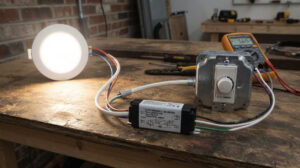
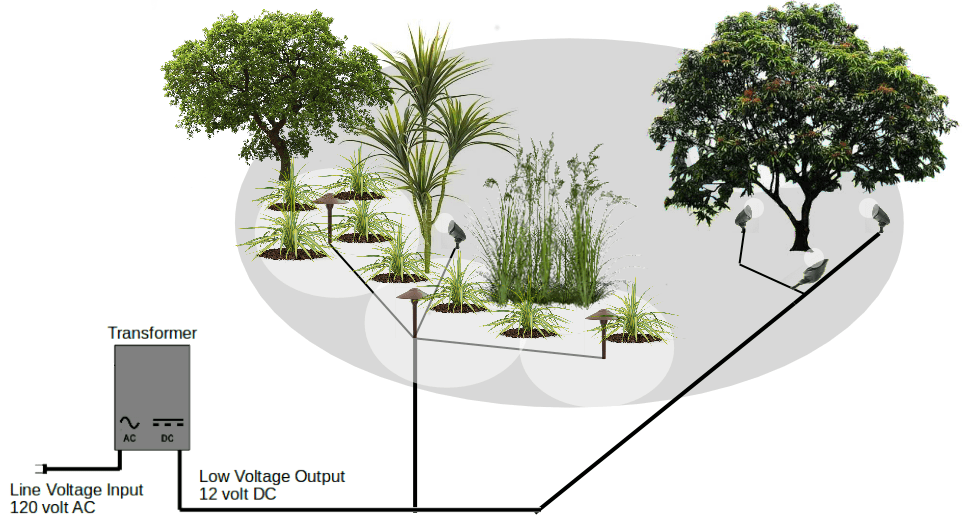
Low Voltage lighting is a lighting system that uses 12/24 Volts to operate. An additional transformer is required to decrease the regular line voltage of 120/240V to 12/24V. The transformer is usually built into the fixture, and if not, a remote transformer is used; you have to ensure that the wattage rating is equal to or greater than the lighting system’s combined wattage rating.
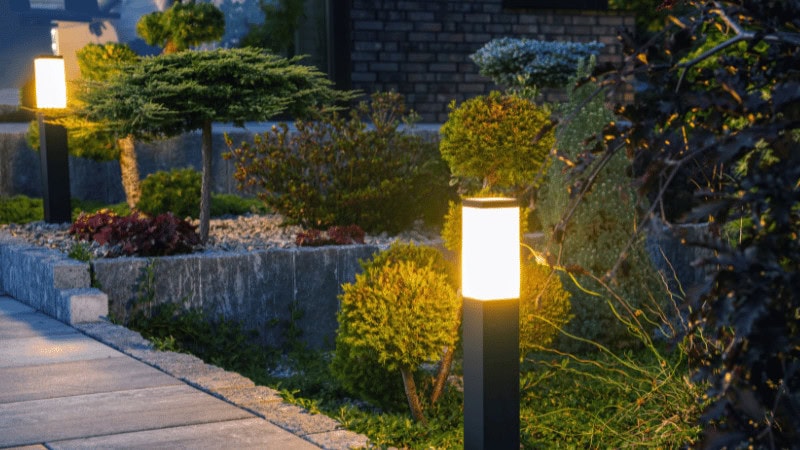
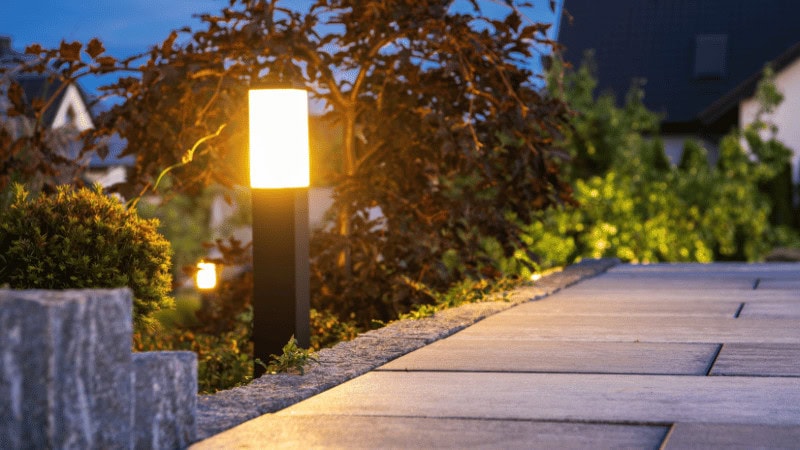
These are popular choices for Landscape spotlights, LED Post Lights, LED Bollard Lights, etc. You can find many LED fixtures for low voltages, and they are more versatile than line-voltage lights. Low-voltage lights are best for landscape lighting, which has restricted access.
The low-voltage requirement greatly pleases energy-conscious people, and rightly so. Due to their efficiency, low-voltage lights are becoming the preferred choice for outdoor use. You can find these in many areas of interest, such as safety, commercial, and outdoor landscape decoration.
What is Line Voltage Landscape Lighting?
A line voltage lighting is a plug-and-play landscape lighting system that runs on the standard line voltage of 120 Volts. You must only connect it to the ordinary supply socket, which starts running. So, unlike Low Voltage Lights, you do not need a transformer in a circuit.
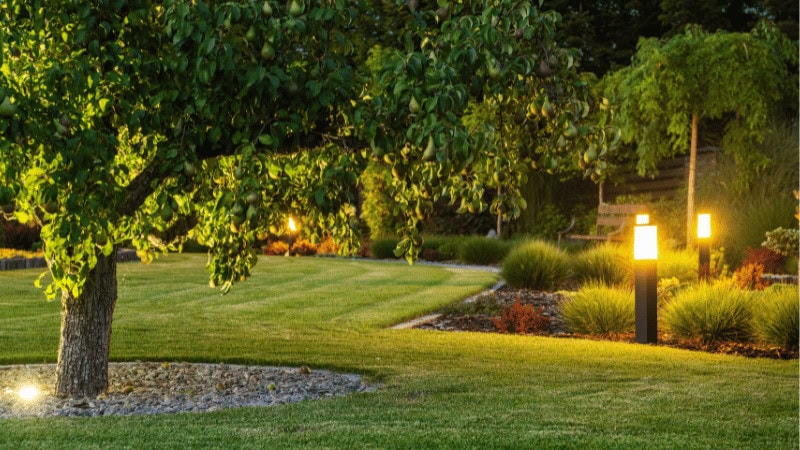
The power cables for 120V line voltage lights must be safely buried 2 feet under the ground. It is better to use plastic conduits and sealed junction boxes at the end. These heavy-duty line voltage lights work best in large landscapes or residential places with lots of greenery.
They are much brighter, but modern low-voltage lights also produce somewhat similar lumens.
It is a popular design choice for outdoor, security, and commercial lighting as they require less purchase and are easy to set up and maintain. Line voltage lighting is more common in landscape lighting, and it can cover a large area, guaranteeing proper wiring is done.
Their applications are numerous, and despite their large electricity consumption, the line voltage lights have their significance.
What’s the Difference Between Low Voltage and Line Voltage Landscape Lighting?
You can choose a lighting system based on the various aspects of line and low voltage landscape lights.
Both are popular choices for landscape lighting, but the final decision depends upon the following factors in general. By going through these, you can decide which lighting system is best suited for your project.
Investment Cost
Low-voltage lights require a larger initial investment compared to Line-Voltage lights. This is due to the additional circuitry (transformer) present in the fixture of low-voltage landscape lighting systems.
Line-voltage lights are initially cheaper, but the operating cost is larger unless installed in low-use areas. A line-voltage landscape system also has lesser installation costs and less expensive dimmers than low-voltage lights.

Light Output Quality
The higher voltage bulbs used in line voltage systems tend to produce warmer and more diffused light output. On the other hand, low-voltage lamps give off more natural light and directed light beams.
Low-voltage LED bulbs produce superior light quality as they scatter less light and offer a higher degree of optical control. They are primarily used in applications that need to be enhanced aesthetically.
You can have a wide range of color temperatures and various beam spreads, such as floodlights and spotlights, which is not the case with line-voltage lights, which have limited options.
Energy Efficiency in Both Cases
A 50-watt low-voltage LED light consumes approximately the same wattage as a line-voltage lamp of similar power, but the low-voltage bulbs produce far more lumens than the standard line-voltage one.
Modern LED technology has dramatically enhanced low voltage LEDs’ capabilities, and you can find these to be brighter than before. They are also replacing low voltage halogens-MR16 lamps due to their better efficiency.
Regular low-voltage lights have a life of 6000+ hours compared to line-voltage bulbs, which have a life of only 800 hours (approximately). Low-voltage lights also produce less heat, which makes them more energy efficient.
Safety
Low-voltage landscape lighting is safer as it operates on a low voltage of 12/24V. This safety factor makes low voltage LEDs more popular in outdoor projects such as playgrounds and schools where children’s safety is a significant concern and a chance of kids or people coming in contact with a wire.
You can quickly and safely install these if professional electricians are not available.
Line voltage is best suited for outdoor use where safety is not a concern and vast areas need to be lighted.
Cables and Connections
Line voltage and low voltage systems differ significantly in how their cables must be run and connected.
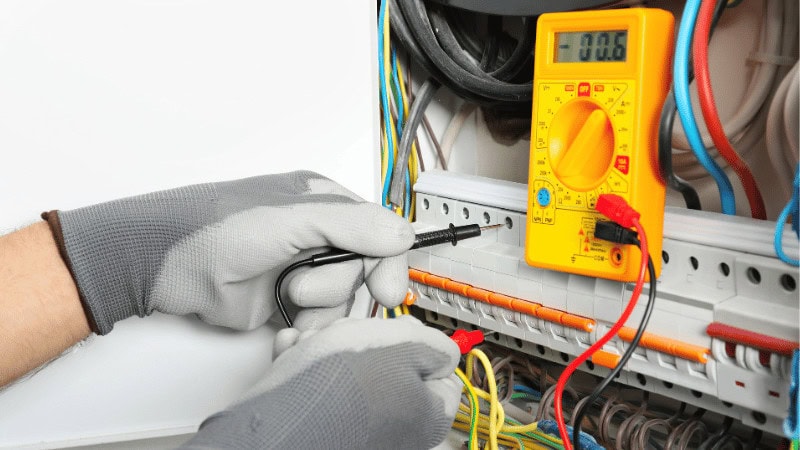
For line voltage, the wiring carries a full 120V, so safety requirements are stricter. Cables should be buried at the depth required by your local electrical code — often around 18 to 24 inches, depending on the conduit used. Running the wires inside a rigid or PVC conduit adds an extra layer of protection, and all connections should be made in sealed, weatherproof junction boxes. Always choose wires and connectors rated as waterproof and shock-resistant.
Low voltage wiring, by contrast, only carries 12V or 24V, so the risk of shock is much lower. This means the cables don’t need to be buried deep — typically just 6 inches or so is enough for most applications. Low voltage systems also use simpler, tool-free connectors (such as clip-on or push-in connectors), which makes installation faster and easier than the hardwired connections required for line voltage.
Relocation Of The Systems
The low-voltage lighting system can be easily relocated because it is not permanent like a line-voltage system. Moreover, you can easily add another fixture to the low-voltage system, provided that the transformer has the capability to handle another fixture.
A line-voltage system, on the other hand, is much harder to move. Since the cables are buried deep and often run through conduit, relocating a fixture usually means digging up and rewiring the line. Adding fixtures is also more complicated and may require a licensed electrician.
Voltage Drop
Voltage drop is the decrease in the voltage along the circuit consisting of lighting fixtures. It occurs in a low-voltage lighting system as electricity is lost in transmission. This is because the voltage decreases with the cable’s length, and the fixtures receive less power for the optimum output.
To fix this, you have to place a transformer closer to Low-Voltage landscape lights and avoid the daisy-line configuration, as in this configuration, the first fixture will receive most of the power compared to the fixtures to follow.
This is much less of an issue in line-voltage systems. Because they run at 120V, the higher voltage carries power over long cable runs with minimal loss, so fixtures at the end of the line still receive nearly full power.
In low-voltage lighting, it is advisable to split the wire runs for more evenly distributed power across all the fixtures. Moreover, transformers can handle the load of a certain number of fixtures. Decide which transformer is best by first calculating the total wattage for all the fixtures you want to light up.
Installation
Low-voltage lights require a transformer to step down the regular voltage supply of 120/227V to 12/24V. Some fixtures come with a built-in transformer, while others require a separate transformer near the circuit. This is hazard-free and safer to install.
On the other hand, line voltage lighting does not require a transformer to step down the voltage, making it easier to install. However, line voltage does require the supervision of a professional electrician because it deals with a high voltage of 120 volts.
Maintenance Challenges
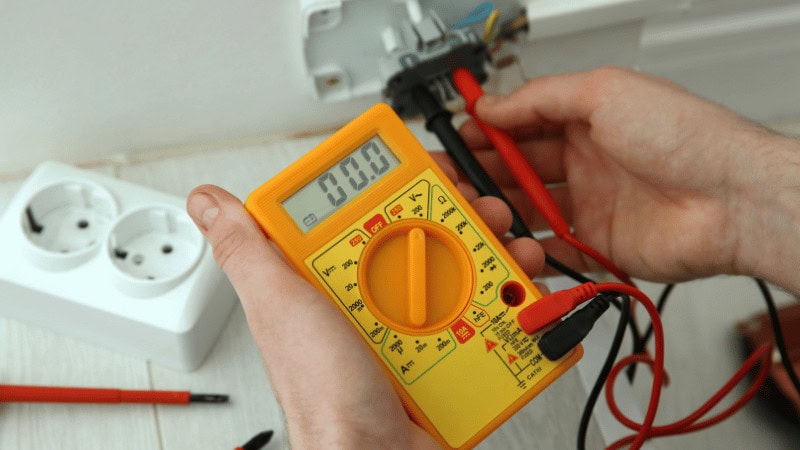
You may require electricians to determine where the transformer should be placed for large, low-voltage landscape projects. This is not the case for line-voltage lights because no transformer is used in the system.
In the long run, low-voltage lights are more economical due to lower electricity consumption. Low-voltage LED lights are also longer-lasting than other lights, saving resources in repair and maintenance costs.
Applications of Line and Low Voltage Landscape Lighting
Before choosing the system, you must first understand the requirements of your project. Both line and low-voltage systems perform best in specific applications.
Low-voltage Lighting is popularly used in projects that demand a customized, stunning outlook. The user can control these lights, making them suitable for designing aesthetic projects using low-voltage LED bollards lights, underwater spotlights, LED fountain lights, etc.
These lights are primarily used in residential and commercial areas such as pathways, parks and playgrounds, display lighting applications, etc.
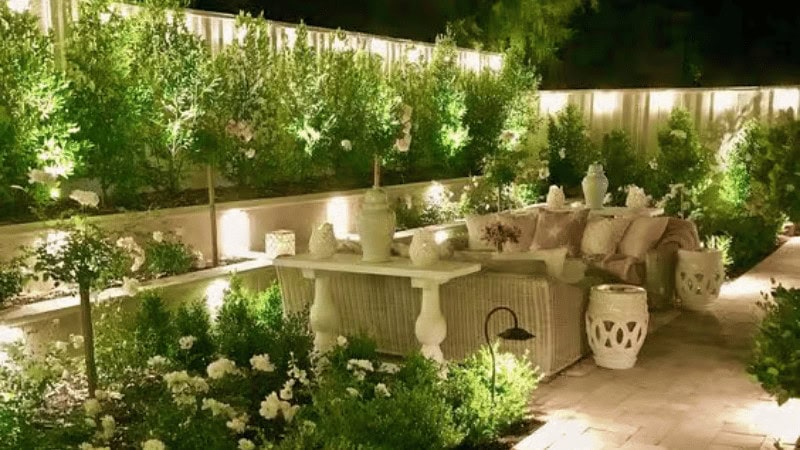
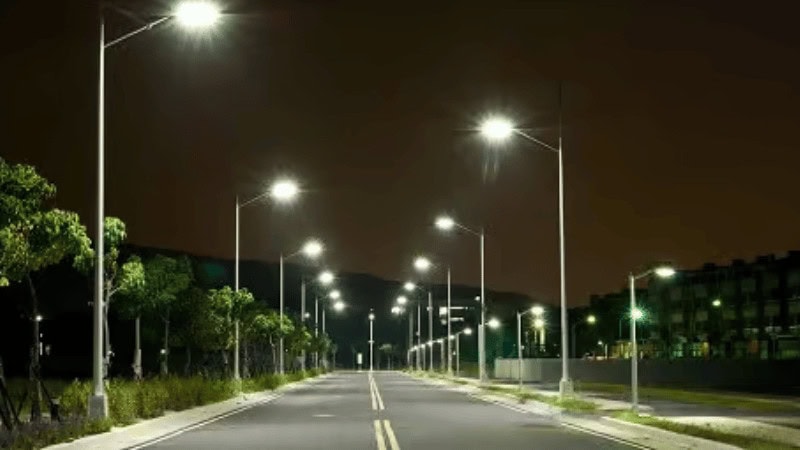
Line voltage lighting is mainly used in applications that require long wire runs, such as landscapes, architecture, street lightings, etc. It is also used in commercial and public areas where a large region needs to be illuminated by a few bright fixtures.
Line voltage is often seen in security applications where high illumination is required for a large area.
When Line Voltage Is the Smarter Choic: From Our Project Experience
In our experience supplying both systems, most residential and decorative projects are a good fit for low voltage. But a few situations tend to push a project toward line voltage instead:
- Long distances: fixtures are spread out and the farthest light sits more than ~250 ft from a practical transformer location.
- Large scale: the project uses 60+ fixtures across a big area, such as long walkways, large parks, or bridges.
- High-wattage fixtures: many floodlights above 35W. At low voltage this draws heavy current, forcing thick, costly cable that rarely pays off.
- Future expansion: the client plans to keep adding fixtures, which quickly eats up a low-voltage transformer’s headroom.
If any of these apply, going straight to line voltage usually saves cost and hassle instead of forcing a low-voltage system to stretch.
Frequently Asked Questions
Q1: Can I mix line voltage and low voltage fixtures in the same landscape project?
Yes, and many larger projects do exactly this. A common approach is to run line voltage for the demanding parts—long perimeters, security floodlights, or fixtures far from any transformer—while using low voltage for decorative zones like pathways, planting beds, and water features. The two systems stay on separate circuits and are never wired together; they simply coexist within the same overall lighting design. This hybrid method lets you get the reach of line voltage where you need it and the design flexibility of low voltage where it matters most.
Q2: Are low voltage and line voltage fixtures interchangeable?
No. A fixture rated for 12V/24V cannot be connected directly to a 120V line, and a 120V fixture will not run on a low voltage transformer output. The bulbs, drivers, and internal components are designed for one voltage class only. If you want to switch a location from one system to the other, you generally need to replace the fixture itself—not just the bulb. When buying, always confirm the fixture’s rated input voltage before ordering, since this is one of the most common spec mistakes in mixed projects.
Q3: Do line voltage and low voltage systems dim differently?
Yes, and it’s worth checking before you buy. Line voltage LED fixtures typically use standard forward-phase (TRIAC) wall dimmers, but not every LED is dimmable, so compatibility should be confirmed. Low voltage systems dim through the driver or transformer, which means the dimmer, the low-voltage driver, and the fixture all need to be compatible with one another. Mismatched components are a frequent cause of flickering, buzzing, or a limited dimming range. If dimming is important to your design, specify dimmable fixtures and matching controls up front rather than adding them later.
Q4: Which system is easier to expand or upgrade to smart controls later?
Low voltage is usually the more flexible choice for future upgrades, as long as the transformer still has spare capacity. Adding a smart controller, timer, or app-based dimming is often as simple as swapping the transformer or driver for a compatible smart unit. Line voltage smart controls exist too, but changes typically involve the 120V wiring and may require a licensed electrician. If you expect to add automation, scenes, or zone control down the road, plan the system capacity—and confirm smart compatibility—at the buying stage.
Conclusion
Both line-voltage and low-voltage lighting systems have pros and cons, which determine their applications. Before opting for a system, learn about each system’s investment cost, installation procedure, output quality, lamp life, long-term operation, and safety concerns. Knowing the differences will help you choose a better landscape lighting system for your project.
RC Lighting: Your Ideal Landscape Lighting Partner
Once you’ve decided between line voltage and low voltage, the next step is sourcing quality fixtures that match your specs. That’s where we come in.
At RC Lighting, we manufacture both line and low voltage landscape lighting, so you can source the right fixtures for your project from a single supplier.
With 12+ years of experience, we offer:
- Fully customizable line & low voltage fixtures
- Low MOQs and fast 7–15 day delivery
- 5-year warranty and competitive factory pricing
Already know your fixture requirements? Send us your list—types, wattage, and quantities—and we’ll get back to you with pricing and product options.
Contact us now for a quote!